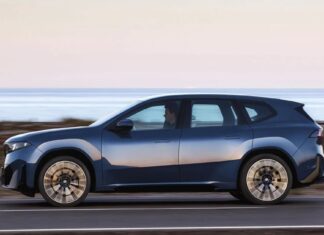
The Volkswagen T-Roc has undergone a substantial redesign for the 2025 model year, moving beyond its previous role as a taller Golf with a slightly upgraded interior. The new T-Roc is built on the advanced MQB Evo platform – the same architecture as the Tiguan and Skoda Kodiaq – resulting in a larger vehicle, now 122mm longer. This expansion isn’t just for show; it’s partially to meet stringent Euro NCAP safety standards, though official testing is still pending.
Enhanced Chassis and Handling
The T-Roc is 9mm wider, with a 30mm wider front track for improved stability and responsiveness. MacPherson strut front suspension and a multi-link rear are standard across all trims, with optional adaptive dampers—a rare feature in this segment. New bushings have been engineered to reduce harshness without sacrificing lateral stiffness, improving ride comfort.
Powertrain Options
Initially, the T-Roc will launch with two mild-hybrid 1.5 eTSI four-cylinder engines, producing either 114 or 148 horsepower, paired with a seven-speed dual-clutch automatic and front-wheel drive. More powerful options are coming soon, including the familiar 2.0-liter ‘EA888’ engine with 201 or 329 horsepower in the T-Roc R variant. Volkswagen also plans to introduce a pair of full hybrids next year, though plug-in hybrid versions are not in development due to anticipated low demand.
Interior Refinement
The cabin has seen significant upgrades. The T-Roc now feels more premium, with redesigned door handles, improved materials (less gloss-black plastic), and subtle touches like a silvery dashboard strip and knitted fabric accents. The controversial touch bar returns but is paired with a rotary knob for volume and drive mode adjustments, offering a more intuitive user experience. Seat options are comprehensive, ranging from basic but supportive models to higher-end versions with excellent lumbar and thigh support.
Practicality and Space
Rear knee room is adequate for taller passengers, and the rear seats are comfortably angled. The 475-liter cargo area is competitive for a compact crossover. The infotainment system features a larger touchscreen, wireless phone mirroring, and a configurable menu layout, though some may find it distracting.
Driving Impressions
The T-Roc’s driving experience is more refined than sporty. The 1.5 eTSI engine is quiet and smooth under normal conditions, though neither the 114-horsepower nor 148-horsepower versions feel particularly quick. Fuel economy ranges from 40 to over 50 mpg depending on driving style. Ride quality is surprisingly similar between cars with 20-inch wheels and adaptive dampers versus 18-inch wheels with passive suspension, suggesting the adaptive setup effectively mitigates harshness. Handling is safe and predictable, with a tendency toward understeer.
Driver Assistance Systems
The T-Roc introduces a new generation of driver assistance features, including an interior camera for driver monitoring (which can be disabled). Adaptive cruise control with automatic lane changes is also available, though performance in extreme conditions (like heavy rain) may vary. Importantly, Volkswagen has retained the option to switch back to standard cruise control, responding to customer feedback.
Overall, the 2025 Volkswagen T-Roc represents a mature and well-rounded compact crossover, prioritizing refinement, comfort, and practicality over outright sportiness. It’s a significant step up from its predecessor, offering a more competitive package in a crowded segment.