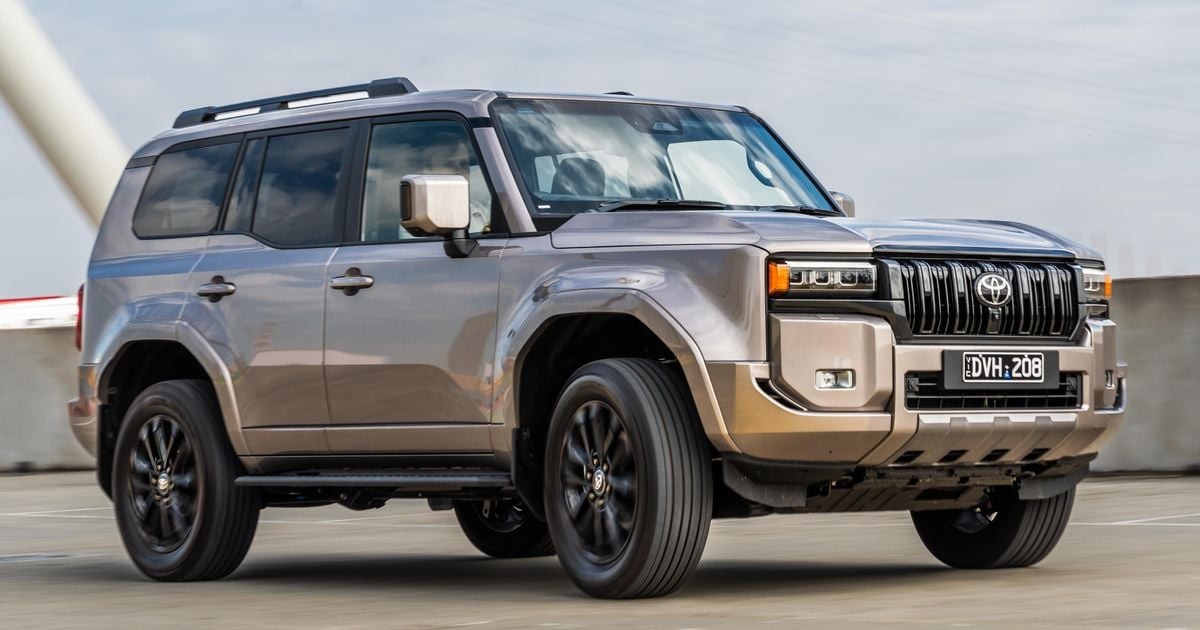
The Toyota LandCruiser Prado has long been a cornerstone of Australian off-road culture, known for its reliability and capability. The latest 250 Series, while now bearing the LandCruiser nameplate in many global markets, continues this legacy, albeit with some evolution. This isn’t just another SUV; it’s a vehicle with a history deeply intertwined with Australian drivers who demand performance and durability.
A Legacy of Capability
Originally born as a comfort-focused variant of the rugged 70 Series, the Prado carved its own path in 1996 as a more accessible family SUV, without sacrificing the LandCruiser’s famed off-road prowess. Starting at $72,500, it offered a compelling alternative to pricier models, and this affordability fueled its dominance for over two decades. Demand remains strong: over 17,000 orders were placed even before the Australian launch, with the luxury Lexus GX variant further expanding the appeal.
Inside the Cabin
Toyota has given the Prado a more aggressive exterior design, borrowing cues from the 300 Series and North American pickups like the Tacoma and Tundra. The interior, while well-built, feels less inviting than previous generations. Twin 12.3-inch displays for instrumentation and infotainment provide clear information, with wireless Apple CarPlay functioning smoothly. The 14-speaker JBL sound system delivers quality audio.
Critically, Toyota has retained physical buttons for key controls, a welcome feature in an era of touch-heavy interfaces. The range-topping Kakadu ($99,990) includes heated and ventilated seats, a panoramic sunroof, and other luxuries, though some argue it doesn’t quite justify the price tag. The seating is comfortable, but visibility has slightly decreased due to thicker pillars, though large mirrors and driver assists compensate.
Performance and Handling
The Prado retains its 2.8-liter turbo-diesel engine, now paired with a 48-volt mild-hybrid system and an eight-speed automatic transmission. Despite this, power outputs remain unchanged from the 2021 model, but the vehicle has gained roughly 140kg. The result is adequate performance, though it feels less energetic than its predecessor.
The Prado excels in solidity and comfort, delivering a smooth ride and confidence-inspiring handling. Braking is competent but requires firmer pressure than some drivers might expect. The vehicle is not particularly sporty, but its strength lies in its ability to handle rough terrain and long distances with ease.
Competition and Value
The Prado’s primary competitor is the Ford Everest ($58,990), though the two feel philosophically different. The Chinese GWM Tank 500 ($66,490 drive-away) offers a compelling alternative with a twin-turbo V6 hybrid engine. The Prado sits in a unique position, blending reliability, comfort, and off-road capability.
What You Get
The base GX model offers essential features, while the GXL adds seven-seat capacity and more amenities. The VX includes premium appointments like leather seats and adaptive suspension. The Altitude trim brings rugged styling with matte grey wheels and an optional locking rear differential. The Kakadu is the top-tier model, boasting a panoramic sunroof, heated and ventilated rear seats, and other luxuries.
The Verdict
The 2026 Toyota LandCruiser Prado remains a worthy successor in a storied lineage. It may not be revolutionary, but it builds upon the formula that has made the Prado a favorite among Australian drivers. While it may not be the fastest or most luxurious SUV in its class, its reliability, comfort, and capability make it a compelling choice for those who demand a vehicle that can handle anything life throws its way.