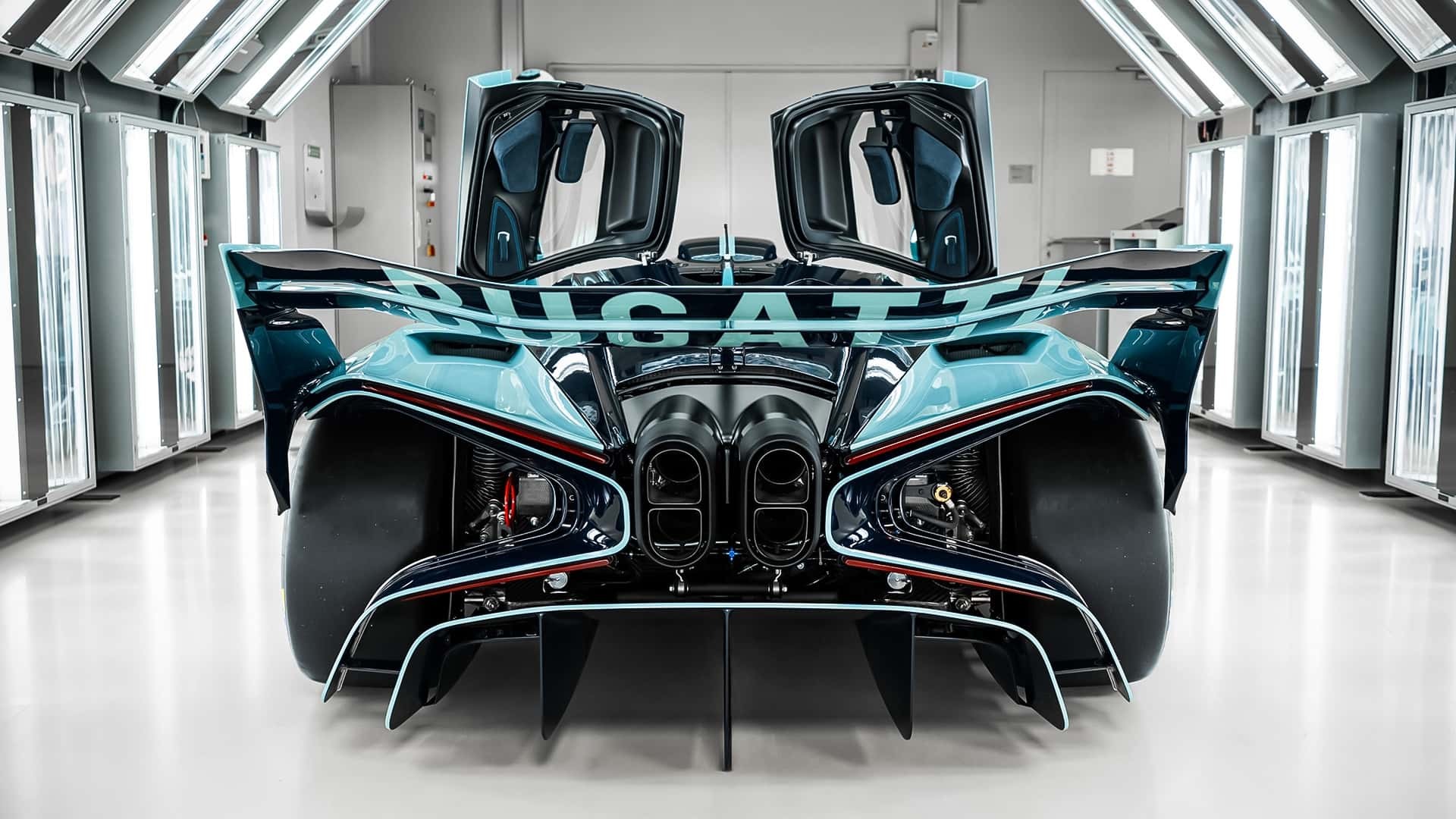
Bugatti has officially concluded production of the Bolide, its extreme track-focused W-16 hypercar. The 40th and final unit has left the factory in Molsheim, France, marking a significant milestone as the company prepares to transition away from the iconic engine. This is not simply the end of a car, but the close of a 20-year era defined by Bugatti’s signature W-16 powerplant.
The Last of a Lineage
The final Bolide was purchased by a long-time Bugatti collector, who also owns one of the last Veyron Grand Sports ever made. This collector’s garage also houses a classic Bugatti Type 35, a legendary racing car from the 1920s, demonstrating a deep appreciation for the brand’s history. The car itself features a striking color scheme: Black Blue and Special Blue Lyonnais exterior paired with a Lake Blue Alcantara interior.
The Bolide’s exclusivity – with a price tag of €4 million – means it will remain a track-only machine for most owners. However, the UK engineering firm Lanzante is already working on road-legal conversions, suggesting some buyers may seek to bypass the restrictions. This highlights the ongoing demand for extreme performance vehicles, even if they are initially designed for closed-course use.
The W-16’s Swan Song
While the Bolide is finished, Bugatti is still delivering the Mistral, the final road-going W-16 model. Limited to 99 units, the Mistral is the fastest open-top car ever produced. Once deliveries conclude, the W-16 engine will officially retire.
The transition won’t be abrupt, though. Bugatti has already developed a new V-16 engine for the upcoming Tourbillon, the Chiron’s replacement. This new engine, co-developed with Cosworth, ditches the quad-turbo setup in favor of naturally aspirated power, boasting an increased displacement of 8.4 liters and integrating a hybrid system to meet modern emissions standards. The shift reflects not just technological progress, but the industry’s growing pressures to comply with environmental regulations.
Keeping the Legacy Alive
Bugatti is also launching “Programme Solitaire,” a program similar to Pagani’s approach. This initiative will allow for bespoke commissions using existing powertrains and chassis, like the Brouillard – essentially keeping older models alive with updated designs and hardware. This strategy ensures Bugatti’s legendary vehicles won’t fade into obscurity, potentially mirroring the long-running appeal of cars like the Pagani Zonda.
The end of the W-16 is not a full stop; it’s a comma. Bugatti is clearly intent on preserving its heritage while moving forward.
The Bolide’s production ending marks the end of an era for Bugatti. However, the company’s plans for the future suggest the W-16 legacy will continue to influence its creations for years to come.