


Chinese automotive giant BYD is aggressively integrating LiDAR technology across its entire vehicle range, partnering exclusively with Robosense to equip eleven new models with advanced sensor capabilities. This move signals a major shift towards higher levels of autonomous driving features, even in entry-level vehicles.
BYD’s LiDAR Expansion: From Luxury to Mass Market
BYD’s commitment to LiDAR isn’t limited to premium lines. The company plans to offer the technology as an option on even its most affordable model, the Seagull, through the DiPilot 300 system. This package, priced at roughly $1,435, demonstrates BYD’s intention to make advanced driver-assistance systems (ADAS) accessible to a wider consumer base.
This is a strategic move : LiDAR sensors enhance ADAS by providing detailed 3D mapping of the vehicle’s surroundings, improving object detection and decision-making in autonomous driving modes. Offering it as an option allows BYD to cater to different customer preferences and budgets while still pushing the boundaries of automotive technology.
Robosense EM4: A Leap in LiDAR Resolution
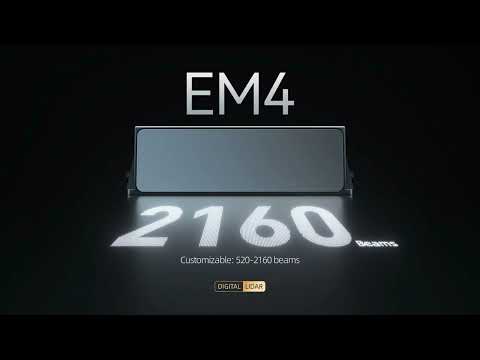
Robosense has revealed its EM4 LiDAR sensor, boasting an industry-leading 2,160 beams – double the resolution of Huawei’s recently launched 896-beam sensor. The company also offers configurations with 520, 720, and 1080 beams to meet varying ADAS requirements.
The EM4’s higher beam count promises improved accuracy in object recognition and distance measurement, potentially offering a clearer and more detailed environmental picture for autonomous systems. While specific performance metrics haven’t been disclosed, the implication is that it will surpass existing LiDAR capabilities.
The Exclusive Partnership: A Long-Term Strategy
The exclusive supply deal between BYD and Robosense is not new. The two companies have had a strategic partnership for years, with BYD previously investing in Robosense to bolster its ADAS development. This latest agreement solidifies their collaboration, ensuring that future BYD models will continue to rely on Robosense sensors.
The eleven vehicles covered by the new deal include : Song Ultra EV, Sealion 06 EV, Seal 07 EV, Seal 08, Great Tang (Datang), Denza Z9 GT, Yangwang U7, Yangwang U8, Yangwang U8L, Fang Cheng Bao Ti3, and Fang Cheng Bao Ti7.
BYD’s aggressive adoption of LiDAR, coupled with Robosense’s high-resolution sensors, sets a new standard for ADAS in the automotive industry. The move demonstrates a clear commitment to autonomous driving features across its entire product lineup.
The race for higher-resolution LiDAR is accelerating, with both Robosense and Huawei pushing the boundaries of sensor technology. This competition will likely drive innovation and lower costs, making advanced ADAS features more accessible to consumers in the coming years.


