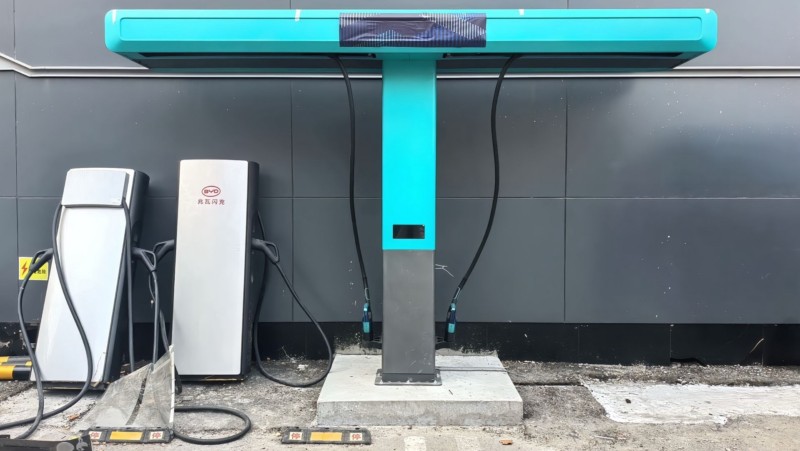
Chinese automaker BYD is now deploying its advanced 1360kW liquid-cooled flash chargers at scale. The move aims to dramatically reduce electric vehicle (EV) charging times, bringing them closer to the convenience of refueling a gasoline car. This infrastructure addresses a major barrier to EV adoption: lengthy wait times at charging stations.
Key Features and Technical Specs
BYD’s Megawatt Flash Charging system stands out with its distinctive “T”-shaped design and blue finish. A key innovation is the dual charging cables suspended on either side, resolving common issues with cable length and ground contact. The system is designed around three core specifications: 1000V voltage, 1000A current, and 1000kW power, achieving a peak output of 1360kW.
This translates to a charging speed of approximately 400 km of range added in just five minutes — or roughly 2 kilometers per second. Crucially, both the cables and the terminal use liquid cooling to prevent overheating during high-power operation. The system also supports “dual-gun charging,” allowing for either single or parallel use of both cables to maximize power output.
Grid Management and Efficiency
Beyond sheer speed, BYD’s charger includes “peak shaving and valley filling” capabilities. This means it can store energy from the grid during off-peak hours and discharge it during peak demand, stabilizing the power grid and ensuring consistent 1MW output. This is essential for avoiding blackouts or surges that could occur when multiple vehicles charge simultaneously at high speeds.
Slow Rollout Despite Tech Lead
While BYD introduced this technology years ago, its public charging network remains limited in China. The high cost of the infrastructure has likely slowed deployment, allowing BYD to keep vehicle prices competitive. However, the company appears to be shifting strategy. A robust charging network is now vital to attract buyers who expect fast, reliable charging with their megawatt-capable EVs.
The economics of high-speed charging are simple: faster charging means more customers, which justifies the initial investment. BYD’s move suggests they are willing to prioritize network expansion over short-term cost savings.