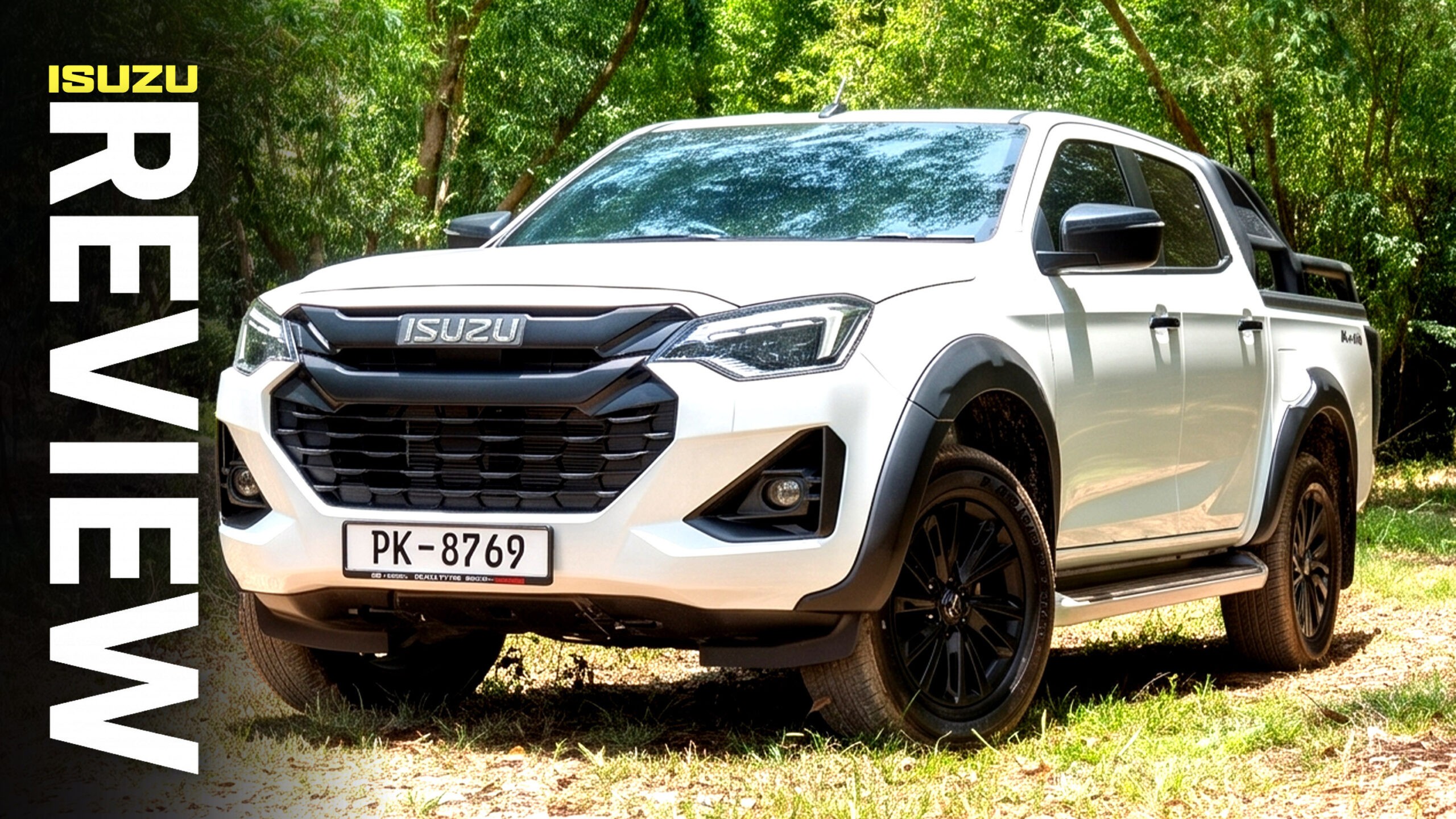
In a world obsessed with chasing higher horsepower and larger touchscreens, the Isuzu D-Max is an outlier. On paper, it often loses the “spec battle” to heavyweights like the Ford Ranger or Toyota Hilux. Yet, in markets across Southeast Asia, Australia, and the UK, it remains a dominant force.
The reason? Isuzu isn’t trying to win a popularity contest based on flashy gadgets; they are winning a battle of durability and purpose.
The Power Gap: Numbers vs. Reality
When comparing the D-Max to its primary rivals, the technical shortcomings are visible at first glance. The 3.0-liter diesel engine in the D-Max produces 187 hp and 450 Nm of torque. To put that in perspective:
– The Ford Ranger (with its 3.0L V6) delivers a massive 247 hp and 600 Nm.
– The Toyota Hilux offers roughly 201 hp and 500 Nm.
– The Mitsubishi Triton also edges it out with 201 hp and 470 Nm.
However, raw numbers don’t always translate to real-world utility. The D-Max’s 4JJ3 engine is famously “understressed,” meaning it isn’t pushed to its absolute limit to achieve its output. This design choice prioritizes long-term reliability over peak performance. For many owners, the consistent, low-end torque is more valuable than a high-revving engine that might wear out faster.
Built for the Dirt, Not the Dashboard
The D-Max is unapologetically utilitarian. While competitors are moving toward “lifestyle” pickups that feel like luxury SUVs, Isuzu has stayed true to the workhorse philosophy.
Off-Road Capability
The truck features a tactile, analog approach to off-roading. Instead of burying settings in a digital menu, Isuzu uses physical buttons and chunky knobs.
– Rough Terrain Mode: This electronic system mimics a locking differential by braking spinning wheels to redistribute torque, allowing the truck to navigate uneven ground effectively.
– Mechanical Simplicity: The 4WD system is intuitive and can be engaged at speeds up to 100 km/h (62 mph), though it remains a part-time system meant strictly for unsealed surfaces.
The Interior Trade-off
If you are looking for a “grocery getter” with a premium cabin, the D-Max might disappoint. The interior is characterized by:
– Hard-wearing plastics designed for durability rather than luxury.
– A dated infotainment system that feels a generation behind the sleek interfaces found in a Ford Ranger.
– Noticeable engine clatter and wind noise on the highway.
While these factors make the vehicle feel less refined than its peers, they also reinforce its identity: this is a tool, not a lounge.
The “Tuning” Factor: A Secret Weapon
One reason for the D-Max’s cult following is its massive aftermarket potential. In Southeast Asia, a vibrant subculture of modifiers treats the D-Max engine like a legendary platform—similar to how enthusiasts treat the Toyota 2JZ. The engine’s inherent toughness allows tuners to push it far beyond its factory limits, turning a reliable workhorse into a high-performance machine.
Value Proposition: The Bottom Line
Ultimately, the D-Max competes on a different axis: Total Cost of Ownership.
In markets like Sri Lanka and Australia, the D-Max typically sits at a lower price point than an equivalent spec Hilux or Ranger. For fleet managers, farmers, and budget-conscious buyers, the math is simple: you get a highly dependable, repairable, and capable vehicle for less money upfront.
Isuzu doesn’t try to be a lifestyle vehicle moonlighting as a workhorse; it is a workhorse that happens to be a decent daily driver.
Conclusion
The Isuzu D-Max succeeds because it ignores the trend of “spec inflation” in favor of proven reliability. By focusing on durability and mechanical simplicity, Isuzu has built a vehicle that appeals to those who value a tool that works, rather than a gadget that dazzles.