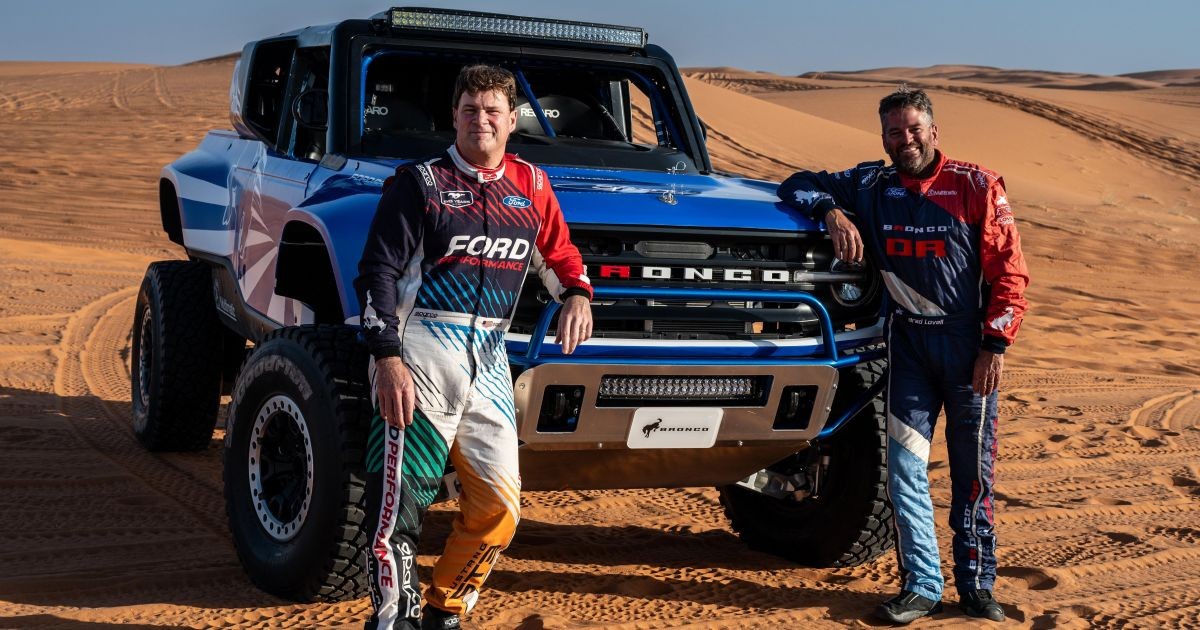
Ford CEO Jim Farley has articulated an ambitious goal: to establish Ford as the undisputed leader in the off-road vehicle segment, much like Porsche’s dominance in high-performance road cars. This isn’t just a marketing push; it’s a fundamental shift in how Ford approaches motorsport and product development.
The Untapped Potential of Off-Road Enthusiasts
Farley points to a clear gap in the automotive market. Unlike the established hierarchy in on-road performance vehicles – where brands like Porsche and Ferrari command respect – the off-road space lacks a single, dominant force. This absence, according to Farley, presents a significant opportunity.
“Unlike on-road enthusiasts, the auto business has no obvious off-road leader… When someone who loves off-road wants an enthusiast product, they pick Ford.”
This strategy isn’t about competing; it’s about owning the category. The company believes it can capture a large share of the market by focusing on a core group of enthusiasts.
Racing as Core Business, Not Just Marketing
Under Farley’s leadership, Ford is restructuring its motorsport division to operate more like a direct extension of product development. Racing, particularly grueling events like the Dakar Rally, is now treated as a critical testing ground for durability, suspension, and overall toughness.
This isn’t simply about winning races for publicity; it’s about feeding real-world insights directly into production vehicles. The company is embedding engineers within racing programs to ensure a closed-loop system where performance improvements translate directly to consumer products. The Dakar Rally, in particular, is being positioned as Ford’s “North Star” in motorsport.
A Brand Transformation, Not Just a Product Play
Farley envisions a long-term brand transformation, where Ford focuses on enthusiast-led segments. The company recognizes it doesn’t need to compete across every price point or market. Instead, it aims to build a loyal customer base around emotional connection, engineering credibility, and motorsport success.
The goal is for customers to experience the benefits of Ford’s racing efforts directly in their vehicles. This approach mirrors Porsche’s strategy, where motorsport success directly boosts road-car desirability. However, Ford’s focus will be on off-road capability rather than circuit lap times.
The move reflects a broader industry trend: automakers are increasingly recognizing the value of motorsport in building brand identity and driving product innovation.
Ford’s success hinges on translating racing wins into tangible improvements in its off-road lineup, including the Ranger Raptor and Bronco. If the company can execute this strategy, it may well achieve Farley’s vision of becoming “the Porsche of off-road.” The path is ambitious, but the potential rewards are substantial.