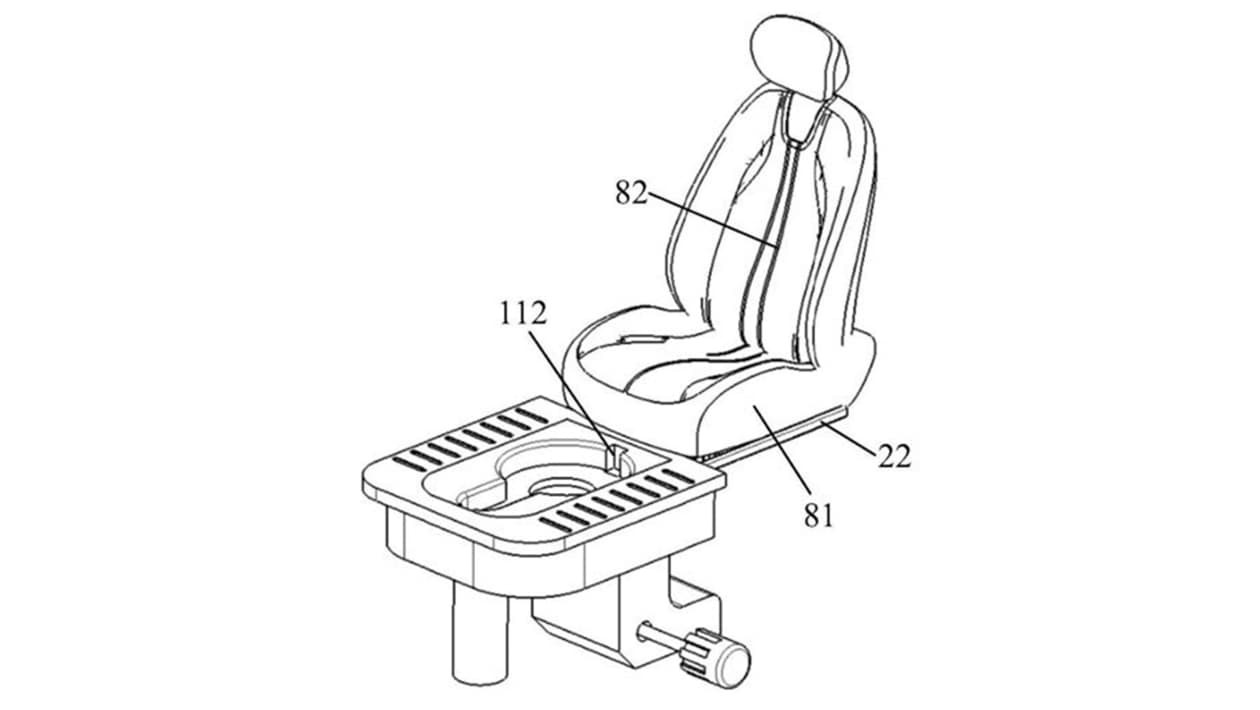
The rapid evolution of automotive technology has brought us everything from autonomous parking to voice-activated dashboards. However, Chinese automaker Seres is pushing the boundaries of passenger comfort into uncharted territory: the integration of a functional, in-car toilet.
A Hidden Solution for Passenger Comfort
Recent patent filings from China reveal a design for an onboard restroom system designed to maximize space and discretion. According to the documents, the toilet is designed to be hidden beneath the passenger seat when not in use.
To ensure ease of access, the system can be deployed in two ways:
– Physical deployment: The unit slides out from under the seat manually.
– Voice command: The mechanism can be activated through the car’s integrated voice-recognition system.
It is important to note that the patent specifically focuses on the passenger side. This design choice suggests that the feature is intended for stationary use or for passengers, rather than the driver, prioritizing safety by ensuring the driver remains focused on the road.
Addressing Hygiene and Waste Management
One of the primary hurdles for in-car sanitation is managing odors and waste. The Seres patent outlines several technical solutions to address these concerns:
– Odor Control: The unit includes a dedicated fan and piping system to vent smells out of the vehicle.
– Waste Processing: Rather than discharging waste onto the road, the system directs it into an internal storage box.
– Sanitization: To maintain cleanliness, the design features a “rotatable heating rod” intended to help break down and destroy waste within the storage unit.
From Luxury Curiosities to Modern Tech Trends
While a toilet in a passenger car may seem unconventional, it is not entirely without precedent. In the 1950s, luxury coachbuilder Alfredo Vignale famously modified a Rolls-Royce Silver Wraith for tycoon Joseph J. Mascuch, featuring a gold-plated toilet that doubled as a champagne cooler.
However, while historical examples were driven by sheer opulence, Seres’ move reflects a broader trend in the Chinese automotive market. Chinese manufacturers are increasingly competing on the basis of extreme convenience and high-end amenities. We see this pattern in other recent releases, such as:
– The Leapmotor T03, which includes a panoramic sunroof as a standard feature.
– The Denza Z9GT, which incorporates an onboard refrigerator.
By exploring such highly specific, niche comforts, Seres is attempting to differentiate itself in a crowded market of electric and smart vehicles.
Looking Ahead
It remains unclear whether this feature will be reserved for premium, high-spec models or if it will trickle down to more affordable variants. Currently, Seres focuses primarily on the SUV market with models like the Seres 5 and the Seres 3 (the latter of which has been slated for the UK market).
While the practicality of a passenger-side toilet remains to be seen, Seres’ patent highlights a growing industry trend: the transformation of the automobile from a mere transport tool into a highly specialized, living space.
In summary, Seres is exploring a high-tech, voice-activated toilet design to redefine passenger convenience, signaling a shift toward cars that function as mobile, self-contained living environments.