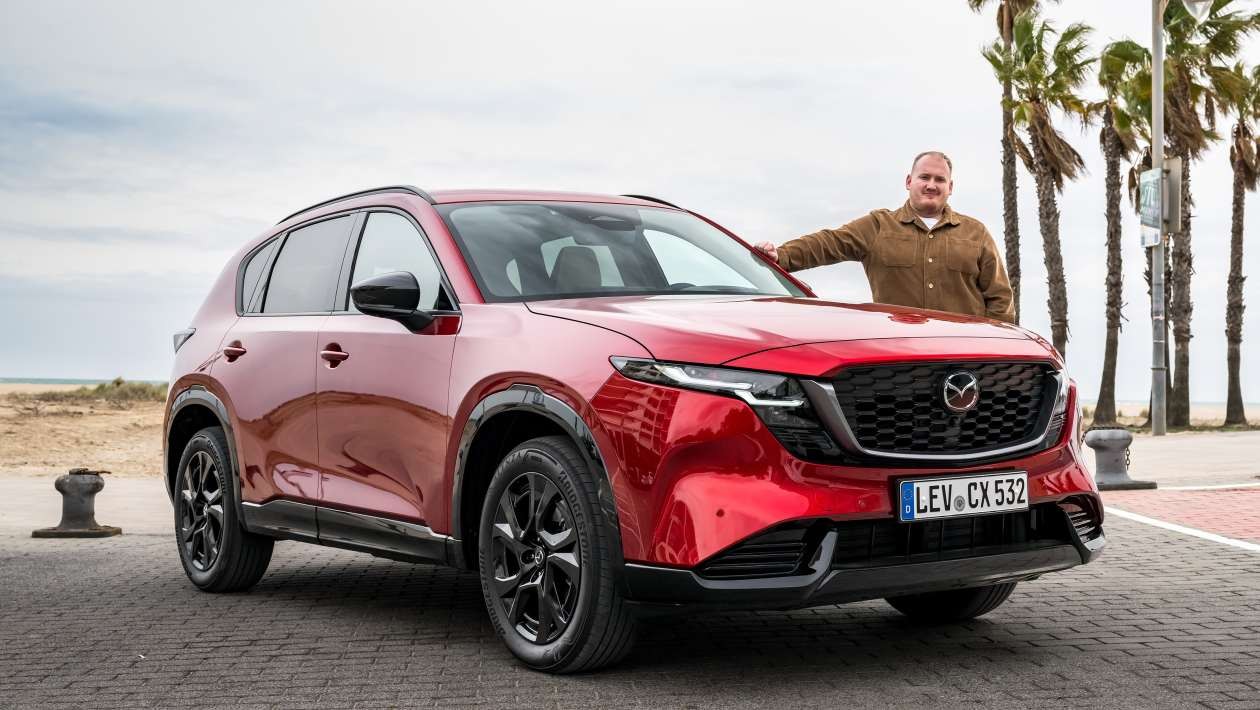
The latest Mazda CX-5 represents a surprising misstep for a brand known for its driving dynamics and quality. While the third-generation model offers increased space and a familiar design, it falls short in key areas, feeling like a downgrade from its predecessor. The interior quality is disappointing, the technology feels outdated, and the single powertrain option is underpowered and unrefined.
A Familiar Face, but Deeper Issues
For nearly a decade, the Mazda CX-5 has been a consistent seller, with over five million units sold globally since 2012. The new model retains the brand’s understated aesthetic, avoiding the flashy designs of competitors like the Kia Sportage or Nissan Qashqai. It’s a handsome SUV, but the evolution is too conservative – and hides deeper regressions.
The CX-5 has grown slightly in size, offering more rear passenger legroom and a significantly larger 583-liter boot. While the added space is welcome, the cabin’s narrowness and large floor hump limit true three-across comfort in the back. The boot itself is practical, with a low opening and easy-to-fold seats, but the overall package doesn’t feel special enough to stand out in a crowded market.
Stripped-Down Interior and Outdated Tech
Inside, the CX-5 takes a minimalist approach that feels cheap rather than refined. Physical controls have been almost entirely removed, leaving drivers reliant on a touchscreen-heavy interface. This feels like a cost-cutting measure, making it stand out for the wrong reasons. The 12.9-inch (or 15.6-inch in higher trims) touchscreen runs Mazda’s infotainment system, which includes Google Maps and Assistant, but it’s sluggish and the graphics look dated.
The lack of physical climate controls is particularly frustrating, as adjusting settings on the move is awkward. Material quality has also taken a hit: hard plastics dominate, with only a thin layer of leather on higher trims to disguise the cost-cutting.
Underwhelming Performance and Ride
The CX-5 is available with only one powertrain: a 2.5-liter naturally aspirated four-cylinder engine paired with a mild-hybrid system. With just 140 horsepower, it feels underpowered and noisy, taking nearly 11 seconds to reach 62 mph. The six-speed automatic transmission is slow to respond, making overtaking difficult.
The ride has been softened, but at the expense of handling. The CX-5 now leans more in corners and feels less engaging than previous models. Road noise is also noticeable at highway speeds, and the steering feels unnatural.
A Disappointing Package
The Mazda CX-5 2026 is a missed opportunity. While it offers more space, its subpar interior, outdated tech, and underwhelming powertrain make it hard to recommend in a competitive segment. Unless you’re a die-hard Mazda fan, rivals like the Kia Sportage, Nissan Qashqai, or Toyota RAV4 offer better value and a more satisfying driving experience.
This model feels like a step backward for Mazda, a brand that once prioritized driving pleasure and quality. The new CX-5 is not the compelling choice it once was.