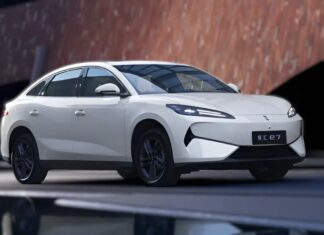
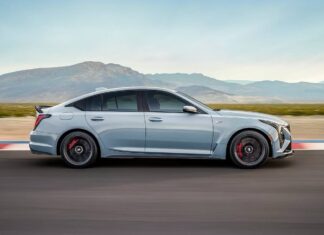
Many Australian drivers prioritize speed, but a surprising number of best-selling cars offer modest power figures. Instead of focusing on peak horsepower alone, this article ranks the 10 new cars currently on sale in Australia with the lowest power-to-weight ratios. This metric is far more relevant for real-world performance than raw engine output.
Why Power-to-Weight Matters
Power-to-weight ratio (kW/tonne) is a simple calculation: engine power divided by vehicle weight. A lower ratio means less power for the mass, resulting in slower acceleration and less responsive handling. This is especially important in a country with diverse terrain and traffic conditions where quick acceleration isn’t always about track times.
The List: From Electric Hatchbacks to Heavy SUVs
Here are the ten vehicles currently available in Australia with the lowest power-to-weight ratios, ranked from lowest to highest:
- BYD Dolphin Essential (46.5kW/tonne) : The base BYD Dolphin currently has the lowest power-to-weight ratio, producing just 70kW while weighing 1506kg. It’s affordable at $29,990 before on-roads, but acceleration is slow – a claimed 0-100km/h time of 12.3 seconds. Upgrading to the Premium trim boosts the ratio to 90.5kW/tonne.
- BYD Atto 1 Essential (50.2kW/tonne) : The base Atto 1 offers slightly better acceleration (11.1 seconds) than the Dolphin despite producing less peak power, thanks to its lighter 1294kg weight. It’s even cheaper at $23,990 before on-roads, though the range is limited to 220km (WLTP).
- Hyundai Inster 2WD (51.6kW/tonne) : The base Inster improves slightly over the Atto 1 but comes at a higher price of $39,000 before on-roads. It produces 71kW, has a tare mass of 1375kg, and claims a 327km WLTP range.
- Fiat 500 (55.4kW/tonne) : The petrol Fiat 500 stands out as the least powerful car on this list, producing only 51kW. Its 1.2-liter engine takes 12.9 seconds to reach 100km/h.
- Isuzu MU-X 2.2 LS-T (58.5kW/tonne) : The first large SUV on the list, the LS-T, costs $71,400 before on-roads. Its 2.2-liter engine produces 120kW but struggles under its weight. 3.0-liter variants offer better ratios (up to 68.0kW/tonne).
- Toyota LandCruiser Prado Kakadu (59.5kW/tonne) : The flagship Prado Kakadu, priced at $100,690 before on-roads, weighs 2.5 tonnes. Its 150kW engine delivers adequate power but a relatively low power-to-weight ratio.
- GWM Tank 300 Diesel (60.7kW/tonne) : The diesel Tank 300 produces 135kW of power, but the weight of the vehicle results in a low power-to-weight ratio. Variants with petrol, hybrid, or plug-in hybrid powertrains offer significantly better ratios.
- Mahindra Scorpio (61.4kW/tonne) : The Mahindra Scorpio diesel produces 129kW of power with a curb weight of 2100kg. It’s priced at $48,990 drive-away.
- Kia Picanto Auto (63.5kW/tonne) : Australia’s cheapest car, the Kia Picanto with an automatic gearbox, has a power-to-weight ratio of 63.5kW/tonne. The base model starts at $19,190 before on-road costs.
- Suzuki Jimny XL Auto (63.7kW/tonne) : The five-door Suzuki Jimny XL produces 75kW and 130Nm with a weight of 1,540kg, giving it the lowest power-to-weight ratio for the Jimny lineup.
The Takeaway
This list demonstrates that low power-to-weight ratios aren’t necessarily tied to expensive vehicles. Many affordable options – particularly electric hatchbacks and smaller SUVs – dominate the lower end of the spectrum. While these cars may not deliver exhilarating acceleration, they represent a pragmatic choice for drivers prioritizing fuel efficiency, affordability, or everyday usability over outright speed.