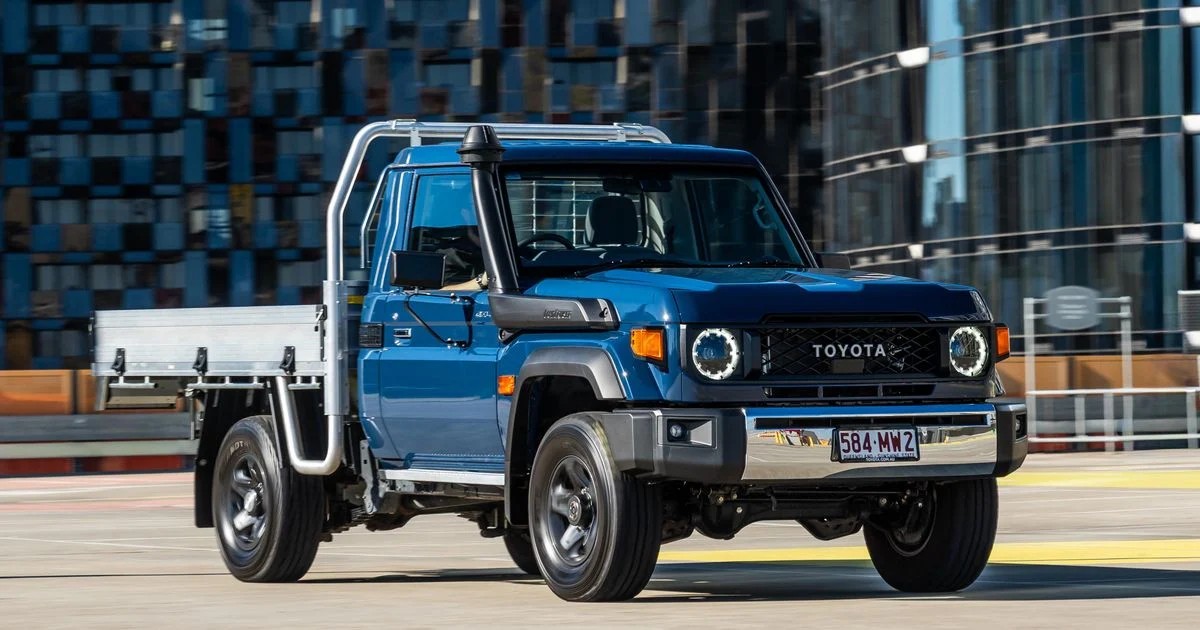
The Toyota LandCruiser 70 Series isn’t just a vehicle in Australia; it’s an institution. For generations, it’s been the go-to choice for those who live and work in the most remote corners of the country, where reliability isn’t a luxury—it’s a matter of survival. The 79 Series, the single-cab/chassis workhorse, remains the most popular variant, but faces increasing competition from modern alternatives.
The Last of a Dying Breed
The LandCruiser 70 Series has stubbornly resisted the march of time. While other manufacturers chase tech and comfort, Toyota has doubled down on what this truck does best: enduring punishment. The current model, launched in 1984, has seen over two dozen different engines under the hood, but the latest iteration comes with a controversial choice: the 2.8-liter turbo-diesel four-cylinder engine borrowed from the HiLux.
This engine swap raises an important question: Can the LandCruiser maintain its legendary status with a smaller, less iconic powerplant? It’s a move driven by stricter fuel efficiency and emissions standards, but one that tests the loyalty of die-hard fans. The 70 Series family includes the 78 Series Troop Carrier and the 76 Series five-door wagon, but the 79 is the one that defines the breed.
Inside the Time Capsule
Stepping into the 79 Series is like stepping back decades. The interior isn’t about luxury; it’s about function. Vinyl floors, hard plastics, and exposed metal remind you that this vehicle was built for work, not show. Toyota has made some concessions to modernity—cupholders, power windows, and a head unit with Apple CarPlay/Android Auto are now standard. But the overall vibe remains unapologetically utilitarian.
The cabin is narrow, with oddly shaped cubby spaces and a lack of wireless charging. The ignition requires an old-school metal key, and the seats are basic but comfortable enough for long days on the road. The air conditioning is strong, the HVAC controls are simple, and the instrument cluster is mostly analog, with retro gauges inspired by the original FJ40.
This isn’t a car that tries to impress; it simply gets the job done. And in a world of over-engineered vehicles, that simplicity is a refreshing change.
Performance and Capability
The 2.8-liter turbo-diesel produces 150kW of power and up to 500Nm of torque with the six-speed automatic transmission. While it lacks the raw grunt of the old V8, it’s still more than capable for most work applications. Toyota claims 9.6L/100km fuel consumption, but real-world testing shows closer to 12.1L/100km—a 26% increase that could hit fleet budgets hard.
The LandCruiser handles well enough, given its heavy-duty construction and ladder frame. The steering takes some getting used to, with a wide turning circle, but the ride is surprisingly good for a commercial ute. The suspension absorbs bumps effectively, making it usable even in urban environments.
Off-road, the 79 Series is virtually unstoppable. The low-range gearbox, differential locks, and ample ground clearance allow it to tackle even the most challenging terrain.
The Competition Heats Up
For years, the LandCruiser enjoyed unchallenged dominance. But Ford has recently entered the fray with the Ranger Super Duty, a tougher, V6-powered alternative that offers more modern features and a larger engine. The base Super Duty starts at $82,990, around $2,000 more than the range-topping LandCruiser GXL, but it comes loaded with tech that Toyota omits.
This competition forces Toyota to defend its territory. The LandCruiser isn’t cheap, but it doesn’t compete on price. It competes on reputation, durability, and the promise of decades-long reliability.
Safety and Features
The LandCruiser 70 Series has a “silver” safety rating from ANCAP, with basic features like autonomous emergency braking, lane departure alert, and traffic sign recognition. The 76 Series Wagon adds a reversing camera, but only automatic versions get hill descent control.
Equipment highlights include LED headlights, black mesh grille, and a 6.7-inch touchscreen with wired Apple CarPlay/Android Auto. The GXL variants add front and rear differential locks, chrome bumpers, and aluminum side steps.
The Verdict
The Toyota LandCruiser 79 Series remains a legend for a reason. It’s a vehicle that prioritizes toughness, reliability, and capability above all else. While modern competitors offer more features and comfort, the LandCruiser’s unique blend of simplicity and durability continues to appeal to those who demand the best in extreme conditions. Whether it can maintain its dominance in the face of growing competition remains to be seen, but for now, the 79 Series still reigns supreme.