
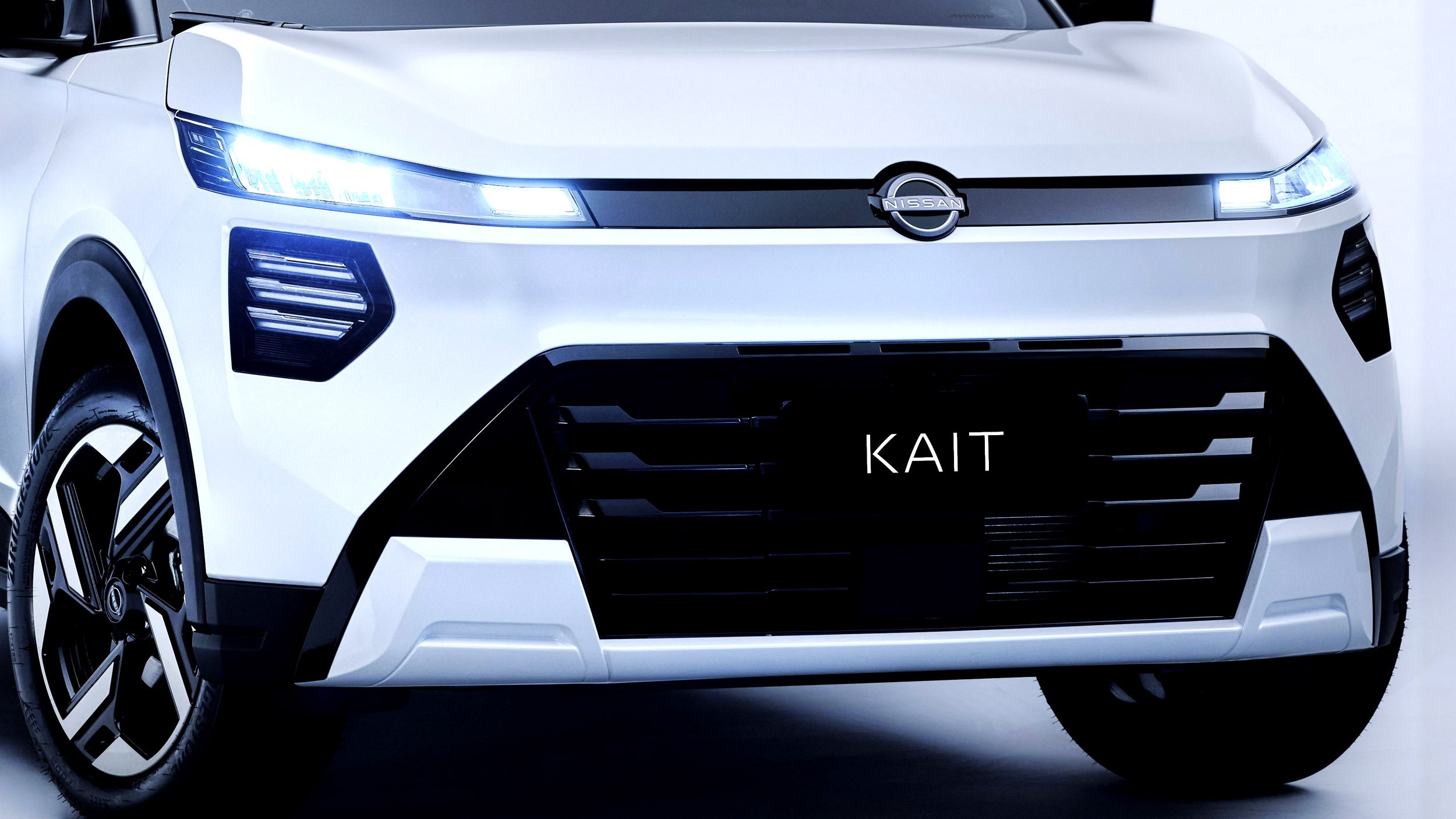
Nissan is strategically extending the life of its previous-generation Kicks SUV by rebranding it as the “Kait” for sale in Latin America. This move allows the automaker to continue offering an affordable, familiar option in the region while focusing on newer models elsewhere.
Reusing a Proven Design
The Kait is essentially a facelifted version of the first-generation Kicks, which debuted in 2016 and received updates through 2021. Rather than discontinuing the older model, Nissan is leveraging its existing design and engineering – specifically the “V Platform” – which has been used reliably across multiple vehicles since 2010. The decision reflects a common industry practice: maximizing returns on existing investments before phasing out older products.
A Fresh Look for a Familiar Face
Visually, the Kait features updated styling with split LED headlights, a revised front bumper, and redesigned taillights, giving it a more contemporary appearance without fundamentally altering the underlying structure. The vehicle maintains the same dimensions as the Kicks Play (4.30 meters long, 1.76 meters wide, with a 2.62-meter wheelbase), ensuring it fits within the subcompact SUV segment.
Inside the Kait
Nissan promises a well-equipped interior with ample space and 432 liters of cargo capacity. While specific details haven’t been released, the powertrain is expected to be a straightforward 1.6-liter naturally aspirated engine paired with a CVT transmission, prioritizing reliability and cost-effectiveness over performance.
Competition in South America
The Kait enters a competitive market in South America, going up against established rivals such as the VW Tera, Fiat Pulse, Renault Kardian, Hyundai Creta, and Chevrolet Tracker. Nissan aims to position the Kait as a value-driven option, capitalizing on its existing manufacturing presence in the region.
Manufacturing Strategy
Production of the Kait has begun at Nissan’s Resende Industrial Complex in Brazil, which recently received a US$525 million investment to modernize operations. This strengthens Nissan’s manufacturing footprint in South America and ensures a steady supply of the Kait for over 20 regional markets.
“The Nissan Kait project leverages our global SUV expertise to meet the needs of Latin American consumers,” said Rodríguez, emphasizing the vehicle’s robustness and quality based on Nissan’s established platform.
The Kait’s launch is a calculated move by Nissan to address regional demand efficiently, proving that sometimes, bringing back what works is just as smart as inventing something new.