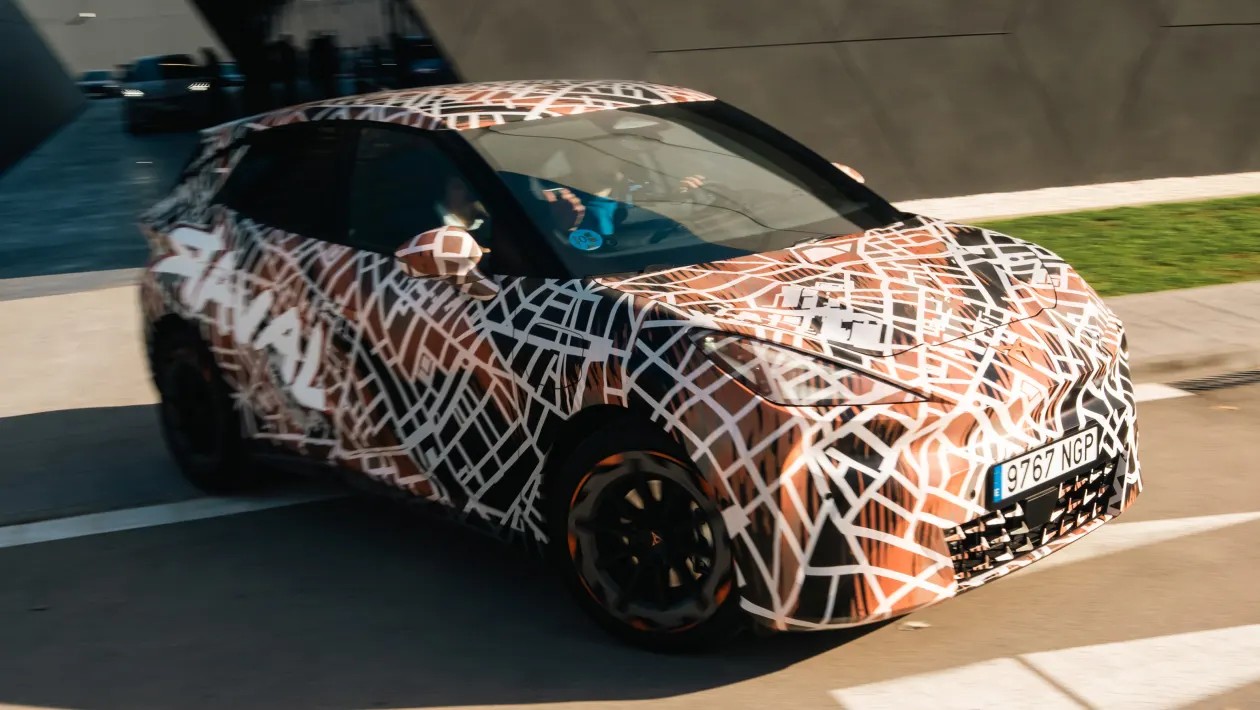
Cupra’s upcoming Raval electric vehicle signals a crucial shift for the Spanish brand, and potentially for the broader Volkswagen Group. Initial drives of a pre-production model suggest the Raval is a notable improvement over Cupra’s previous EV offerings. With a targeted price, range, and feature set, this could finally be the compelling electric supermini buyers have been waiting for. The question remains whether its “hot” VZ variant will truly deliver the dynamic performance expected of a modern hatchback.
A Renaissance Built on MEB+
The Raval isn’t just another EV; it’s a product of Volkswagen Group’s multi-billion euro restructuring plan. Development has been centralized in Cupra’s Barcelona R&D center, with the car built on the new MEB+ platform. This all-electric architecture will also underpin the VW ID. Polo, Skoda Epiq, and a production version of the ID. Cross concept. The conglomerate is under pressure to innovate, and Cupra is leading the charge.
Why this matters: VW’s restructuring is a response to the growing EV market, where brands must compete on price, range, and technology. Cupra’s position as a leader in this transition is vital for VW’s success.
Engineering Choices: Front-Wheel Drive and Compact Design
Unlike the rear-drive MEB platform used in the ID.3 and Cupra Born, the Raval will be front-wheel drive. This configuration allows for a more compact design, especially under the hood, and enables a simpler four-link rear suspension. The battery pack is also smaller, with an expected range of 250-280 miles. The high-performance VZ model will boast 222bhp, a limited-slip differential, and a kerb weight around 1.5 tonnes.
Key details: Front-wheel drive is a practical choice for the B-segment, focusing on affordability and efficiency. The limited-slip differential and high-performance tires suggest Cupra intends for the VZ to deliver a more engaging driving experience.
On the Road: Early Impressions
Early driving impressions of the prototype VZ model reveal a surprisingly lively front-wheel drive experience. The steering is light yet accurate, the throttle response is crisp, and the ride quality is improved over previous MEB models. On winding roads, the car demonstrates composure, with the limited-slip differential providing excellent cornering control. The brakes are a particular highlight, offering a refined blend of regenerative and friction braking.
What stands out: The Raval’s driving dynamics are a clear departure from the somewhat detached feel of earlier VW Group EVs. The car exhibits a sense of togetherness in its controls and a willingness to engage the driver.
Interior and Future Outlook
The prototype’s interior borrows components from current VW Group models, including the steering wheel, driver’s display, and infotainment screen. While familiar, this isn’t necessarily a positive sign. However, the overall driving experience suggests Cupra has focused its development efforts on the chassis and powertrain.
Looking ahead: The Raval is on track for release in Q3 2026, with an estimated price range of £30,000-35,000. If Cupra delivers on its promises, this could be a game-changer for the electric supermini segment.
The Cupra Raval doesn’t reinvent the wheel, but it establishes a firm foundation for a well-executed electric supermini, which is precisely what Cupra and the VW Group need to regain momentum.
The Raval is not yet a full hot hatchback contender, but it sets a strong course for a compelling, affordable EV.