Ford has publicly acknowledged that its electric vehicle (EV) division, Ford Model e, will continue to lose billions of dollars annually for at least the next three years. This admission follows a staggering $4.48 billion loss in 2025 and an expected $4 to $4.5 billion loss in 2026. The company does not anticipate reaching profitability in its EV business until “around 2029,” according to CFO Sherry House.
The Scale of the Losses
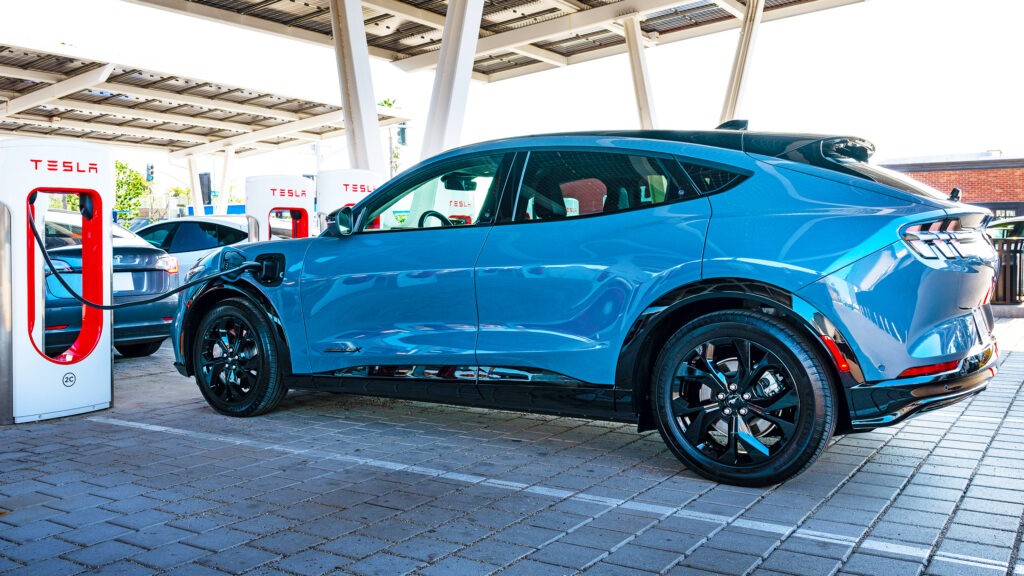
Over the past four years, since establishing the Model e division, Ford has accumulated over $16 billion in losses. Despite ambitious initial plans, the division’s current lineup consists primarily of the Mustang Mach-E and E-Transit, after the early discontinuation of the F-150 Lightning. This high burn rate raises questions about the viability of Ford’s EV strategy in the short to medium term.
Combustion Engines Keep Ford Afloat
The continued losses in the EV sector are currently offset by strong performance from Ford’s traditional combustion engine vehicles and commercial sales. These segments generated $6.8 billion in adjusted earnings before interest and taxes in 2025, and the company forecasts this figure to rise to $8–$10 billion in 2026. This means that Ford’s EV ambitions are currently subsidized by its legacy business.
Strategic Retreat
The financial strain has already led to significant shifts in Ford’s EV plans. Production of the F-150 Lightning was halted indefinitely last year, indicating a clear retrenchment from aggressive EV expansion. This decision suggests that demand for high-priced electric trucks may not be meeting expectations, forcing Ford to prioritize profitability over rapid electrification.
Implications for the Future
Ford’s prolonged losses in EVs demonstrate the significant financial challenges facing automakers transitioning to electric platforms. The company’s reliance on combustion engine profits to fund its EV division underscores the long-term commitment and investment required for a successful transition. This situation highlights the broader industry trend where EV profitability remains elusive, despite increasing sales and government incentives.
The continued losses through 2029 imply Ford will need sustained financial support from its core business to realize its EV ambitions, raising questions about whether the company can achieve sustainable profitability in the electric market.