China’s highest court has issued its first criminal ruling on road safety, underscoring that drivers remain fully accountable even when using assisted driving technologies. The case, involving a driver who intentionally disabled safety features while intoxicated, sets a precedent for holding individuals responsible for misusing modern vehicle systems. This ruling emphasizes that technology cannot absolve a driver of legal and moral obligations.
The Incident: A Dangerous Test of Autonomy
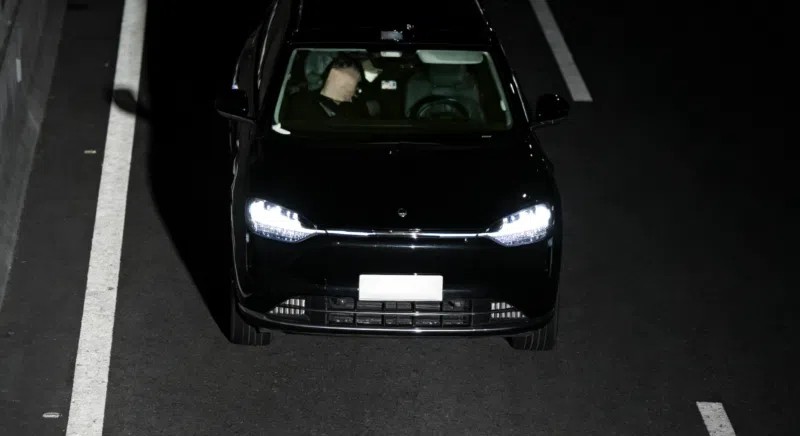
In September 2025, Wang Mouqun, from Hangzhou, Zhejiang Province, was found driving under the influence after using an aftermarket device to trick his vehicle’s Level 2 autonomous system. He deactivated safety prompts by simulating hand-on-wheel input, allowing him to recline in the passenger seat and fall asleep while the car drove itself toward a preset destination. Passersby alerted police after the vehicle stopped unexpectedly on a public road. Subsequent blood tests confirmed a dangerously high blood alcohol content of 114.5 mg/100 ml.
This case is noteworthy because it wasn’t simply drunk driving. Wang deliberately circumvented the vehicle’s safety mechanisms, exploiting a loophole in the system to avoid detection. The Aito M9 SUV he drove, equipped with Huawei’s assisted driving technology, is designed to disengage if the driver doesn’t respond to prompts after two minutes. Wang’s illegal device bypassed this safeguard, essentially turning the vehicle into a dangerous, autonomous projectile.
Legal Ramifications and Prior Violations
Wang had previously lost his driver’s license for six months in July 2024 due to alcohol-related driving violations. Despite this, he repeated the offense and compounded it by manipulating the car’s systems. The Linping District People’s Court sentenced him to one month and 15 days of detention, plus a 4,000 yuan (approximately $576 USD) fine.
The court’s decision aligns with Article 133‑1 of China’s Criminal Law, which defines drunk driving as dangerous behavior. The case also reflects stricter enforcement guidelines issued by top legal and public security bodies in 2023, which mandate harsher penalties for repeat offenders.
The Bigger Picture: Automated Driving and Responsibility
This ruling is crucial because it directly addresses the legal grey areas surrounding automated driving. National standards (GB/T40429‑2021) categorize Level 0–2 systems as driver-assistance, not full automation. This means drivers, not the technology, are legally responsible for safe operation. The case highlights that bypassing safety features does not transfer liability.
The Supreme People’s Court has made it clear: regardless of how advanced the technology, a driver cannot abdicate their duty to operate a vehicle safely.
The incident raises critical questions about the future of autonomous driving: how to prevent similar abuses, and whether current legal frameworks adequately address the risks of system manipulation.
The court’s judgment serves as a clear warning: while assisted driving systems offer convenience, they are not a substitute for responsible human control. The ruling underscores the enduring principle that drivers, not machines, bear the ultimate responsibility for road safety.