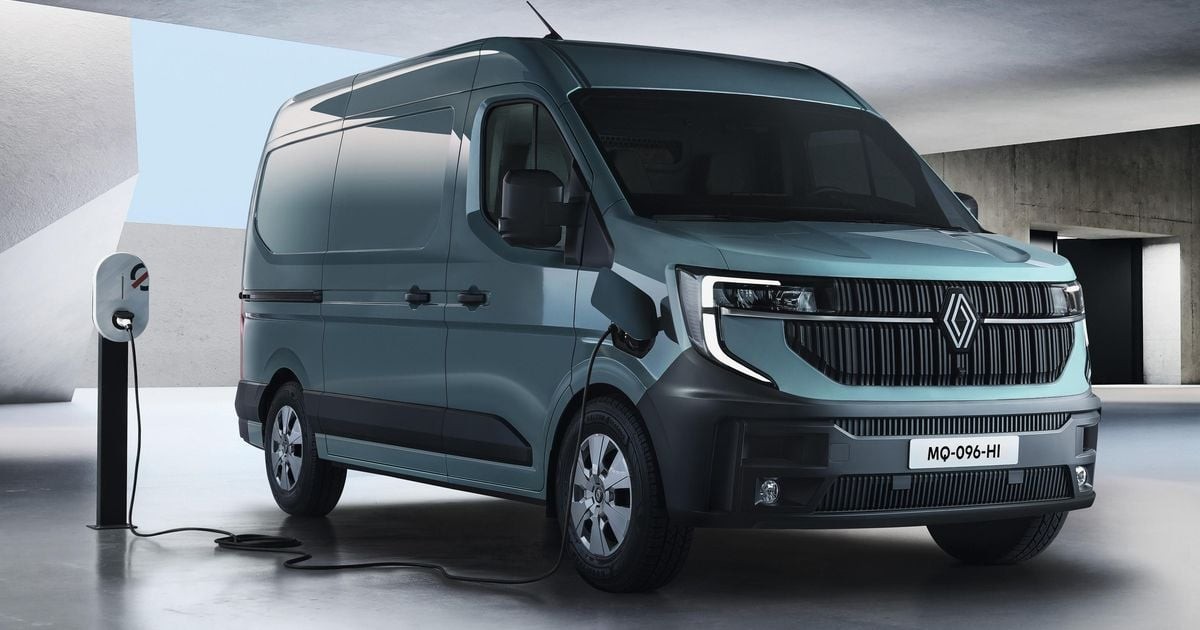
Renault has confirmed that the fourth-generation Renault Master will arrive in Australian showrooms by June 2026. This new iteration marks a significant shift for the French manufacturer, as it will introduce an all-electric variant to the local market for the first time.
The rollout is part of a broader “model revitalisation” strategy for Renault Australia, which has pledged to launch six new models over an 18-month period.
Powering the Future: Diesel and Electric Choices
The new Master will cater to two distinct segments of the commercial vehicle market: traditional diesel users and those transitioning to electric fleets.
The Electric Master E-Tech
The flagship electric model, the Master E-Tech, is designed to compete with established players like the Ford E-Transit and Mercedes-Benz eSprinter. Key specifications include:
– Battery Capacity: 87kWh
– Performance: 105kW power and 300Nm of torque
– Range: Up to 410km (WLTP cycle)
– Charging: Supports up to 130kW DC fast-charging
While the electric version offers a cleaner footprint, it does come with trade-offs in utility. The E-Tech features a payload capacity of up to 1,164kg and a Gross Vehicle Mass (GVM) of 3,500kg, which is lower than its diesel counterpart.
The Diesel Workhorse
For long-distance or heavy-duty requirements, the combustion engine remains a core offering. The diesel Master will feature an updated 2.0-litre turbo-diesel four-cylinder engine, delivering 125kW of power and 380Nm of torque, paired with a nine-speed automatic transmission.
In terms of utility, the diesel variants offer superior heavy-lifting capabilities:
– Payload: Up to 1,973kg
– GVM: Up to 4,000kg
Designed for Productivity and Safety
Renault has focused on making the Master a more functional “mobile office” rather than just a transport tool. The new generation features a more aerodynamic exterior and a modernized cabin designed for driver comfort.
Key interior and utility features include:
– Advanced Infotainment: A 10.0-inch touchscreen featuring the OpenR Link system, including wireless Apple CarPlay and Android Auto. Higher-end models will integrate Google apps (Maps, Play Store) directly into the OS.
– Workstation Integration: An optional fold-down workstation located in the center of the three-seat bench, suitable for both administrative tasks and meals.
– Smart Cargo Access: The side door is sized to accommodate forklift pallets, and a flat bulkhead behind the seats maximizes usable load space.
– Safety Credentials: The model has earned a Platinum rating from Euro NCAP, highlighting its advanced driver-assist technologies.
Market Context: Why This Matters
The introduction of the electric Master is a strategic move to address the growing demand for “last-mile” delivery vehicles in urban environments. As Australian businesses face increasing pressure to reduce carbon footprints, the availability of a high-range electric van with fast-charging capabilities positions Renault to capture a slice of the burgeoning EV commercial market.
However, the lower payload and GVM of the electric model compared to the diesel version highlight the ongoing engineering challenge in the industry: balancing heavy battery weight with the practical hauling needs of commercial operators.
“The new-generation Renault Master is a key part of Renault Australia’s model revitalisation,” says Glen Sealey, General Manager of Renault Australia.
Summary: The 2026 Renault Master represents a dual-track approach to the Australian commercial market, offering a high-payload diesel option for heavy industry and a sophisticated electric variant for the evolving green logistics sector.