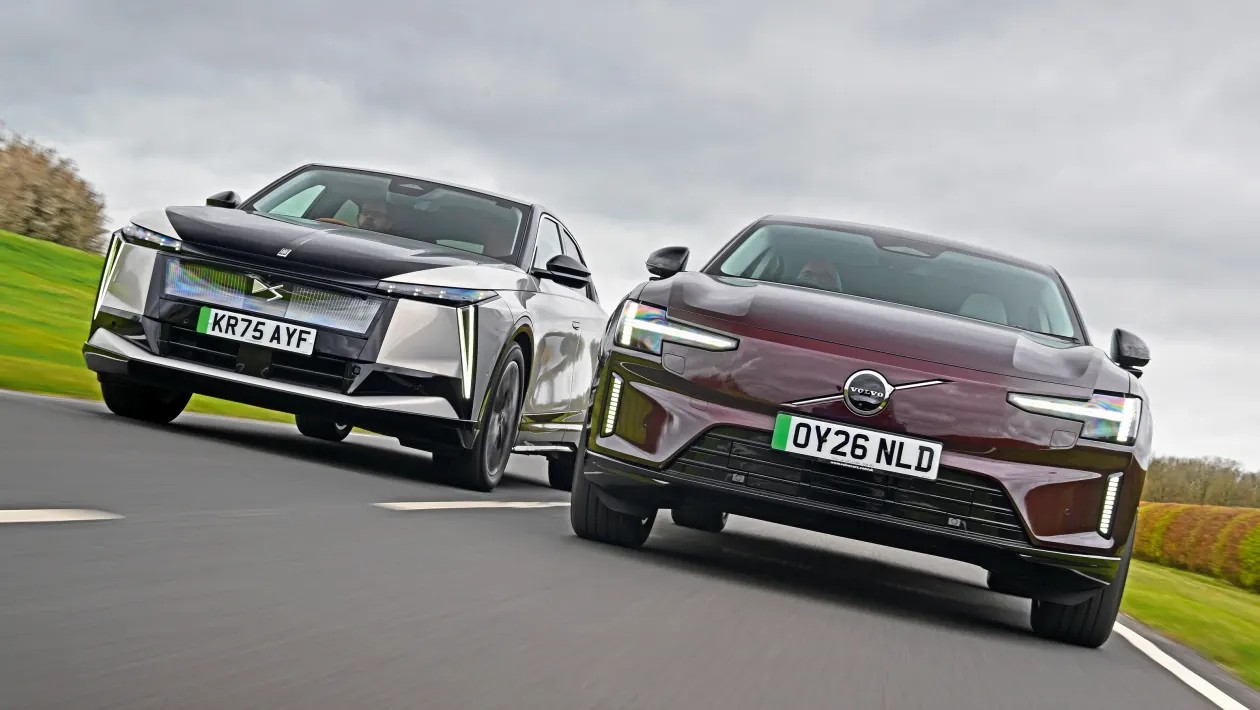
The traditional executive car market has long been dominated by German marques. However, a new era of electrification is shifting the landscape, allowing Swedish and French manufacturers to challenge the status quo. We recently put two flagship electric contenders—the Volvo ES90 and the DS No8 —head-to-head to see if they can disrupt the luxury hierarchy.
The Contenders
The Volvo ES90 marks a significant pivot for the Swedish brand, replacing the combustion-powered S90. Built on the same sophisticated platform as the EX90 SUV, it offers a more practical hatchback silhouette and a tech-forward interior designed for the modern professional.
The DS No8, meanwhile, represents the pinnacle of French luxury for DS Automobiles. Described as an “SUV coupé,” it aims to stand out through bold, avant-garde design. While it enters the market at a more accessible price point than the Volvo, it faces the challenge of proving that “quirky” design can translate into mainstream luxury appeal.
Performance and Driving Dynamics
Both vehicles are heavy, large-scale machines designed with a primary focus on passenger comfort rather than spirited driving.
- Volvo ES90: Delivers a “limousine-like” experience. The ride is exceptionally smooth at high speeds, though the long wheelbase can occasionally transmit larger bumps into the cabin.
- DS No8: Offers more punch on paper with a 0-62mph time of 5.4 seconds (compared to the Volvo’s 6.6). However, the powertrain lacks a certain responsiveness, and the ride feels slightly more unsettled than its Swedish rival.
Technology and Interior Experience
The two cars take vastly different approaches to the digital cockpit:
The Volvo: Seamless Integration
The ES90 utilizes a Google-derived operating system that is intuitive and slick. While some controls—like mirror adjustments—have been moved to the touchscreen (a move that can feel cumbersome during initial setup), the system is highly efficient once mastered. Volvo has also embraced “dual-function” controls, such as a single controller that manages both seat movement and lumbar support.
The DS: Art Deco Opulence
The No8 leans heavily into its Parisian roots, offering a cabin filled with unique design touches and high-end audio. The optional Electra 3D Focal sound system is a standout, providing an immersive 14-speaker surround-sound experience. However, the build quality lacks the consistent perfection expected at this price point; minor inconsistencies in exterior badging and slightly “fiddly” door releases detract from the premium feel.
Efficiency and Practicality
In the electric era, range and space are the ultimate metrics of success.
| Feature | Volvo ES90 (Tested) | DS No8 (Tested) |
|---|---|---|
| Efficiency | 3.3 miles/kWh | 2.9 miles/kWh |
| Real-world Range | ~290 miles | ~282 miles |
| Official Range | 411 miles | 412 miles |
Note on Range: Both cars fell significantly short of their official WLTP estimates during testing. For long-distance travelers, this discrepancy is a vital consideration.
Passenger Space: Neither car is a class leader in rear-seat comfort. Due to the sloping rooflines of the coupé/hatchback designs and the high floors necessitated by battery placement, headroom is adequate but legroom and under-thigh support are somewhat lacking in both models.
Verdict: Which Should You Buy?
🏆 Winner: Volvo ES90
The Volvo wins on the basis of substance and refinement. While the entry price is higher, you are paying for superior efficiency, a more composed ride, and a more cohesive luxury experience. It feels like a complete, high-end product from the moment you step inside.
🥈 Runner Up: DS No8
The DS No8 is the choice for the individualist. If you find German luxury too clinical, the DS offers a breath of fresh air with its Art Deco styling and striking silhouette. It is a beautiful, quiet machine, even if it lacks the meticulous finish and efficiency of the Volvo.
Summary: The Volvo ES90 is the more polished, efficient, and logically engineered executive tool, whereas the DS No8 serves as a stylish, characterful alternative for those prioritizing design over technical perfection.