Volkswagen Group has opened its first fully integrated research and development (R&D) center outside of Germany in Hefei, China, marking a strategic shift towards faster, localized innovation. The new facility, operated by Volkswagen (China) Technology Co., Ltd. (VCTC), represents the company’s largest R&D investment outside its home country and signals a commitment to the rapidly evolving Chinese automotive market.
The First Full-Process R&D Outside Germany
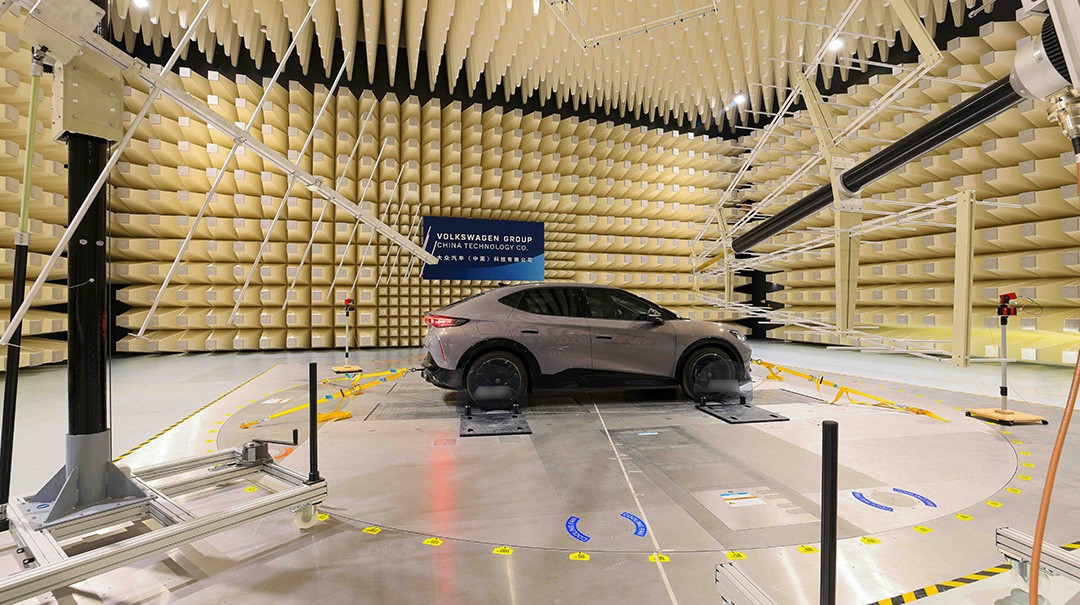
The 100,000-square-meter complex houses over 100 advanced laboratories, covering software and hardware integration, battery testing, and full vehicle validation. This is the first time Volkswagen has established end-to-end R&D, compliance, and mass production capabilities outside Germany, allowing simultaneous development and testing from the earliest stages. This move is significant because it bypasses traditional delays associated with relying solely on German-based R&D for the Chinese market.
Speeding Up Development for Chinese Consumers
Volkswagen executives emphasize that the new center will reduce vehicle development time by an estimated 30%. This speed is critical in China, the world’s most competitive automotive market, where consumer demands for innovation are high. The facility will focus on developing technologies specifically tailored for Chinese consumers, including the Group’s first Central Computing and Regional Control Electronic/Electrical Architecture (CEA) designed for the local market.
Cost Reduction and Export Potential
The Hefei R&D hub isn’t just about speed; it’s also about efficiency. Localized development and supplier collaboration could lower vehicle costs by up to 50% for certain projects. Importantly, the innovations developed in China won’t stay there: Volkswagen plans to leverage the R&D center to support exports to other regions, including Southeast Asia and the Middle East.
The “In China, for China” Strategy
VCTC, operational since January 2024, is a core part of Volkswagen’s “In China, for China” strategy. The facility is dedicated to electrification and intelligent connected vehicles, integrating R&D modules and decision-making processes directly within the local ecosystem. A Functional Integration Test (FIT) laboratory, one of only two globally capable of simulating extreme environments, is scheduled to open mid-2026, further enhancing the center’s testing capabilities.
The establishment of this comprehensive R&D base in China demonstrates Volkswagen’s intent to compete effectively in the world’s largest automotive market. The company is betting on localized innovation, faster development cycles, and cost efficiencies to gain an edge in a fiercely competitive landscape.