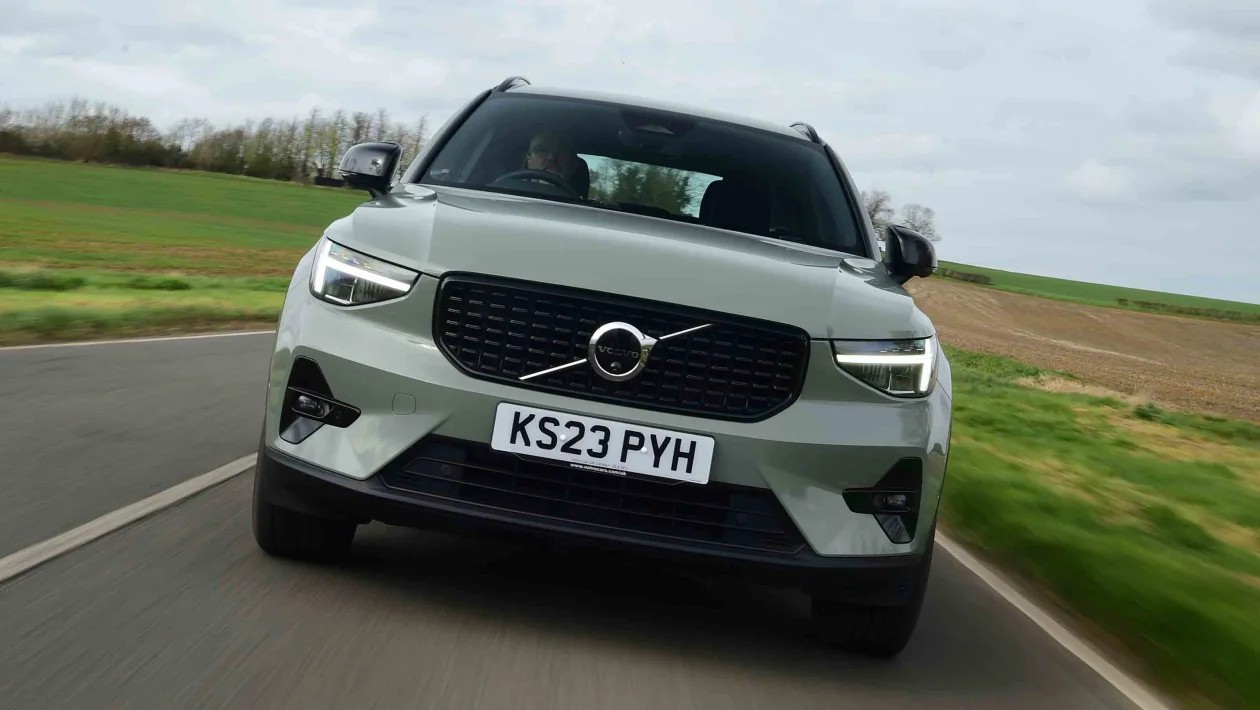
Volvo will continue manufacturing hybrid SUVs—including the XC40, XC60, and XC90—as long as customers demand them, according to recently reinstated CEO Håkan Samuelsson. This strategy acknowledges that the transition to fully electric vehicles (EVs) won’t be immediate for all buyers. The company plans to upgrade these existing models with technology and designs mirroring its newer EV lineup.
Hybrid Systems to Evolve
The upgrades will include a “Gen 2” plug-in hybrid system, leveraging learnings from current models and developments by Volvo’s parent company, Geely. Battery sizes are expected to increase, reducing reliance on the internal combustion engine (ICE). While not classified as “range-extenders,” these systems will move in that direction, potentially offering 100–150 miles of electric range, as seen in the China-only XC70.
Engine Efficiency Improvements
The push for greater electric drive may also lead to changes in the ICE component. Volvo might switch from the current turbocharged 2.0-liter four-cylinder to a more efficient engine, possibly using a Millar-cycle combustion system or smaller turbos. Since the engine will primarily charge the battery rather than directly power the wheels, it can operate in narrower, more efficient zones.
Model-Specific Updates
- XC60 and XC90: These top-selling SUVs will receive substantial revamps, potentially migrating to platforms shared with Geely, though their current SPA architecture remains an option.
- XC40: The smaller XC40, already on a co-developed SEA platform, will likely continue using a shared platform for its next generation. Hybrid upgrades may be less significant due to packaging constraints.
Engineering Focus Remains in Sweden
Despite collaboration with Geely, Volvo emphasizes that all non-Chinese-market models will continue to be developed in Sweden, ensuring they remain “true Volvos” in engineering and design.
Timeline: The XC40 is expected to be the first to receive updates, potentially within the next year. Revamps for the XC60 and XC90 are likely two to three years away, given their recent minor updates.
Volvo’s continued investment in hybrid technology reflects a pragmatic approach to electrification, acknowledging that many consumers are not yet ready to fully commit to EVs. The company is positioning itself to meet current demand while simultaneously preparing for a future dominated by electric vehicles.