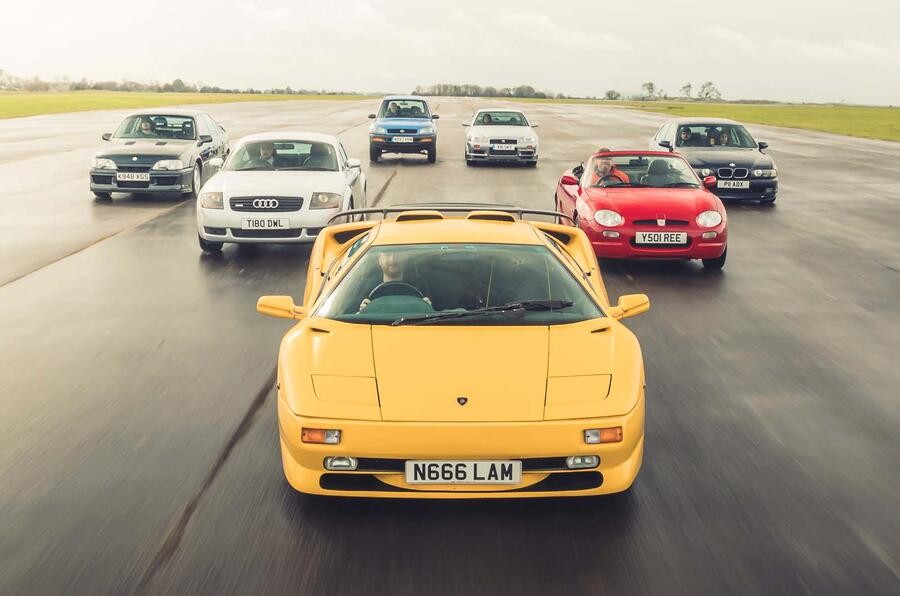
The automotive world is currently witnessing a profound shift in nostalgia. While the 1980s and 2000s have their devotees, the 1990s have emerged as a distinct phenomenon, commanding a level of reverence that transcends mere age. As these vehicles enter the 25-to-35-year vintage bracket, they are not just becoming “old cars”—they are becoming cultural touchstones.
More Than Just Nostalgia
At first glance, the trend seems easy to explain through demographics: the teenagers of the mid-90s are now approaching their 50s, possessing the disposable income to finally acquire the machines they once dreamed of. However, the current enthusiasm for 90s motoring extends far beyond a single generation.
The surge in interest points to a deeper appreciation for a specific type of automotive purity. To understand why these cars feel different, one must look at the world in which they were conceived.
The Perfect Storm of Design and Technology
The 1990s represented a unique “sweet spot” in industrial history. Several factors converged to allow car manufacturers to prioritize soul and character over the strict constraints of the modern era:
- Regulatory Freedom: While safety and emissions regulations existed, they did not yet dictate the heavy, homogenized shapes seen in modern fleets. Designers had more room to experiment with silhouette and emotion.
- Mechanical Simplicity: This was a pre-smartphone, pre-climate-crisis era. The industry was not yet pivoting toward massive investments in electrification or navigating the fallout of “Dieselgate.”
- Economic Efficiency: The rise of “platform theory”—using shared underpinnings for different models—allowed manufacturers to save money on engineering, which in turn freed up resources to focus on creating cars that people could actually love.
- A Simpler Digital Landscape: Computers were tools for the office, not the cockpit. This meant driving remained a tactile, analog experience, largely free from the constant digital interruptions and driver-assistance systems that define modern motoring.
Testing the Legend
To determine if this modern obsession is justified or merely a case of misplaced sentiment, a diverse collection of ten iconic 1990s vehicles was gathered in Gloucestershire. The goal was to re-examine these machines—ranging from high-performance supercars to cult classics—to see if their legendary status holds up under modern scrutiny.
From the sculptural lines of the Audi TT to the raw performance of the era’s most celebrated drivers, the mission was to rediscover the rationale behind their fame.
The 1990s provided a unique window where mechanical character and design freedom met, creating a standard of “soul” that modern, highly regulated vehicles struggle to replicate.
The enduring appeal of 1990s cars lies in their status as the last era of uninhibited mechanical expression, offering a tactile driving experience that feels increasingly rare in a digital age.