No screens. No push-button steering wheels. Just a manual gearbox and an engine that screams.
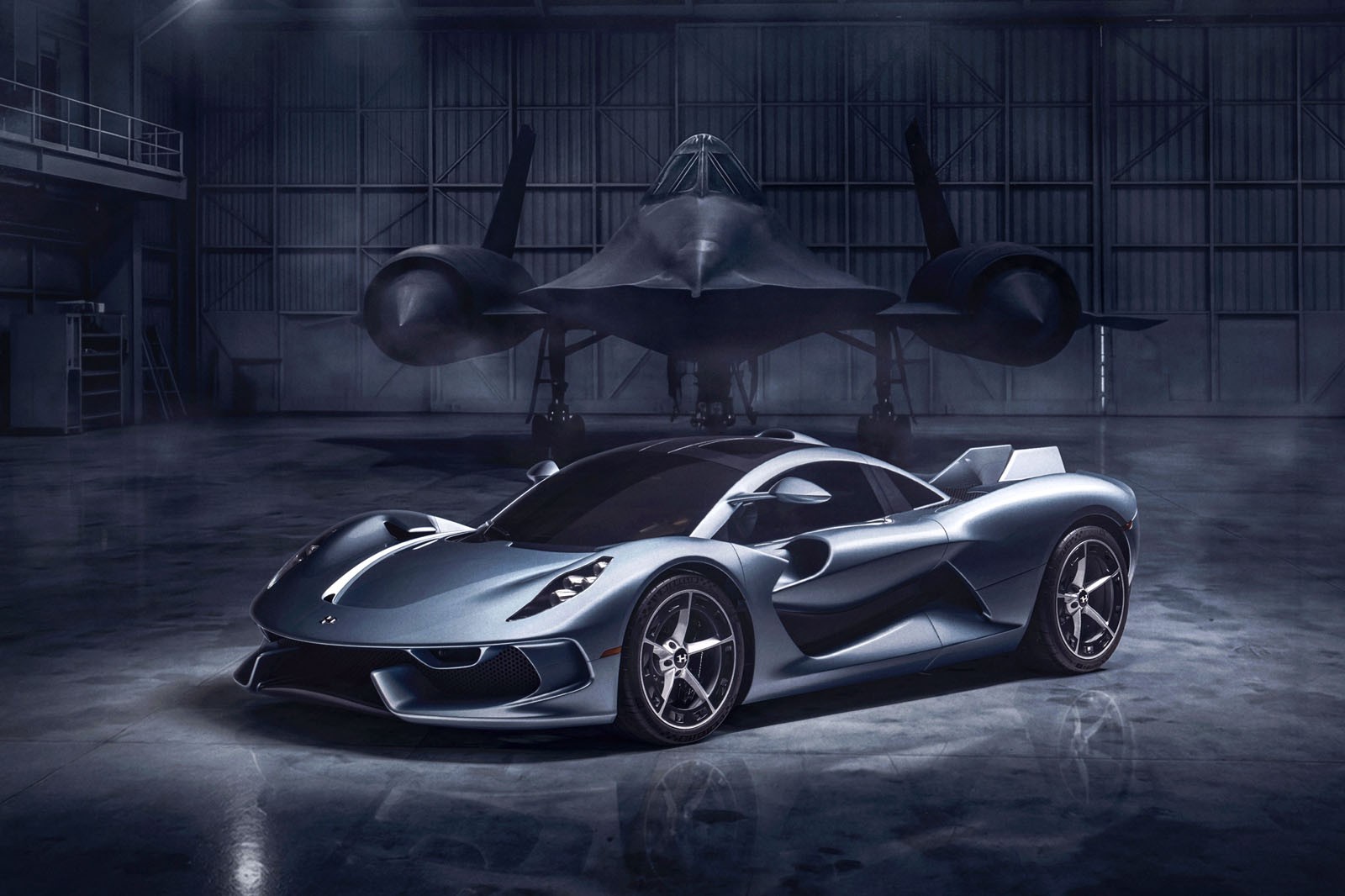
Hennessey Performance Engineering has just unveiled its latest weapon: the Blackbird. It’s the third all-new model in their lineup, and it’s aggressively ditching the tech-heavy trend dominating the hypercar segment. They are replacing the Venom F5 lineage with something far more visceral. The mandate? Maximum man-machine connection.
The stats still put this thing firmly at the top of the food chain, though. We are talking about 800 to 850 brake horsepower generated by a bespoke, high-revving, naturally aspirated 8.0-liter V8. It was co-developed with Ilmor Engineering—the guys behind some serious NASCAR powerplants. The engine redlines at a dizzying 9000 RPM. Power goes solely to the rear axle via a six-speed manual transmission with an open-gate shifter and exposed linkages. You can feel every shift. Every gear change. Every mechanical interaction.
Is it fast? Yes.
0-60 mph happens in less than three seconds. Top speed sits around 220 mph. But the numbers don’t tell the whole story. The real story is the weight. By using a bespoke carbon fiber tub and full carbon bodywork, Hennessey claims a dry weight of just under 3,000 pounds (1,360 kg). That’s light. That’s nimble.
The design isn’t just about aerodynamics; it’s about history. The Blackbird takes its name—and its visual soul—from the Lockheed SR-71 spy plane. Hennessey actually secured the rights to the name, which adds a layer of legitimacy to the aviation homage. The active rear stabilizers tilt up to 71 degrees at speeds above 71 mph to maintain downforce, mimicking the tail fins of the original spy plane. The sidepods feature creases that echo the SR-71’s skin.
But here’s the kicker. This isn’t just a track toy.
It’s designed as a grand tourer for the supercar age. Development prioritized refinement and visibility. Hennessey promises a range long enough to comfortably cover 800 miles in a single day. Compare that to other hypercars that leave you sweating through leather seats and running on fumes. The Blackbird offers more cabin space than its predecessor, the Venom F5. There’s enough luggage capacity for two full-size carry-on bags.
Inside, it’s a time capsule of mechanical purity.
Exposed carbon fiber everywhere. Visible pedal linkages. A suite of clear, analog dials and clocks. No digital driver display. No touchscreen infotainment center cluttering the dash. Instead, there’s a simple smartphone mount. You use your phone if you need navigation, but you aren’t trapped by a fixed screen. The steering wheel itself? Clean. No buttons. No switches. Just wheel, pedals, and gears.
Electronic aids exist, of course. You get active suspension, anti-lock brakes, and traction control. But Hennessey insists the driver remains in the thick of the action. These systems support you; they don’t replace your skill.
The quad exhaust layout is another nod to aviation history. Specifically, the Bell X-1. The first aircraft to break the sound barrier. A direct tribute to that 1947 milestone.
Why does this matter now?
We’re living in an era of electric torque and computer-optimized handling. Cars drive themselves. Or at least, they try to. The Hennessey Blackbird serves as a stark counter-narrative. It’s an analogue alternative to similarly priced machines like the McLaren W1, but it goes further. It rejects the digital crutch entirely.
It’s a reminder that speed can still be raw. Unfiltered. Mechanical.
Will it win over the tech-savvy generation raised on touchscreens? Probably not. But for those who remember what it felt like to grip a thick leather wheel and hunt for a gear, the Blackbird is a love letter. And perhaps, just perhaps, it’s the supercar we needed to prove that soul hasn’t been engineered out of the machine entirely.
Or maybe it just proves we’re all forgetting what real driving feels like.