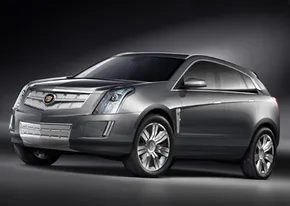
The era of the bloated, horsepower-obsessed concept car is dead. For years, automakers used these one-offs to flex their engineering muscles, pushing limits that had nothing to do with real-world driving. They were about raw speed and luxury for its own sake. Then fuel prices spiked. Suddenly, efficiency wasn’t just a buzzword; it was a survival tactic. You can see the shift clearly. It isn’t just happening at the big Detroit or Geneva shows. It showed up quietly at the Consumer Electronics Show in Las Vegas with the unveiling of the Cadillac Provoq.
The specs tell the story. Top speed? A modest 100 mph. It isn’t an ultrapowerful sports car. It isn’t a high-torque off-road beast. Instead, it leans on alternative fuels and environmentally friendly materials. The goal is high fuel efficiency without sacrificing the Cadillac badge. This is where the Cadillac Provoq concept becomes interesting. It’s not just another green experiment. It’s a statement that sustainable design can still look desirable.
The Challenge of Stylish Efficiency
Cars using fuel cells, rechargeable batteries, and lightweight materials aren’t new. We’ve seen them before. The real hurdle for Cadillac’s designers was different. They had to make efficiency sexy. That’s the hard part. You can build a car that gets amazing miles-per-gallon numbers. Making people want to buy it is another thing entirely.
There was a practical constraint too. The Provoq is an alternative fuel “crossover” small SUV. It needs cargo room. But you have to fit battery packs and fuel cell stacks somewhere. How do you keep the trunk usable while packing in heavy energy storage? That’s the engineering puzzle. The exterior gives some clues. Louvered grills. Fin-like taillights. The design language signals eco-friendliness, but it doesn’t look like a science project. It looks like a car.
Under the Hood
What’s actually powering this thing? The Provoq uses a combination of hydrogen and electricity. It’s not just a battery electric vehicle. It’s a series hybrid. The fuel cell generates electricity, which charges a small battery pack. That battery then powers the electric motor. This setup offers several advantages. Range anxiety is reduced because the hydrogen tank extends the distance you can travel. Charging times are faster for the battery component compared to plugging in for hours.
The hydrogen fuel cell itself is compact. Cadillac claims it can be integrated into the chassis without eating up interior space. This addresses the cargo room concern mentioned earlier. The battery packs are tucked away, likely under the floor or in the rear, minimizing the impact on passenger volume. This allows the Provoq to function as a practical small SUV, not just a city runabout.
Why This Matters Now
The Provoq represents a pivot. Automakers are no longer just showing off power. They’re showing off intelligence. The integration of hydrogen technology into a mainstream design language is significant. It suggests that alternative fuel vehicles don’t have to look weird. They don’t have to compromise on style. The Provoq proves that you can have both. It’s a glimpse into a future where cars are efficient, powerful, and still look good doing it
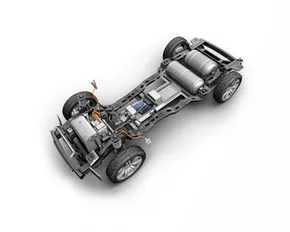

The heart of the Cadillac Provoq isn’t a traditional combustion engine. It’s a hydrogen fuel cell tucked under the hood, where you’d normally find pistons and spark plugs. Inside that housing sits the stack, a complex sandwich of anodes, cathodes, and other high-tech materials. This setup drives a chemical reaction that actually moves the car.
Power comes from the rear, specifically from two storage tanks buried below the cargo floor. They hold 13.2 pounds (5.99 kg) of hydrogen gas, pressurized to a massive 10,000 psi. When needed, hydrogen flows to the fuel cell and mixes with oxygen pulled from the air. The air is pressurized and humidified before the reaction kicks in. The result? A constant output of 88 kW, which translates to roughly 118 horsepower.
But the Provoq doesn’t rely on hydrogen alone. Running along the center of the chassis, right under the floor, is a series of lithium-ion batteries. You can charge these by plugging into a standard electrical outlet using the ports located on the front fenders. This battery pack stores up to 9 kWh of energy.
Why have batteries if you have a fuel cell? They serve two main purposes. First, they extend the vehicle’s range. Second, they provide a power boost. If you need to accelerate quickly, the batteries can deliver a peak of 60 kW (80.5 horsepower) to supplement the fuel cell’s output.
All-Wheel Drive Without a Transmission
The Provoq features all-wheel drive, but don’t expect a conventional drivetrain. There is no transmission sending power from a central engine to the wheels. Instead, it uses three separate electric motors for traction and stability in various conditions.
- Front Axle: One motor drives both front wheels, producing 70 kW (93.9 horsepower).
- Rear Axles: Each rear wheel has its own hub motor, delivering 40 kW (53.6 horsepower) apiece.
This setup gets the Provoq from 0 to 60 mph in 8.5 seconds, with a top speed limited to 100 mph. On paper, those numbers might look modest compared to today’s hyper-fast concept cars. However, for a fuel cell vehicle, they are respectable figures. More importantly, electric motors provide instant torque. That means the acceleration feels sharp and responsive, even if the top-end speed isn’t blistering.
Is the Cadillac Provoq Really Green?
The fuel cell runs on hydrogen, emitting only water vapor. But is that enough to call it truly environmentally responsible? Does the “eco-friendly” label stop at the tailpipe, or does it run deeper? The Provoq incorporates several other green features beyond its powertrain. To understand the full scope of its environmental impact, we need to look closer at its materials, manufacturing, and lifecycle.

The Hydrogen Reality Check
GM is promising a range of 300 miles on a tank of hydrogen for the Provoq. That figure assumes a specific driving profile. The final 20 miles of that journey rely on battery power acting as a range extender. Drive it hard, and that range drops. The math changes when you aren’t treating the pedal gently.
Hydrogen fuel cells aren’t a magic bullet for the environment. You have to look at the supply chain. Making, moving, and storing hydrogen leaves a footprint. But a car that emits zero carbon dioxide while driving? That’s a step forward.
Right now, hydrogen comes from natural gas. Methane. The price tracks with gas prices because demand is low. If fuel cell vehicles catch on, demand spikes. Prices follow. You can make hydrogen without methane, but that process takes energy. The “greenness” of the Provoq depends entirely on how that energy is generated.
Beyond the Tailpipe
The Provoq isn’t just about clean exhaust. GM packed it with other eco-conscious choices.
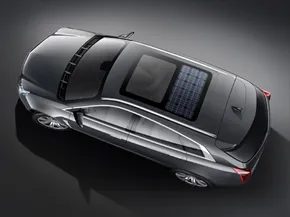
A section of the roof features a solar panel. It doesn’t drive the car. It powers accessories. The stereo. Interior lights. An integrated hard drive. Small energy sources, stacked up.
The tires are custom-made by Michelin. They use Green-X technology. The goal is low rolling resistance. The tires still grip the road. They still perform. But the motors don’t have to work as hard to spin them. Efficiency improves.
GM listed several other sustainable touches in their press release:
- The headliner uses a fully recyclable soy-based material.
- The carpet is woven from recycled polyester and jute.
- The leather on the seats and dashboard contains no harmful chemicals.
- Chrome trim utilizes less-harmful materials.
Charging and Design Integration
You can charge the Provoq’s batteries overnight. Just plug the front fender charging ports into a standard outlet. No external charger needed. The ports aren’t hidden behind flaps. They are built into the sweeping lines of the side panels. It’s part of the design, not an afterthought.
An amber light shows the batteries are charging. A green light means they’re full. Simple. Visual. Immediate.
You might expect that these eco-friendly choices would cut into the comfort and luxury expected from Cadillac. Think again. The Provoq manages to stay true to the brand’s core identity while embracing new technology.

Space Efficiency in a Hydrogen Crossover
Defining the Provoq is tricky. It straddles the line between a compact SUV and a sporty wagon, fitting neatly into the crossover segment that dominates showrooms today. The engineering challenge was brutal: fit a complete alternative fuel system without sacrificing interior volume. Hydrogen, even under high pressure, lacks the density of liquid gasoline. That physical reality forces tanks to take up significant real estate.
General Motors solved this by getting creative with packaging. The battery packs are low and centered. This placement doesn’t just store energy; it lowers the vehicle’s center of gravity, improving stability. The fuel cell stack lives in the engine bay, out of the way. The result? You still get a usable rear cargo area. You can fold the 60/40 split seats, too, for longer gear. It’s not a spaceship interior, but it’s practical.
Luxury Features in a Zero-Emission Package
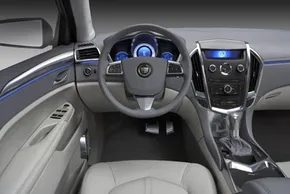
Choosing an eco-friendly car usually means compromising on luxury. You trade leather for cloth, or ambient lighting for battery range. The Provoq ignores that trade-off. It is dripping with superfluous comfort features. The seats are wrapped in hand-finished leather with visible French seams. That’s a level of craftsmanship you typically reserve for higher price points.
The lighting design is equally obsessive. LED strips illuminate the door panels, footwells, door sills, and even the space beneath the seats. It’s not just aesthetic; it sets a mood. Tech integration is robust, too. Every passenger gets a USB port. There’s a dedicated holder for your cell phone that supports Bluetooth connectivity and inductive charging. You don’t even need an iPod anymore. The internal hard drive holds thousands of songs and detailed maps for the navigation system.
The driver faces a configurable LCD instrument cluster. The center stack handles the mundane stuff—climate controls and audio inputs—keeping the focus on the road. It’s a reminder that clean energy doesn’t have to feel sparse.
Suspension Dynamics and Regenerative Braking
Comfort is the priority here, not track days. The Provoq rides on a four-wheel independent suspension. Up front, you have MacPherson struts. In the rear, a four-link setup provides compliance. Neither technology is revolutionary. You see these setups on regular sedans. This isn’t a car built for high-speed cornering at Laguna Seca. It’s built for smooth, quiet commutes.
Stopping power relies on a brake-by-wire system. There are no hydraulic lines connecting the pedal to the calipers. The system is entirely electronic. This design choice does more than just simplify maintenance. It enables regenerative braking. Every time you slow down, the system captures kinetic energy. That energy feeds back into the batteries, extending the Provoq’s range slightly. It’s a subtle but effective way to squeeze more miles out of every tank of hydrogen.
Availability and Future Outlook
You probably won’t be test-driving one soon. General Motors has made it clear: there are no immediate plans to put the Provoq into production. No pricing estimates exist. No build schedules have been released. It remains a concept, a showcase for what fuel cell technology could look like if scaled up.
The Provoq stands as a proof of concept. It proves you can have range, comfort, and zero emissions without compromising on space or luxury. The engineering is sound. The design is bold. The market, however, isn’t ready. Not yet.
If you want to dig deeper into the mechanics behind these vehicles, there are resources available. Links to articles on fuel cells, hydrogen safety, and the broader hydrogen economy exist for those who want to understand the technology driving this concept. The infrastructure for a hydrogen society is still being debated, but the cars are ready to roll. The rest is just logistics.