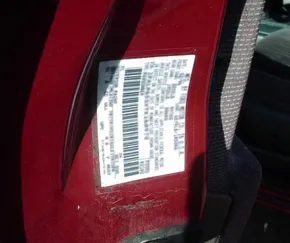
You know that string of numbers and letters on your registration? That’s the Vehicle Identification Number, or VIN. Think of it as the car’s fingerprint. It’s unique, it’s permanent, and it tells you everything from where the engine was born to whether that sedan was ever submerged in floodwater.
Every car made in the US after 1981 carries a 17-character VIN. No two vehicles built within a 30-year window share the same code. This system isn’t just bureaucratic red tape. It keeps thieves confused, helps insurers track losses, and lets you verify if that used truck actually has the mileage the seller claims.
Where to Find the VIN on Your Vehicle
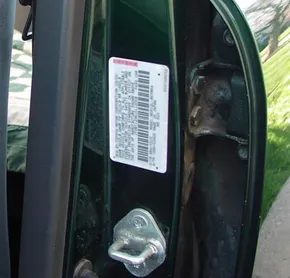
You don’t need a mechanic’s lift to find it. Look through the windshield on the driver’s side dashboard. The VIN sits on a small plate or sticker, visible from the street. That’s the primary spot.
Check the driver’s side door jamb. There’s often a label on the frame sill where the door latches. Open the glove compartment. Some manufacturers stamp it inside. Of course, it’s on your title. And on your insurance documents. If you’re buying a used car, cross-reference the VIN on the dash with the paperwork. If they don’t match, walk away.
The Anatomy of a 17-Character Code
The system standardizes these codes through ISO 3779, adopted by the US Department of Transportation in 1981. Before that, manufacturers used their own messy numbering schemes. Now, every character has a job.
The first three characters are the World Manufacturer Identifier (WMI).
- Digit 1: Country of origin. A ‘J’ means Japan. A ‘1’, ‘4’, or ‘5’ usually means the US, depending on the specific assembly region. If parts come from three different continents, this digit reflects where the final assembly happened.
- Digit 2: The manufacturer. In the US, the Society for Automotive Engineers assigns these codes.
- Digit 3: The vehicle division or type. Ford uses ‘1F’. General Motors uses ‘1G’. A Chevrolet, being a GM division, starts with ‘1GC’.
Digits four through eight describe the vehicle itself. This is where manufacturers get creative. There is no universal standard here, so you have to know the brand to decode it accurately.
- Digit 4: Often weight or horsepower ratings.
- Digit 5: The platform. Van, pickup, sedan, trailer.
- Digit 6: The specific model. Corvette. Durango. Mustang.
- Digit 7: Body style. Two-door. Four-door. Hatchback. Convertible.
- Digit 8: Engine specs. Cylinder count. Displacement.
Sometimes these digits also encode transmission type, trim level (like Accord DX vs. LX), or safety features. But since every maker uses different logic, a ‘B’ in the fourth spot might mean something totally different on a Toyota than on a BMW.
The Universal Digits: Year, Check, and Plant
The last five digits follow stricter rules.
- Digit 9: The check digit. This is a math problem. The other 16 digits go through a calculation to produce this number. If the math doesn’t add up, the VIN is invalid. It catches typos. It stops fake VINs from slipping through computer systems.
- Digit 10: The model year. This changes every single year. From the late 80s to 2000, letters were used. 2000 was ‘Y’. Then it switched to numbers. 2001 is ‘1’. 2002 is ‘2’. It cycles through 1-9 and skips I, O, Q, and U to avoid confusion with numbers and other letters.
- Digit 11: The assembly plant. This tells you which factory built the car.
Digits 12 through 17 are the serial number. They identify the specific vehicle on the production line. If a manufacturer makes fewer than 500 cars a year, they use digits 12-14 as additional manufacturer codes instead. But for most, it’s a straight count.
Global Differences and EU Standards
The EU has its own VIN regulations, but they are less strict than the North American rules. European VINs don’t always include the model year, factory code, or detailed vehicle attributes. The systems are compatible, but not identical.
When importing a car, the VIN must be entered into the Motor Vehicle Records (MVR) database. You need enough context to explain the codes if they don’t match the ISO 3779 standard.
The Check Digit Calculation
The ninth digit is the gatekeeper. It prevents errors from cascading through insurance claims, theft reports, and service records. Computers run the other 16 digits through a weighted sum formula. Each position has a weight. Letters and numbers are converted to values. The sum is divided by 11. The remainder is the check digit.
If the calculated digit doesn’t match the one on the car, the VIN is suspect. It could be a transcription error. It could be fraud. It could be a swapped part.
This system works because it’s consistent. It’s enforced. It’s embedded in every steel panel and paper title. Understanding it gives you power. You stop guessing. You start knowing.
But the story doesn’t end with the code. It ends with what that code unlocks. History. Liability. Truth.
How the VIN Check Digit Actually Works
You can’t just eyeball a VIN and know if it’s legit. There’s math behind it. Specifically, a modular arithmetic system that turns your 17-character identifier into a verifiable string of numbers. The goal? Catch typos, forged plates, or stolen cars before they leave the lot.
Here’s how the system actually functions under the hood.
Translating Letters to Numbers
The first step is translation. The VIN is a mix of letters and numbers, but the validation algorithm doesn’t read alphabets. It needs raw integers.
So, every letter in the VIN gets replaced by its corresponding numerical value. I, O, and Q are skipped entirely to avoid confusion with zero. The rest map directly. Once you swap the letters out, you’re left with a string of 16 digits. The ninth position? That’s left blank for the check digit itself. Now you have a clean line of 16 numbers ready for calculation.
Weights and Multiplication
This is where it gets specific. Each position in the VIN carries a predefined weight. These aren’t random. They’re fixed multipliers assigned to positions one through eight and ten through seventeen.
Position one? It gets a weight of eight. Position two is seven. Position three is six. It drops down to one, then restarts at three for position ten, ending with a weight of two for the final position.
A computer takes the digit in position one and multiplies it by 8. It does this for every single digit in the 16-digit string, applying the specific weight assigned to that slot.
The Modulo 11 Calculation
Once all 16 digits are multiplied by their respective weights, you sum them up. One big total.
Then comes the modulo operation. You divide that total by 11. You don’t care about the quotient. You only care about the remainder.
That remainder is your check digit. Simple, right?
There’s one catch. The modulo 11 system produces remainders from 0 to 10. But a VIN can only contain numbers 0-9 and the letter X. So, if the remainder is 10, the system substitutes an X. If it’s anything else, that number goes directly into position nine.
Why This Matters for Verification
This isn’t just academic exercise. It’s a basic integrity check. If a dealer types in a VIN wrong, or if a clone car has a mismatched plate, the math won’t balance. The check digit in position nine will fail to match the calculated remainder.
It’s not a perfect security system. It won’t stop someone from hacking a database. But it catches human error. It stops obvious fakes. It forces the VIN to make sense numerically before the paperwork even hits the desk.
So next time you see that ninth character, remember it’s not just a random letter. It’s the result of a weighted sum, a modulo operation, and a strict set of rules designed to keep the system honest. Or at least, as honest as a string of digits can be.
The VIN as a Digital Fingerprint
A Vehicle Identification Number is more than just a serial plate bolted to the frame. It is a comprehensive history file for any specific automobile. Most enthusiasts use this code when evaluating a used purchase. Commercial services allow you to input the code and retrieve data from Motor Vehicle Records (MVR) databases for a fee. This data reveals the ownership chain. It shows the last inspection date. It flags if the vehicle was declared a lemon by its manufacturer. It confirms if the car was ever reported stolen. It details major incidents like rollovers or water submersion. A skilled mechanic can often spot these issues during a physical inspection. However, a digital check exposes odometer fraud. It detects if the mileage gauge has been rolled back or flipped to zero.
Deterrence and Detection
The primary function of a VIN is theft deterrence. It complicates the resale of stolen property. If a buyer runs a check, the stolen status appears in the records. Thieves attempt to obscure this by altering the number. Switching VINs is a common tactic. A thief might swap the plate from a stolen car to one acquired legally. Police use the VIN for positive identification. They look for the door jamb plate. However, thieves often cover the dashboard plate. Officers need a search warrant to inspect the interior. This creates a window of opportunity for fraud.
Etching as a Security Layer
Vehicle identification number etching adds a physical barrier to theft. A weak acid application burns the code into the windshield and side windows. This serves multiple purposes. Thieves cannot remove the etched code without replacing the entire glass assembly. Glass replacement is costly. This expense reduces the profit margin on a stolen vehicle. It is also harder to hide etchings on multiple windows. Police can read the code through the glass. Kits are available for about $20. They include a template and acid solution. Auto dealers and collision shops offer the service too. The price is usually higher than the DIY route.
The Anatomy of VIN Fraud
Thieves have developed methods to bypass VIN security. One scheme involves stripping a totaled car. The insurance company writes it off. It sells the vehicle at auction. The thief buys it back cheaply. They rebuild it using the original parts. They register the car legally. The VIN remains intact. This creates a clean title for a stolen vehicle.
Another method targets the plates themselves. Thieves steal VIN plates from legal cars. Owners rarely check their own plates. The thief attaches the stolen plate to a stolen vehicle. An alternative is buying a wrecked car from a salvage yard. They use the wreck’s VIN plate. The match might not be exact. The year or model could be slightly off. But if the discrepancy is small, it passes initial scrutiny. Most buyers do not check the VIN. The thief sells the car and disappears. The fraud goes unnoticed until long after the transaction.
Where to Look Next
For deeper technical details, official resources provide the regulatory framework. The Code of Federal Regulations outlines the requirements for vehicle identification numbers. The International Organization of Standardization sets the global guidelines. State Departments of Motor Vehicles maintain the local records. The United States Department of Transportation oversees the broader safety standards.
If you are navigating the used car market, understanding these systems is non-negotiable. The links below offer more context on the buying process.
- How to Buy a Car
- How Car Financing Works
- How Selling a Car Works
- How Odometers Work
- How Power Door Locks Work
- How Power Windows Work
- How Tires Work