City grids are choked. Commutes turn into parking lots. And when the sun sets, it often paints the sky in hues of orange and purple, courtesy of smog. It’s pretty until you realize that haze is a health hazard. That muggy, heavy air clinging to metropolitan skylines during the summer isn’t just an aesthetic issue. It’s a pollution crisis.
Vehicle emissions are a primary driver of this urban choking. Tailpipes spew nitrous oxides into the atmosphere. These gases mix with volatile organic compounds. The result is smog. It’s a localized tragedy that feeds into a global one. In the United States, cars account for more than one-fifth of all carbon dioxide emissions. Fossil fuel reliance isn’t just changing the climate. It’s making cities unlivable.
The realization that current automotive tech is environmentally dangerous has shifted consumer behavior. Drivers are looking for alternatives. Fuel efficiency is no longer just about gas prices. It’s about survival. Enter the hybrid car.
It dominates the conversation. Advertising campaigns pitch hybrids as the eco-friendly savior. The technology is generally consistent: a conventional gasoline engine paired with an electric motor. The battery powers the motor. This dual setup stretches gasoline reserves. It reduces tailpipe emissions during operation. It saves money at the pump.
But there’s a question that keeps gearheads and environmentalists up at night. If hybrids still burn gas, how green are they really? The answer isn’t in the tailpipe. It’s in the factory.
The Carbon Debt of Manufacturing
We focus on where the car drives. We don’t usually look at where it’s built. Hybrid vehicles carry a heavier manufacturing burden than their internal combustion counterparts. They require complex battery packs. They need dual drivetrains. The production process is energy-intensive.
This creates a carbon debt. Before a hybrid ever touches the road, it has already emitted significantly more CO2 than a standard gasoline car. The question becomes: does the reduced tailpipe emission over the vehicle’s life offset that initial manufacturing cost?
The answer depends on several variables. It depends on the battery size. It depends on the source of electricity used to charge the hybrid (if it’s a plug-in). It depends on how many miles the owner drives.
Why Manufacturing Emissions Matter
The production of hybrid batteries involves mining rare earth metals. Lithium, cobalt, and nickel extraction are dirty processes. They require massive amounts of water and energy. The refining of these materials adds to the carbon footprint.
Once the raw materials are secured, the assembly line takes over. Installing the electric motor, integrating the battery management system, and calibrating the powertrain all add to the manufacturing emissions. This initial spike in pollution is the “carbon debt” that hybrids must pay off through efficient driving.
How Long Does It Take to Break Even?
Breaking even on that carbon debt isn’t instantaneous. It depends on driving habits. A city driver who frequently uses electric-only mode may break even faster than a highway commuter who relies heavily on the gas engine.
Plug-in hybrids (PHEVs) offer a different equation. If charged with renewable energy, the break-even point accelerates. But if charged from a coal-heavy grid, the environmental benefit shrinks. The math is complex. It’s not a simple yes or no on whether hybrids are truly green.
The Bigger Picture
Hybrid cars are not
People talk a lot about the end-of-life impact of products, but they rarely look at the input side. How much energy goes into forging a toaster or shipping a tomato? It’s a valid question. The logic is simple: local food means fewer miles for trucks. Fewer miles mean less diesel burned. Less diesel means a smaller carbon footprint for the supplier.
Cars are no different. The math gets tricky when you factor in manufacturing.
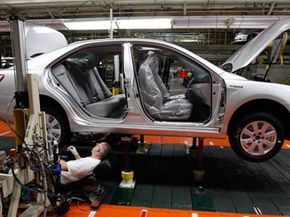
Building a vehicle is an energy-intensive process. It doesn’t matter if it’s a gas-guzzling SUV or a plug-in hybrid. If you’ve walked through an assembly plant, you know the drill. It’s a maze of robotics, welding arms, and human oversight. Every bolt, wire, and panel has to be created. That requires massive amounts of electricity and raw power.
So, does making a hybrid car pollute more than making a traditional vehicle? The answer depends on who you ask and what year you’re asking in.
In 2007, this debate exploded. CNW Marketing Research released a report titled “Dust to Dust: The Energy Cost of New Vehicles from Concept to Disposal.” The headline grabber was stark. They claimed the total energy cost of a Toyota Prius over its lifetime exceeded that of a Hummer H3.
“The Toyota Prius costs more over the course of its lifetime than a Hummer H3.”
This claim sent shockwaves through the eco-conscious community. Why? Because Toyota marketed the Prius as the antidote to gasoline dependency. The idea that building the “green” car required more energy than the gas-guzzler contradicted the entire sales pitch. Prius owners were confused. Automakers were defensive.
The report didn’t just confuse buyers; it drew fire from experts. Bloggers and tech sites dissected the methodology. Critics pointed out two major flaws: poor analysis and a lack of peer review. The core assumption in “Dust to Dust” was that manufacturing dominated the energy budget.
Other studies disagreed. They argued that manufacturing is actually the small part of the equation.
Manufacturing vs. Operation
The real energy hog isn’t the factory. It’s the road.
Multiple independent studies have found that 80 to 90 percent of a vehicle’s total lifetime energy consumption happens during operation. That is the time you’re actually driving it. Whether you are accelerating on a highway or idling at a traffic light, that is where the fuel—or electricity—is burned.
Manufacturing accounts for a fraction of that total. At the absolute highest estimates, production makes up only 13 percent of the vehicle’s lifetime energy use. For a hybrid, that number might be slightly higher due to the battery pack, but it still pales in comparison to decades of fuel consumption.
Carmakers know this. They are under pressure to reduce their environmental impact during the design phase. It’s not just about efficiency; it’s about compliance and brand image. Many manufacturers are actively replacing hazardous substances like lead and hexavalent chromium with more sustainable materials. The goal is to minimize the footprint before the car even leaves the lot.
The Hybrid Advantage
This is where the hybrid model wins on sheer arithmetic.
Yes, building a hybrid requires more energy than building a basic sedan. You need a battery. You need an electric motor. You need a complex power management system. That upfront cost exists. But it is a one-time debt.
Once that car hits the road, it begins paying it down.
Because hybrids use less fuel, they emit fewer greenhouse gases during operation. That 80 to 90 percent operational energy use is drastically lower than that of a non-hybrid vehicle. Over a ten or twelve-year lifespan, the savings in fuel and emissions overwhelmingly cancel out the initial manufacturing penalty.
The Hummer comparison from 2007 ignored the fact that the Hummer burns fuel at a rate that dwarfs the Prius. Even if the Prius had a slightly higher initial energy cost to build, it would take only a few thousand miles for that “debt” to be repaid.
The narrative that hybrids are net-negative for the environment is a myth built on incomplete data. It focuses on the beginning of the car’s life and ignores the middle. And in the case of transportation, the middle is the longest part.
Manufacturing improvements are still happening. Lighter materials. Recycled components. Cleaner energy sources in the
Let’s cut the fluff. Hybrid cars cause pollution. They burn gasoline. They spew carbon dioxide. They are not zero-emission machines unless you count the tailpipe smoke as a suggestion rather than a fact.
The reality is simpler than the marketing brochures suggest. Most hybrids on the road today are gas-electric hybrids. They use the same fuel as your dad’s old V8 sedan. But here is the kicker: they produce significantly less pollution than conventional vehicles. That reduction is why eco-conscious drivers flock to them. It’s not about being clean. It’s about being less dirty.
How Hybrid Powertrains Manage Emissions
The magic isn’t in the absence of combustion. It’s in the management of it.
Standard cars let the internal combustion engine (ICE) do all the work, all the time. Hybrids split the load. The gas engine doesn’t just kick in randomly. It operates based on specific conditions.
At low speeds, the electric motor takes the wheel. This is crucial for urban environments. City driving involves stop-and-go traffic, idling at lights, and creeping through neighborhoods. In these scenarios, an ICE is inefficient. It guzzles fuel. It spews exhaust. The electric motor doesn’t care. It pulls the car forward silently, with zero tailpipe emissions.
“The electric motor can also provide additional power during acceleration or when a hybrid is climbing a steep incline.”
But what happens when you hit the highway?
Electric motors have limits. They run out of juice. They can’t sustain high speeds efficiently over long distances. So, the system switches. Once you hit around 45 miles per hour (72.4 km/h), the gas engine usually takes over. This threshold isn’t hard-coded into every model. Aggressive drivers might trigger the gas engine sooner. A gentle foot might keep the electric motor engaged longer. But generally, highway speeds demand the raw horsepower that only a gasoline engine can provide.
Why City Driving Favors Hybrids
This operational split explains why hybrid car emissions are often cited as a benefit for urban dwellers.
City driving aligns perfectly with the strengths of the electric motor.
– Low speeds.
– Frequent stopping.
– Short distances.
In these conditions, the hybrid minimizes the time the gas engine is running. Less engine runtime means less fuel burned. Less fuel burned means fewer pollutants released into the atmosphere.
Highway driving? That’s where the advantage shrinks. You’re relying on the gas engine more. The efficiency gains are still there compared to a non-hybrid, but they aren’t as dramatic.
The Self-Charging Misconception
Many people assume “hybrid” means “plug-in.” It doesn’t.
Most conventional hybrids don’t need an external power source. They don’t plug into a wall. The gasoline engine acts as a generator. When the car is braking or coasting, kinetic energy is captured and stored in the battery. When the gas engine is running, it also charges the battery.
This design eliminates range anxiety. You don’t need to hunt for charging stations. You just fill up at the gas pump. The electric motor gets its power from the battery, which gets its energy from the gas engine and braking.
The Bottom Line on Pollution
Does a hybrid pollute? Yes

The Hidden Toxicity in Hybrid Battery Chemistry
We buy hybrids to save gas. We tell ourselves we are saving the planet. That narrative sold millions of units. But look closer at what makes the magic happen. The electric motor. The battery pack. The stuff humming under the floorboard.
Fuel efficiency was the hook. Environmental concern is the anchor. Now, the anchor is dragging toward a new problem. Toxic waste.
Drivers aren’t just thinking about gallons per mile anymore. They are asking what happens when that battery dies. And the answer isn’t pretty.
Why Hybrid Car Batteries Are a Growing Landfill Issue
Hybrid vehicles rely on a specific chemical cocktail to store energy. That energy powers the electric motor. This motor handles the heavy lifting at low speeds. It takes the strain off the internal combustion engine. Result? Less fuel burned. Fewer tailpipe emissions in the city.
But batteries are not innocent. They contain toxic materials. Lead. Nickel. Lithium. Cadmium. All of it is potentially hazardous to the environment if not managed correctly.
Currently, conventional cars still outnumber hybrids by a wide margin. So the landfill crisis isn’t here yet. It is looming. If hybrid adoption accelerates—as most predictions suggest—we will face a surge of toxic waste. Corrosive materials. Carcinogenic compounds. All ending up in soil and groundwater if recycling infrastructure doesn’t keep pace.
Lead-Acid vs. NiMH vs. Lithium-Ion Batteries
Not all battery packs are created equal. The industry has cycled through three main technologies. Each has a different toxicity profile. Each has different efficiency trade-offs.
1. Lead-Acid: The Heavyweight Loser
Lead-acid batteries were the early standard. They are cheap. They are proven. They are also the most toxic of the three types.
And they are heavy. That mass kills fuel economy gains. You might save on electricity, but you are lugging around a brick. The industry is largely abandoning lead-acid for hybrids. It just doesn’t make sense for modern efficiency goals.
2. Nickel-Metal Hydride (NiMH): The Middle Ground
NiMH batteries replaced lead-acid in many early hybrids. Nickel is less toxic than lead. That is a step forward.
But it is not a clean solution. Nickel mining is hazardous. The material itself is potentially carcinogenic. Recycling NiMH packs is complex. They dominate the market right now, but they carry their own environmental baggage.
3. Lithium-Ion (Li-ion): The Future?
Lithium-ion is lighter. It holds more energy per unit of weight. It is considered the least toxic option among the three primary contenders.
Car manufacturers are pouring millions into Li-ion research. Why? Because it mirrors the technology in laptops and MP3 players. The supply chain exists. The chemistry is understood. It is the logical next step for high-performance hybrid systems.
The Recycling Gap
Knowing which battery type is toxic is only half the battle. We need to know how to dispose of them. Currently, the infrastructure for recycling NiMH and Li-ion packs is not as robust as the infrastructure for pulling lead from a standard starter battery.
If the number of hybrids spikes, the waste stream spikes. The question isn’t whether the batteries will die. It is whether we have a plan for the poison they leave behind.
“The promise of green driving has proven to be a successful incentive… but concerns have been raised that landfills will soon overflow with toxic batteries.”
Where Do We Go From Here?
The shift from fuel efficiency to battery toxicity is inevitable. As older hybrid models age, the waste problem becomes immediate.
Consumers are starting to notice. The focus is shifting. It is no longer just about MPG. It is about the entire lifecycle of the powertrain.
We need better recycling mandates. We need clearer labeling on battery chemistry. We need to stop pretending that “green” means “harmless.” It just means less harmful. Until now.
The technology is advancing. Lead-acid is fading. Li-ion is rising. But the environmental cost of extraction and disposal remains a variable we have yet to fully solve.
What happens to the nickel? What happens to the lithium? The answers are still being written.