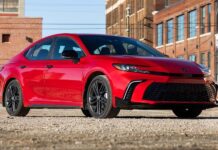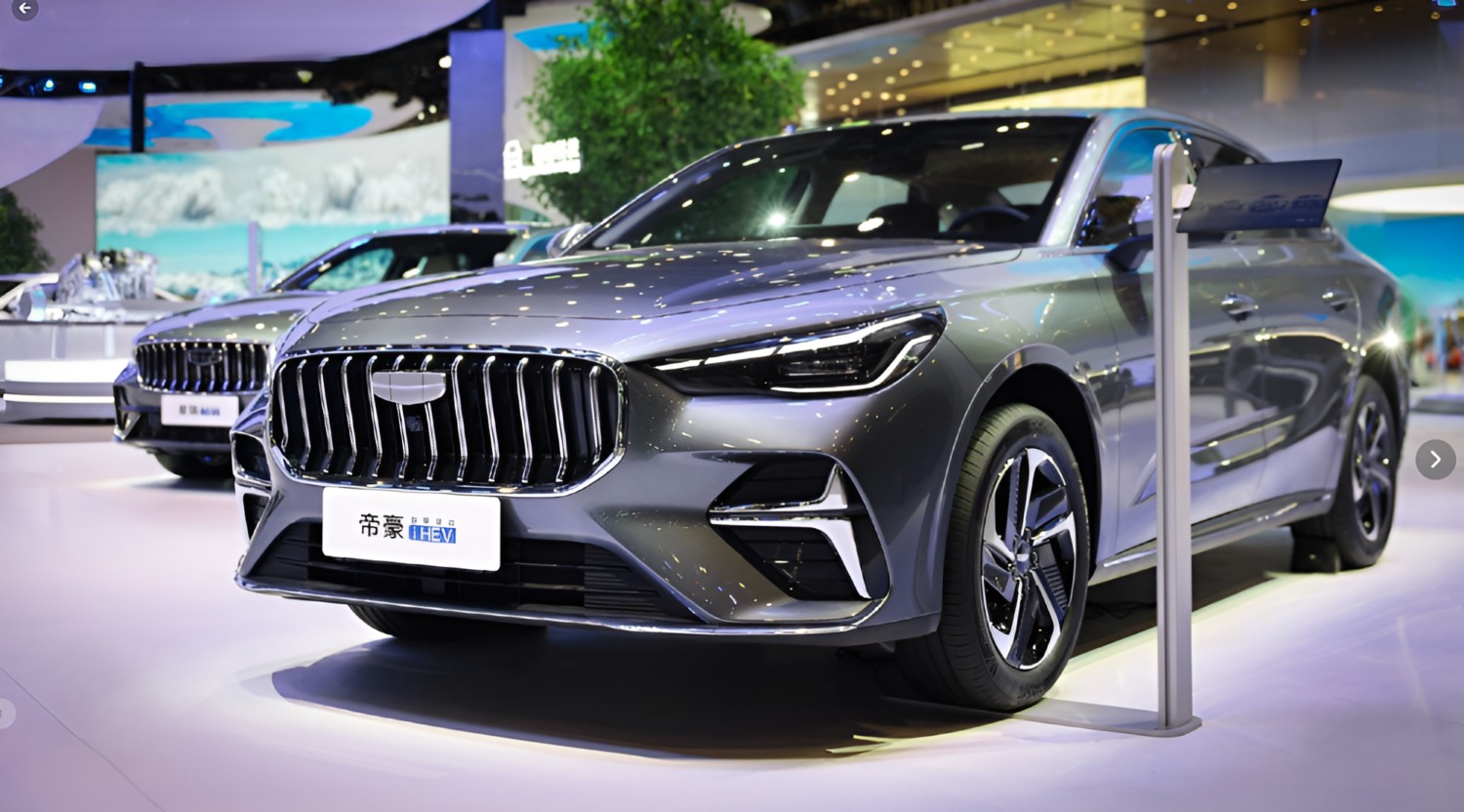
At the 2026 Beijing Auto Show, Geely Auto officially unveiled the fifth-generation Emgrand i-HEV, a hybrid sedan that claims a new world record for fuel efficiency. According to company reports, the vehicle achieved a consumption rate of just 2.22 L/100 km during real-world highway testing in Hainan—a figure submitted to Guinness World Records as the lowest ever recorded for a mass-produced hybrid.
Breaking the Efficiency Barrier
The Emgrand i-HEV’s performance marks a significant milestone in the ongoing competition between Chinese manufacturers and established hybrid leaders. Geely claims this fuel consumption is 12% lower than the results achieved by the Toyota Prius under similar testing conditions.
While specific methodology details have not been fully disclosed, this comparison highlights a broader trend in the automotive industry: the rapid technological leap in “dedicated hybrid engines” (DHE) designed specifically to maximize thermal efficiency rather than just power.
Engineering the Record-Breaker
The record-setting performance is driven by a sophisticated combination of hardware and software:
- High-Efficiency Engine: The vehicle features a dedicated hybrid engine with a thermal efficiency of 48.41%, which Geely identifies as a leading figure among current mass-production engines.
- Advanced Architecture: The system utilizes a P1+P3 dual-motor layout paired with an integrated 11-in-1 electric drive system. The motor delivers up to 230 kW, which Geely asserts is 1.72 times more powerful than typical Japanese hybrid systems.
- Electric-Dominant Driving: Under WLTC (Worldwide Harmonized Light Vehicles Test Cycle) conditions, the vehicle operates in electric mode for more than 80% of the time, reducing engine run-time by over 27% compared to traditional hybrids. It can maintain pure electric operation at speeds up to 66 km/h.
Refining the Driving Experience
High efficiency often comes at the cost of refinement, but Geely has focused heavily on NVH (Noise, Vibration, and Harshness). Using in-house “EOC” active noise control and predictive engine-stop technology, the company has reduced startup vibrations by 32.7%. The resulting cabin noise is reported to be only 1 dB higher than that of a fully electric vehicle (BEV), aiming to bridge the comfort gap between hybrids and EVs.
To ensure reliability, the system underwent rigorous validation, including:
– 15,000 hours of bench testing (simulating roughly 4.8 million km of driving).
– Extreme environment testing across a 100°C temperature range and altitudes of up to 4,650 meters.
Market Context and Future Outlook
Despite the technological breakthrough, the Emgrand model faces the volatility of the current automotive market. In March 2026, domestic sales for the Emgrand reached 9,278 units, a 17.2% decrease compared to the previous year. However, the model remains a cornerstone of the brand, accounting for 14% of Geely’s total sales in March.
Geely plans to scale this technology rapidly. Starting in 2026, the i-HEV system will be integrated across several major models, including the Xingrui, Xingyue L, and Boyue L. Pre-sales for the Xingrui and Xingyue L hybrid variants have already commenced as of April 19.
Geely’s push for record-breaking efficiency suggests a strategic move to capture consumers who want the fuel economy of an electric vehicle without the range anxiety or charging infrastructure requirements of a full BEV.
The Emgrand i-HEV represents a major technical leap in hybrid engineering, signaling Geely’s intent to challenge global leaders in both fuel economy and powertrain performance.