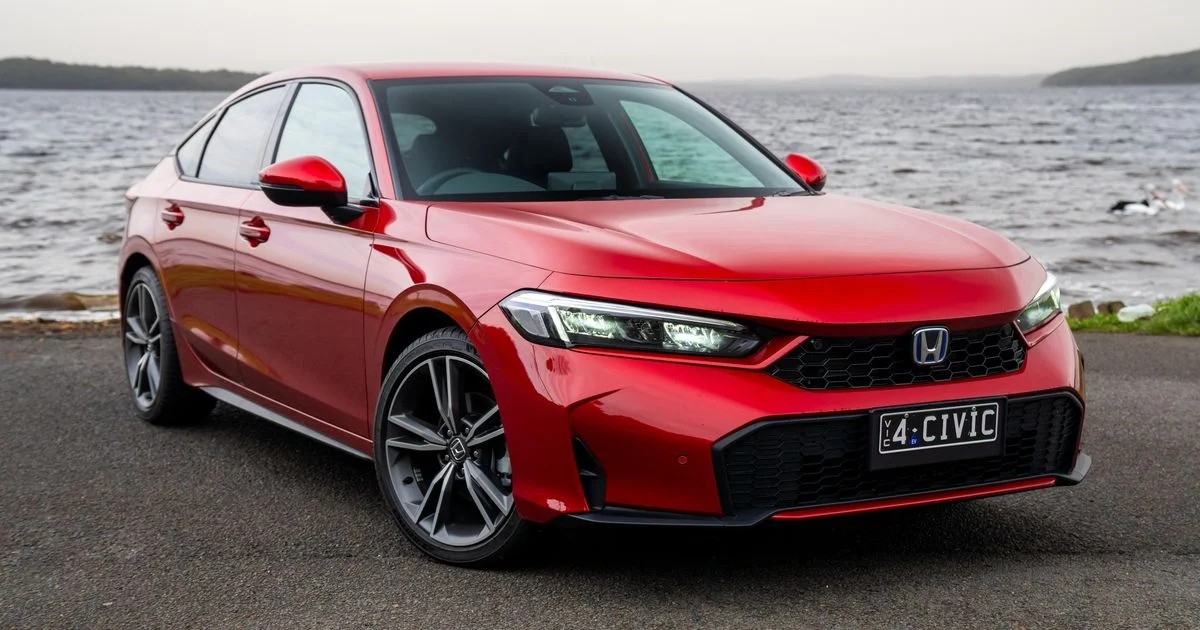
Despite a shrinking market for traditional sedans and hatchbacks, Honda Australia has confirmed that two of its most iconic nameplates—the Civic and the Accord —will remain in the local lineup for the foreseeable future.
This decision comes at a time when both models are facing significant headwinds, as consumer preferences shift toward SUVs and the brand undergoes a strategic transition in how it sells vehicles.
The Decline of the Traditional Passenger Car
The Civic (introduced in 1973) and the Accord (introduced in 1977) were once the backbone of Honda’s Australian operations. During the 2000s, both models were high-volume leaders, with annual sales exceeding 10,000 units each.
However, recent data shows a sharp decline:
– The Accord: Sales plummeted by 29% last year, with only 98 units delivered. It currently stands as one of the slowest-selling medium passenger cars in the country.
– The Civic: Last year’s sales totaled 933 units, placing it behind premium competitors like the BMW 1 Series, Audi A3, and Mercedes-Benz A-Class.
Several factors contribute to this trend. The global automotive market has seen a massive pivot toward SUVs and crossovers, leaving traditional sedans like the Accord in a niche position. Additionally, Honda’s move toward an “agency” sales model—which focuses on premium variants—has resulted in higher price points that may alienate budget-conscious buyers.
A Strategy of Choice vs. New Growth
While the sales figures are modest, Honda Australia maintains that these models serve a specific purpose in their portfolio.
“For us, it’s about providing customer choice and having a value proposition that works,” says Nick Parkington, General Manager of Automotive at Honda Australia.
Rather than focusing on these aging segments, Honda is shifting its primary energy toward an aggressive “product offensive.” The company is prioritizing new launches and updates to capture growing market segments, including:
– The Prelude: A recent addition to the lineup.
– The CR-V and ZR-V: Updated models to bolster their SUV presence.
– The Super-One: Expected to launch in the second half of the year.
This represents a strategic pivot from defending declining segments to incremental growth —adding new models into categories where Honda previously had no presence.
The Exception: The High-Demand Type R
While the standard Civic e:HEV may face pressure due to low volumes, the enthusiast market tells a different story. The Civic Type R remains a standout performer. Honda reports “overwhelming demand” for the hot hatch, with recent allocations selling out immediately. This niche, high-performance success suggests that while mainstream passenger cars are struggling, specialized performance models still hold significant brand value and customer loyalty.
Conclusion
Honda is balancing a dual strategy: maintaining its historic passenger car icons to satisfy loyalists while aggressively pivoting its resources toward the high-growth SUV and new model segments. While the Accord and Civic are safe for now, their long-term survival will ultimately depend on whether Honda can find a profitable “value proposition” in an SUV-dominated market.