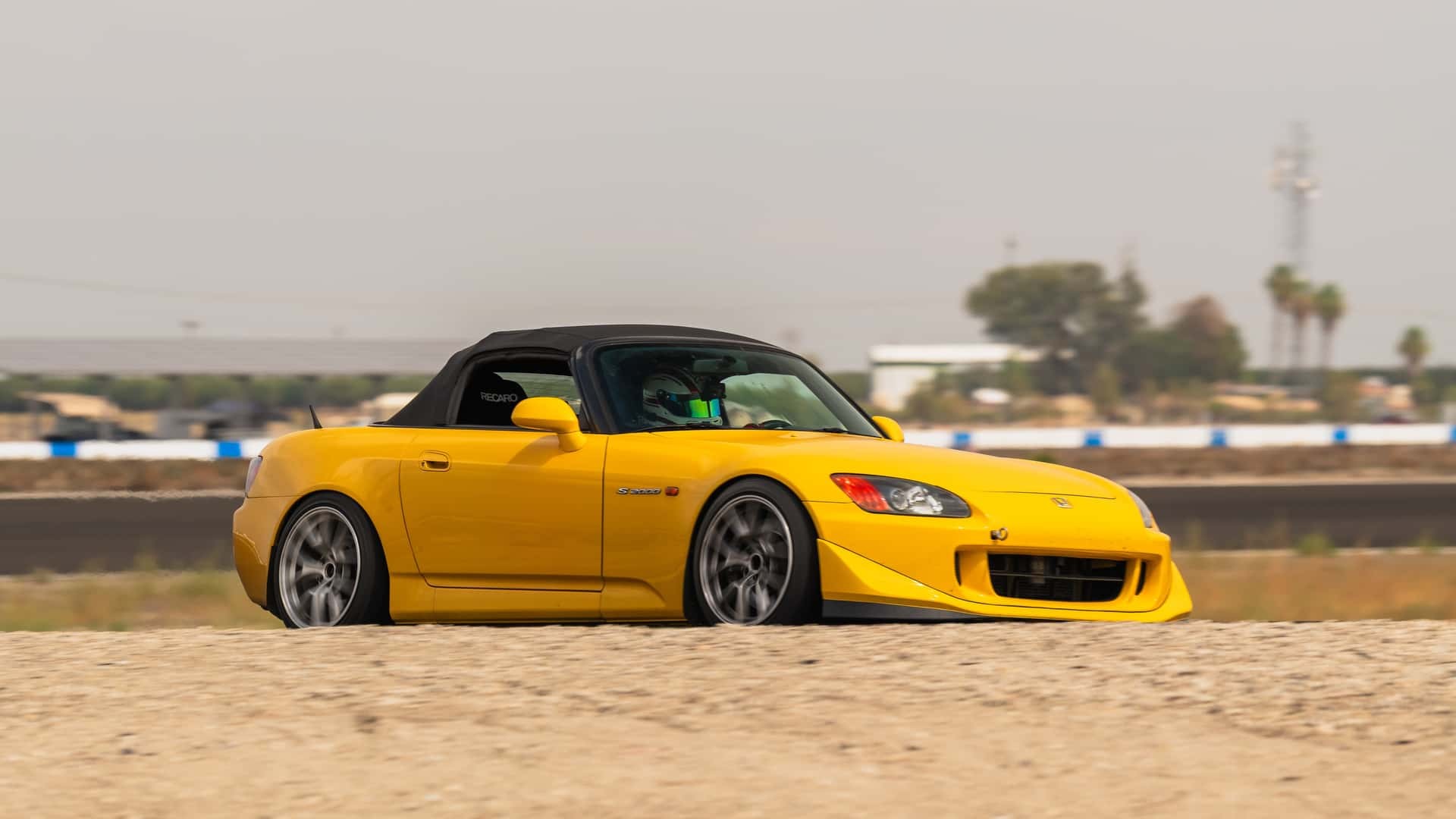
For many automotive enthusiasts, the Honda S2000 is more than just a car; it is a legend. Known for its screaming 9,000 RPM redline and razor-sharp handling, it has occupied “dream car” lists for decades. However, as one driver recently discovered, owning a piece of automotive history comes with a unique set of mechanical challenges and high-stakes risks.
The Transition: Leaving Perfection for a Legend
The journey began with a difficult choice. After spending a year perfecting a 2023 Subaru BRZ —a modern, highly dialed track car equipped with premium components like Nitron dampers and Brembo brakes—the owner decided to move on. Despite the BRZ being functionally “perfect,” an opportunity arose to purchase a long-coveted 2002 Honda S2000 in Spa Yellow Pearl.
The S2000 was not a stock model; it was a meticulously built machine featuring:
– JRZ RS Pro suspension
– Recaro RS-G seats
– AP Racing Pro 5000 brakes
– An AP2 gearbox with shorter gearing
– An OS Giken limited-slip differential
Choosing the AP1 model (1999–2003) was a deliberate nod to purism, as it features the iconic 9,000 RPM redline that defined the S2000’s identity.
The S2000 Paradox: High Performance vs. High Risk
While the S2000 is celebrated for its engagement, it is notorious among enthusiasts for two specific reasons:
- Mechanical Vulnerabilities: Early AP1 models are known for fragile valvetrains and timing chain tensioner issues. While this specific car had been reinforced with AP2 valve retainers and a Billman tensioner, the model’s reputation for fragility remains.
- Aggressive Handling Geometry: The S2000 is famous for its “rotation.” Its suspension geometry is designed to make the car turn aggressively, which can lead to sudden oversteer if not managed with extreme precision. This “secret sauce” makes the car incredibly fun but also prone to the types of accidents frequently seen in viral driving videos.
The Incident at Buttonwillow
After a baseline maintenance check—including new Bridgestone RE-71RS tires and fresh brake pads—the car was taken to Buttonwillow Raceway for its maiden track outing.
The initial experience was visceral. The driver described the engine’s resonance above 6,000 RPM as “unbelievable” and the car’s mechanical vibrations as “delightful.” However, transitioning from the linear, predictable steering of a modern Subaru BRZ to the manic, high-rotation nature of the S2000 proved to be a steep learning curve.
The honeymoon period ended abruptly during a track session. After noticing strange sensations in the rear suspension and a shifting steering center, a massive mechanical failure occurred. A loud clunk signaled the end of the session, leaving the driver with a completely uncontrollable rear end.
The Aftermath: A Costly Lesson
Upon inspection, the culprit was identified: the toe arm shanks had failed.
The parts, which were approximately six years old and had endured numerous track days, finally succumbed to the stresses of high-performance driving. While the failure ended a promising eight-hour track day after only 15 minutes, the driver noted a silver lining:
“It’s actually quite lucky that this failed on the track. If this had failed on a canyon road like Angeles Crest, it could have spelled disaster.”
Conclusion
The experience serves as a stark reminder that high-performance enthusiast cars, particularly older legends like the S2000, require constant vigilance and a deep understanding of their mechanical limits. While the thrill of a 9,000 RPM redline is unmatched, the price of admission is the responsibility of maintaining components that are pushed to their absolute breaking point.