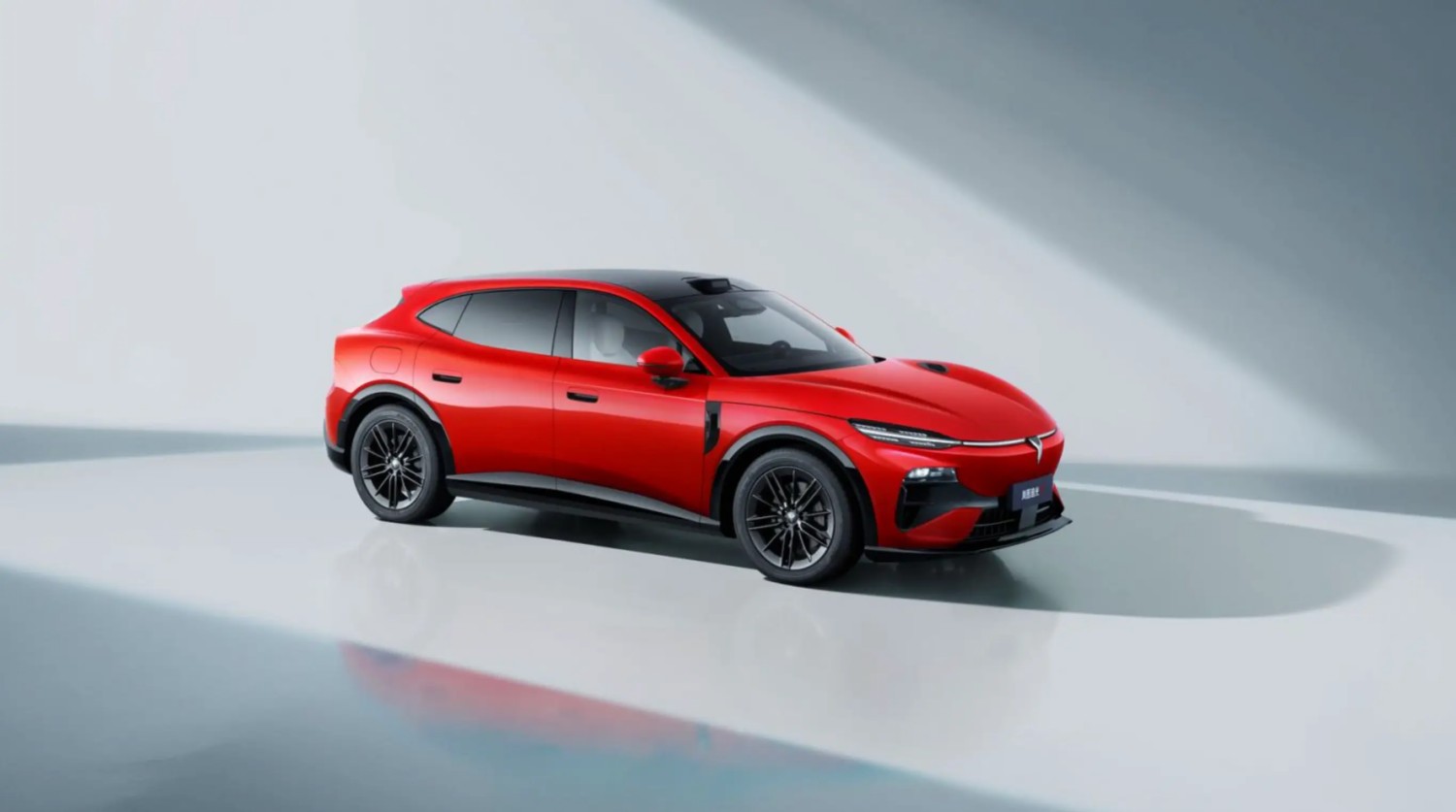
Dongfeng’s premium badge Voyah just flipped the switch on pre-orders for the Passion S. If you are waiting to see if the Chinese EV market can still surprise us, this is a good test.
Right now, you can only book the top-tier model. There are no entry-level compromises. We are looking at the 700 Four-Lidar 4WD Ultra+ trim.
The price? 309,900 Yuan. Roughly $45,600 if you do the quick conversion. It sounds like a lot until you remember what is actually under the skin. And inside the digital dashboard.
The brain and the bones
This car runs on Huawei’s nervous system. That means the Qiankun Smart Driving ADS 3 system is baked in. It uses a quad-lidar setup. Not two. Four.
Specifically, there is one primary 896-line image-grade lidar and three solid-state blind-spot units. Add in a total of 33 sensors. You get a level of perception that feels redundant until you see the data.
The system supports “Parking-to-Parking” navigation. It also includes the CAS 5.0 collision avoidance system. That is omnidirectional. Meaning it watches the blind spots, the sides, even the rear, without you turning your head.
Inside, the software layer is HarmonyOS Cockpit 5.2. It is driven by the MoLA voice model. Hardware-wise, you get dual 15.6-inch linked screens and a massive 29-inch augmented reality HUD.
The audio setup is aggressive. Twenty-seven speakers. A 7.3.4.2 channel layout. Driver’s headrest speakers. Seat vibration motors. You aren’t just hearing the music; you’re feeling the bass in your spine.
The Passion S isn’t just an SUV; it is a rolling tech laboratory disguised as a mid-large electric vehicle.
Range, charge, and brute force
Voyah built this on a full-domain 800-volt silicon carbide platform. That allows for 5C fast charging speeds. You plug in, you get charged, you leave. The cycle is fast.
Power comes from the “Amber Battery 2.” capacity of 98 kWh. Range figures from the CLTC cycle sit at 700 kilometers for this 4WD model. The rear-wheel-drive version claims 740 km, but we are looking at the four-wheel-drive Ultra+ here.
Does the extra power kill efficiency? Not necessarily, but the performance is the headline.
This 4WD version produces 475 kilowatts. That translates to 637 horsepower. Zero to 100 km/h happens in 4.5 seconds. It is quick enough to embarrass sports cars that cost three times as much.
Stopping power is handled by four-piston fixed front calipers. You need to stop as fast as you accelerate. The chassis keeps up with that philosophy.
Aluminum suspension and sharp lines
Underneath the bodywork lies an all-aluminum independent suspension setup. Front double-wishbone. Rear five-link. It is adjustable.
There is an EDC variable magic carpet system and air suspension standard. So you get the plush ride quality, but the geometry is tuned for stability. Aerodynamics are managed by ten air ducts and nineteen functional vents. It looks aggressive for a reason.
The dimensions fit the “mid-to-large SUV” category comfortably. Length exceeds 5,000 millimeters. The wheelbase stretches to 3,000 millimeters.
The proportions follow a 3:1 height-to-length ratio. The wheel-to-height ratio is 1:2. It looks planted.
Inside, the materials matter. Everything is Oeko-Tex-certified skin friendly fabric. No weird chemical smells after a sunny afternoon.
Features include electric suction doors. A panoramic sunroof with electric shading. Tri-zone climate control.
But the real party trick for families? A 6.6-liter dual-door smart refrigerator in the center console. Keep the drinks cold. Keep the baby food fresh. All seats are heated, ventilated, and massaged. Front row massage included.
The Passion S is not trying to be subtle. It stacks every high-end spec onto a single trim level. It forces you to buy the whole package.
Is that a bad deal? Maybe for the purist who wants a base model to modify. For everyone else, it removes the guesswork.
You get the lidar. The Huawei tech. The 800V charging. The aluminum suspension. For under 310,000 Yuan.
The question is whether the brand name carries the weight. Voyah