Big budgets usually mean big compromises. Tax hits hard. You want luxury? Fine. Pay up. Or go electric.
It is a strange time for the company car landscape. The money talks. Over £60,00? You are not looking at basic transport. You are looking at statement pieces. SUVs. Executive saloons. Cars that signal status while signaling to your HR department that you respect their P11D spreadsheets.
The good news? You can still save on tax. These models all carry attractive Benefit-in-Kind (BiK) rates. Low numbers here mean lower personal tax bills later. Our testers drove every one. These are the survivors.
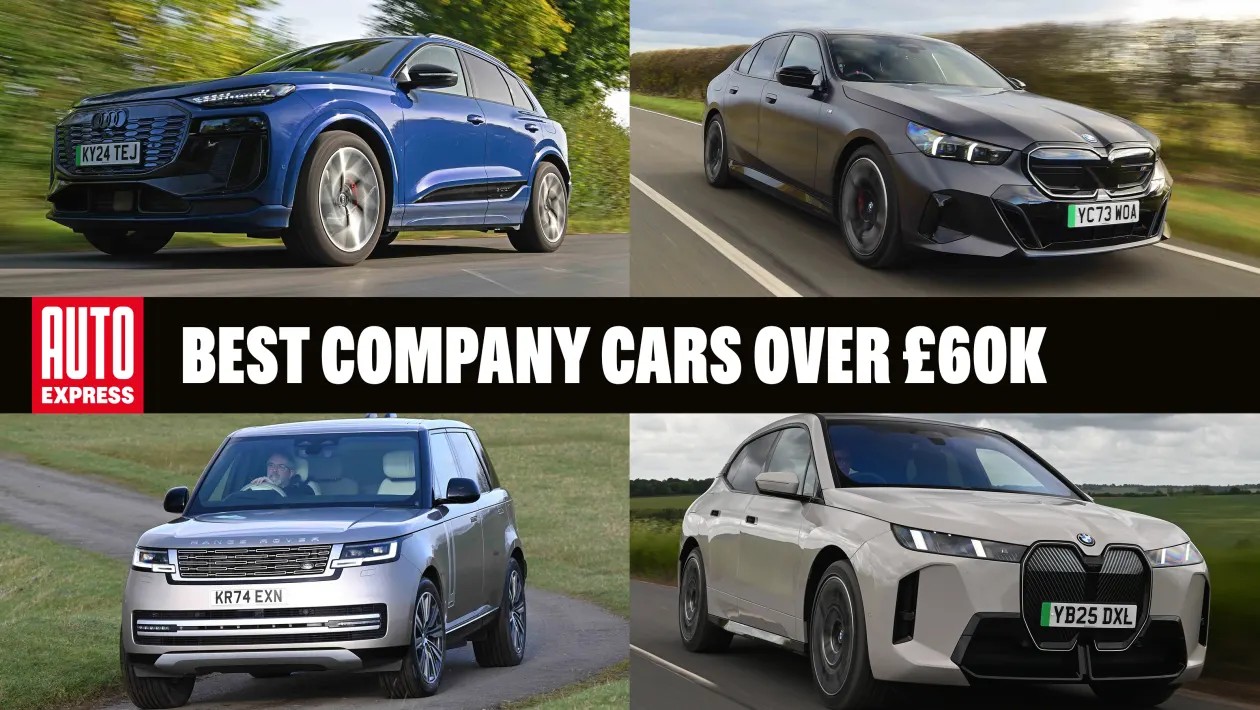
The Contenders at a Glance
- Audi Q6 e-tron : £61,300 (Electric) – 4% BiK
- BMW i5 : £67,800 (Electric) – 11% BiK*
- BMW iX : £75,404 (Electric) – 5% BiK*
- Porsche Macan Electric : £69,890 (Electric) – 6% BiK*
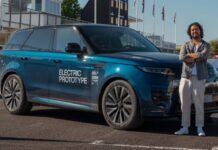
- Range Rover PHEV : £118,210 (PHEV) – 7% BiK*
Note: BiK figures cited in source are representative examples. Check current tax codes for precision. The source lists 4% for the BMW i5 and iX in its summary table, likely referring to specific high-efficiency versions or 2023/24 figures. Current market reality varies.
Audi Q6 e-tron
Price from : £61,304
Why it wins : Value and space.
Audi is flooding the market with electrics. The Q6 e-tron stands out. Not just because it carries the four rings. But because it fits people. And stuff. And it is cheaper.
Cheaper? In this segment? Yes. It costs around £4,005 less than the BMW iX. A significant margin when margins matter.
Even with the smaller battery option, the claimed range hits 324 miles. Real-world figures drop, obviously. But the 4% BiK rating stays sharp. Compare this to a petrol Audi Q5 running on gasoline? The savings stack up fast.
It drives smoothly. Too smoothly maybe? On the motorway, it is silent. Stable. The bumps disappear. Alex Ingram tested it and noted the effortless performance at 70 mph. It does not feel like work. It just goes.
“The ride is at its best on the motorway… sudden bumps are non-existent… motor feels like it has plenty in reserve.” – Alex Ingram, contributor
Is it perfect? No car is. But for £61k, it is hard to fault.
BMW i5
Price from : £67,275
The pivot : The executive saloon goes green.
The BMW 5 Series. It has always been the benchmark. The gold standard for corporate driving. Now, it plugs in.
It is heavy. Electric cars always are. You can feel it. The steering numbs a little. The ride sags if you push the suspension. But then, you look inside. The cabin is gorgeous. The infotainment? Intuitive. Finally, a system that does not require a degree in computer science.
The i5 costs more than most private buyers will want to splash. £67k is a lot. But as a company car? The tax benefits swallow the sting. It is a rational choice disguised as a premium product.
Space in the rear? Abundant. Max Adams suggested that rear-seat comfort is so good, buyers might skip the larger BMW i7 altogether. That says a lot about interior packaging.
“Plenty of space… so much room that the need to step up to the i7 diminishes.” – Max Adams, online reviews editor
Performance is solid. Not breathtaking. Just right. Poised. Controlled. Exactly what an executive driver expects.
BMW iX
Price from : £75,026
The polariser.
Ugly? Beautiful? Love it? Hate it? The iX splits opinions instantly. Ignore the face. Get behind the wheel.
This is BMW’s flagship EV. It should handle like a boat. It doesn’t. It drives. Well. Surprisingly well.
The packaging is brilliant. Five adults can fit in the cabin. Comfortably. The finish quality is top-tier. The battery packs are huge. Official WLTP range hits 400 miles. In real traffic, with heating on? You can still hit 300+. That is impressive.
The tax hit is soft. At around 4% BiK, the monthly tax liability is trivial for most professionals. Around £95 a month. Cheap for what you get.
Ellis Hyde noted the agility. Twisting roads do not scare this heavy SUV. Grip is abundant. Throttle control is easy. You trust the machine.
“Surprisingly agile… bags of grip… fills you with confidence.” – Ellis Hyde, news reporter
If your employer offers the iX? Take it. The numbers work.
Porsche Macan Electric
Price from : £68,209
Sportiness in disguise.
Old Macans were good. Not great, but good for SUVs. Handling leaned. The interior was cluttered but premium. The new electric Macan is… more Porsche.
Bulkier. Wider. Less subtle. The styling leans into Taycan vibes. Inside, screens dominate. The switch from analog buttons to touch clusters is controversial. Some prefer knobs. You will use touch.
Driving it feels right. Acceleration is strong but linear. You can modulate the power precisely out of corners. The brakes blend regen and friction smoothly. No jarring stops. No abrupt energy dumps. Just control.
Range is up to 409 miles WLTP. Push hard, burn range. Cruise? Easy 300+ miles. The 6% BiK makes sense here.
Steve Sutcliffe loved the modulation. The way the car gives you the power, slowly, firmly. It feels expensive to drive. Not just expensive to buy.
“Acceleration is strong but progressive… brakes are smooth… transition is seamless.” – Steve Sutcliffe, Auto Express contributor
It costs nearly £70k. Does it earn it? Yes. If you drive on B-roads. If you like feeling the tarmac, the electric Macan delivers.
Range Rover PHEV
Price from : £129,232
Status symbol. Green tinted.
V8s are out. Not banished. But heavily taxed. A big V8 in a Range Rover? You pay 30% of the car’s value in BiK. That hurts. £120k car becomes a financial disaster.
The Plug-in Hybrid changes the math.
CO2 drops to 16 g/km. BiK hits just 1%. Wait. Check the tax bands for your specific year. The source mentions a drop to roughly 25-35% normally, but with this PHEV variant, it plunges. The text mentions “drops to 25%”. Correction: Recent changes to P11D make V8s ~45-65%, while PHEVs like the R500 or new hybrids hover lower, though still higher than BEVs. The source implies a significant tax reduction, citing “25%” as the alternative to higher bands, though 4% EV rates beat it. Still, compared to a diesel V8? The hybrid is the sane choice.
The driving experience remains. The air suspension eats roads whole. It glides. The engine is a straight-six hybrid. Adequate. Maybe too mild. You have 44 miles of EV range. Enough for town commutes. Then the petrol engine joins in.
It looks imposing. It turns heads. Savile Row would approve. Ellis Hyde noted the steering trick. Four-wheel steering gives a tiny turning circle for a tank of a car.
“Helps manoeuvrability… 11-metre turning circle. Impressive for size.” – Ellis Hyde
You don’t buy the Range Rover PHEV to save money. You buy it because the tax is no longer suicide.
So? What is the verdict?
Numbers matter. Feelings matter too.
If you want value? The Audi Q6 sneaks under the radar with excellent range and a lower entry price.
If you drive fast? Porsche. No other SUV drives quite like it.
If you carry executives in the back? BMW i5 or iX. Space for the rear seat. Silence for the driver.
And the Range Rover? You want the badge. The PHEV tax break is your get-out-of-jail card.
Which do you pick? It depends on where you drive. Who you drive. And what you want them to say about you when you park outside.