Boating has a vocabulary problem. It is dense, specific and often incomprehensible to outsiders. the lexicon can feel like a barrier to entry. Learning the different parts of a boat, let alone a trailer, can be a daunting task. We are going to cut through the noise. Let’s talk about the actual hardware you need to move the boat from land to water and back again.
The Front End: Bow, Lines, and Winches
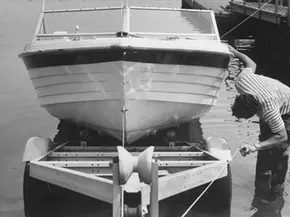
Let’s start with the main structure of the boat. That is the hull. The front section is the bow (or fore ). You will need a secure point on the bow to attach a rope. In boating terminology, the rope in question is a ring rope. These lines are critical during a launch. Prevents the boat from drifting away when it is removed from the trailer.
Some boats have special bolts in the bow to attach the bow strap. This connects the trailer directly to the boat from the front.
Next is the winch line. The rower used the winch to pull the boat back to the trailer. Don’t think of this as a holding mechanism. Winch manufacturers especially warn against using winches to tie up boats. They are not rated for that load. Attempting to secure the boat with a winch with a cable can cause damage. Use straps and cables designed specifically for the job. Safety is important here.
The Rear: Stern, Transom, and Cleats
The back end is the stern (or aft ). Look at the bottom of the stern. There is usually a flat section called the transom. Many boats are equipped with transom loops, which are U-shaped bolts that attach to the hull. You run a transom strap through these eyes. This strap attaches to the port (left) and starboard (right) sides of the trailer. This keeps the boat stable while you are loading or unloading.
Once your boat is in the water, you have to keep it there. Cleats are special fittings on docks and boats. They provide a place to make fast a line. You secure the boat to the dock this way. If you are launching alone, do not skip this step. You don’t want the hull of your boat to wash into the lake while you’re still on shore.
Protection and drainage
Water is the enemy of a dry boat. Buoyancy is not the only problem. Impact Island Most boat owners use buoys, bumpers or fenders to protect their hulls. If you’re going it alone, these are non-negotiable. Without these, fiberglass or aluminum hulls collide with docks or rocks. The damage adds up quickly.
Gutters are also dangerous. The boat has a drain plug that prevents water from getting inside while driving. These plugs must be removed when the boat is in the water. If you leave it alone, the ship will sink. Water can easily enter through gutters. Keep the water drops on hand. A simple bucket to drain excess water to the side. Basic but effective.
Trailer points and safety
Trailers have their own components. Rollers are the wheels under the trailer. Allows the boat to slide up and down without damaging the hull. Some trailers have Instructions. These rails help align the containers precisely during loading. Think of it like a gutter guard on a bowling alley. They steered the ship into place.
Vehicles and trailers are left unattended in water. Theft is really dangerous. The clutch lock is installed in the connection between the trailer and the vehicle’s towbar. These make it almost impossible to unlock your device and drive away. Ring lock is also an option. They fix the wheels. Like police boots, they prevent the trailer from moving.
Prepare for release
We’ve already talked about hardware. Now let’s take a look at the steps you need to follow to get your boat ready for the water. This process is methodical. A single mistake can lead to damage to the boat or trailer. Details matter.
“The winch manufacturer warns that the winch is not suitable for attaching a boat to a trailer and that the winch may be damaged if used in such a manner.”
The difference between a smooth launch and disaster is often just a few manufacturing lines. Understand your hardware. Use the correct shoulder strap. Check the plug. It’s not complicated, but it’s easy to make mistakes. Water does not tolerate mistakes.