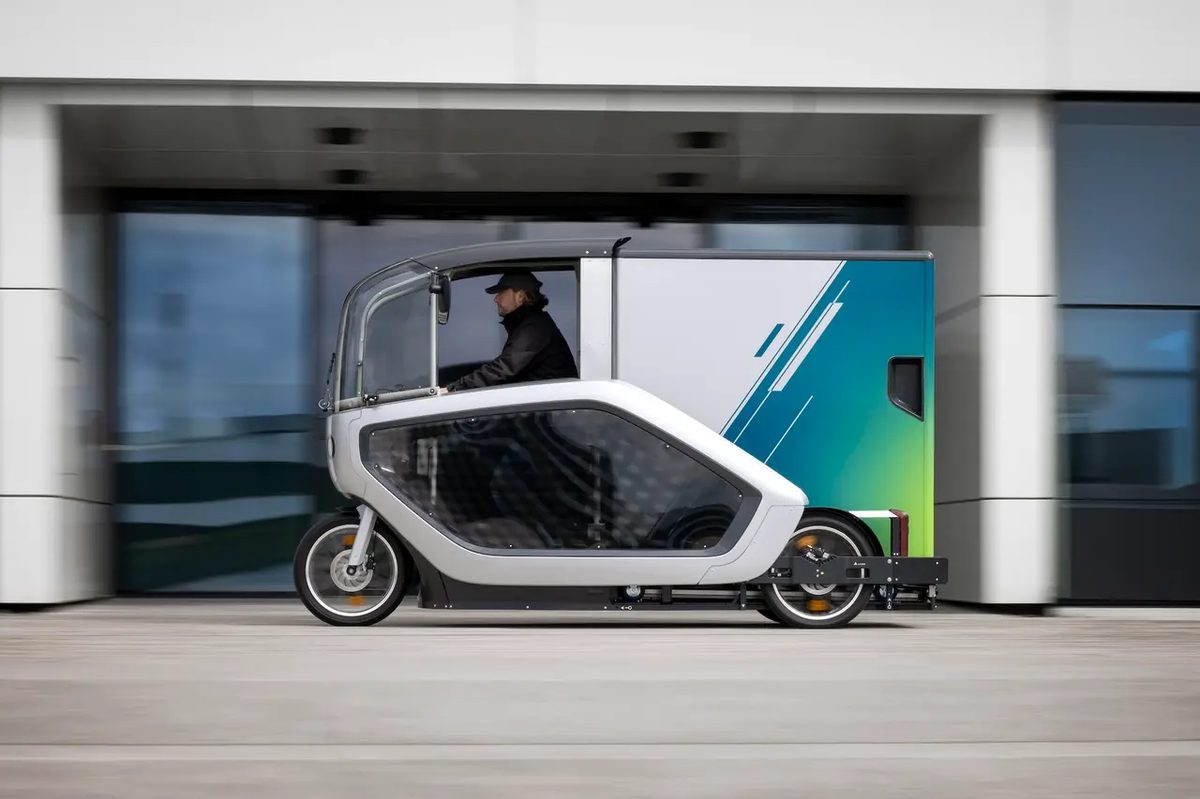
Mercedes-Benz is trying to fix the mess that is city logistics with the Sustaineer concept. It’s not just another electric van. It’s a closed-loop system designed to move goods faster while keeping the carbon footprint low. The goal is simple: reduce congestion and emissions without sacrificing speed.
The E-Sprinter as a Mobile Warehouse
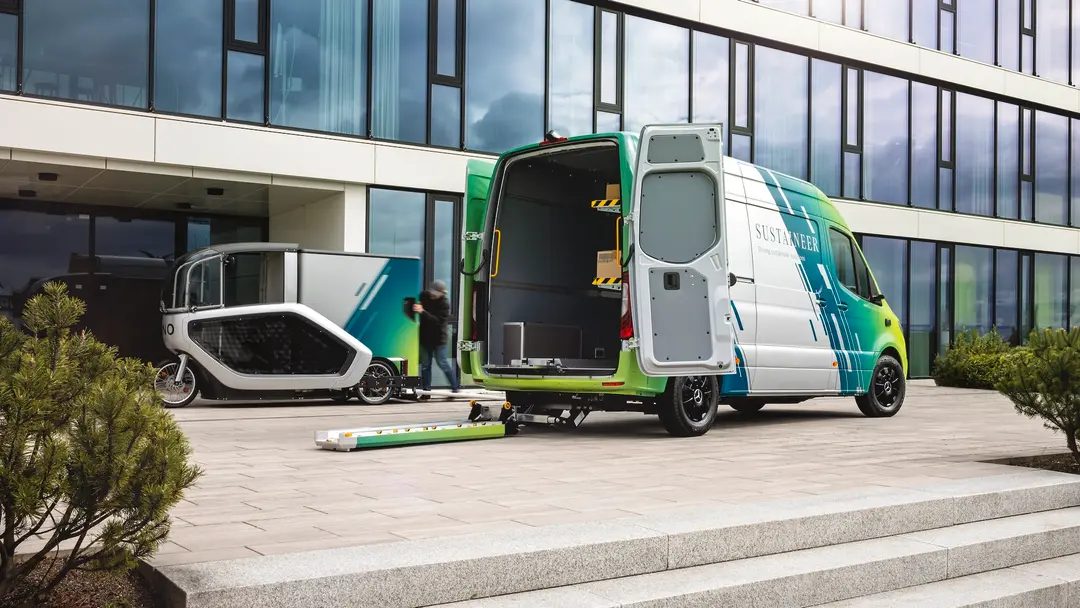
The core of the system is the E-Sprinter. Think of it as a rolling micro-warehouse. It doesn’t just drive goods around. It holds pre-packed containers. These aren’t random boxes. They are standardized units with a capacity of over 2 m3.
The trick is the transfer process. A telescopic arm built into the E-Sprinter lifts these containers. It makes the handoff seamless. No forklifts. No heavy lifting by humans. The containers slide out and are ready for the final leg of the journey.
Last-Mile Delivery via ONO Cargo Bikes
Once the containers are offloaded, they don’t go into another truck. They go onto ONO cargo bikes. These are electric-assist bicycles built for heavy loads. They navigate the tightest city streets with ease.
This shift from van to bike changes everything. It cuts down on traffic. It reduces noise. And it allows for direct delivery to the customer’s door. The E-Sprinter acts as a hub. The bikes are the spokes.
Why This Matters for Urban Distribution
Traditional delivery models are inefficient. They involve multiple stops. They clog streets. They emit pollutants. The Sustaineer model breaks this cycle. By using the E-Sprinter for bulk transport and cargo bikes for the last mile, it creates a clean chain of custody.
Companies using this setup can deliver faster. They avoid the gridlock that slows down traditional vans. They also meet stricter environmental regulations. It’s a practical solution for cities that want to stay connected without choking on exhaust.
The system improves delivery efficiency while simultaneously reducing urban congestion and carbon emissions.
The technology exists. The integration is proven. The question is whether cities will adopt it at scale.
Targeted Emissions Traps and Smart Thermal Management
The sustainability angle isn’t just about the powertrain. It’s about the minutiae. Mercedes-Benz packed the Sustaineer with hardware designed to squeeze efficiency out of every cycle.
Take the front-mounted particulate filter. It’s not a generic add-on. It’s tuned for particles up to 10 micrometers. The result? A 55 percent drop in emissions. That’s significant for urban delivery zones where air quality is a daily battle.
Then there’s the cab. Traditional heating systems are energy hogs. They pull from the engine or draw heavily from the battery. The Sustaineer uses a targeted heating unit focused on the driver’s body.
“A system focused on the driver, not the entire cabin volume, slashes energy consumption by 25 percent.”
This isn’t about keeping the whole van warm. It’s about keeping the person working warm. Less wasted heat. Less battery drain.
Pre-climatization adds another layer. The van can heat or cool itself while plugged in. Before you even turn the key. This reduces the energy load at departure. The battery isn’t starting from zero. The cabin is already at setpoint. Efficiency isn’t an accident here. It’s engineered.
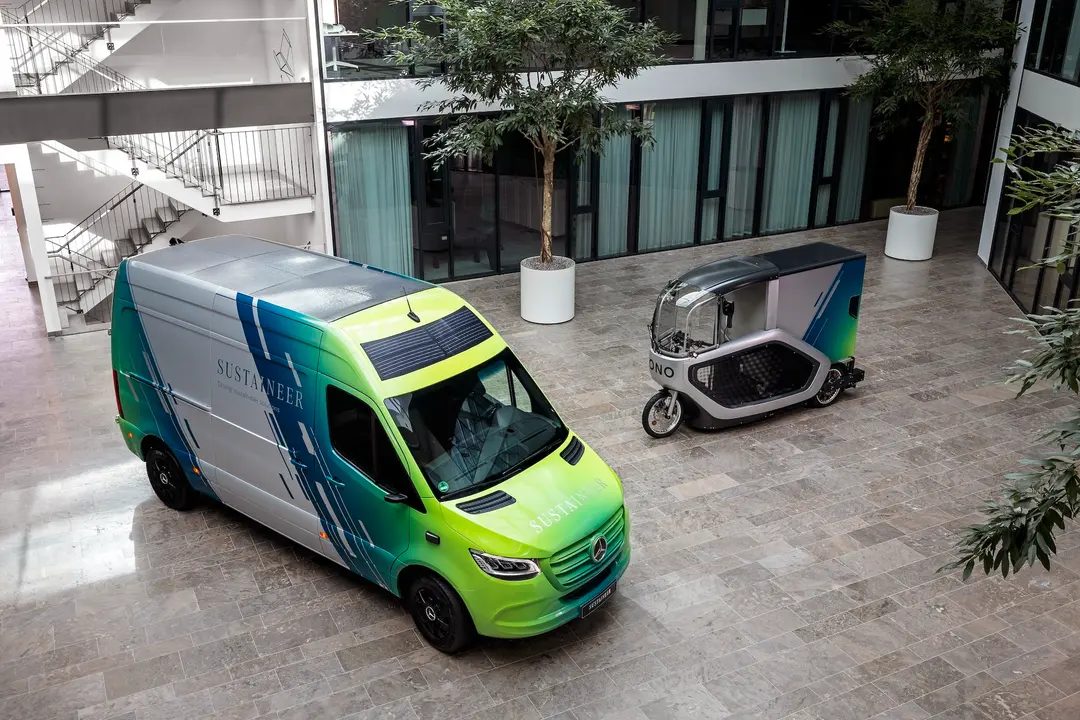
The push for a carbon-neutral fleet by 2039 isn’t just a slogan for Mercedes-Benz. It’s an operational mandate. Enter Sustaineer, the brand’s dedicated sustainable mobility label. This isn’t about tweaking existing gas guzzlers. It’s a structural shift in how the company handles urban logistics. The goal? Fast deliveries that don’t leave a chemical trail in the city air.
Testing Ground for Future Vans
Mercedes-Benz is using Sustaineer to stress-test real-world solutions for tomorrow’s light commercial vehicles. The market demands speed. Cities demand zero emissions. These two requirements often clash. The brand is trying to bridge that gap with concrete prototypes and pilot programs.
The initiative isn’t theoretical. It’s about deploying actual vehicles in dense urban environments to prove viability.
This approach allows the manufacturer to gather data on charging infrastructure, route efficiency, and driver behavior under load. They aren’t waiting for perfect infrastructure. They’re building it, one van at a time.
Meeting the Demand for Green Speed
Traditional logistics prioritize volume and speed. Sustainable logistics usually compromises one or both. Mercedes-Benz is betting that technology can eliminate that trade-off. The Sustaineer program focuses on electric vans capable of handling rapid turnaround times.
Think of the electric Sprinter or eVito. These aren’t city cars. They’re workhorses. The challenge is keeping their batteries charged without killing operational uptime. By integrating smart charging solutions and optimizing delivery routes, Mercedes-Benz aims to show that green doesn’t mean slow.
Why This Matters for Commercial Fleets
For fleet managers, the shift is financial as well as environmental. Lower fuel costs. Reduced maintenance on electric drivetrains. But there’s also the regulatory pressure. Many European cities are introducing low-emission zones. Fleets that can’t comply will be locked out of lucrative urban contracts.
Mercedes-Benz is positioning its Sustaineer brand as the solution to this compliance headache. It’s not just selling vans. It’s selling operational continuity in a regulated market.
The Road to 2039
The 2039 target is aggressive. It requires a complete overhaul of the supply chain, not just the tailpipe. Sustaineer is a piece of that puzzle. It’s a testing lab for the next generation of utility vehicles.
Will it work? The pilots suggest yes. But scaling up is a different beast. Charging networks need expansion. Battery supply chains are strained. Yet, the direction is clear. Mercedes-Benz is moving away from incremental improvements. They’re looking for systemic change.
The question remains: can the market absorb this shift without breaking the logistics model? The data from these current tests will tell us soon enough.