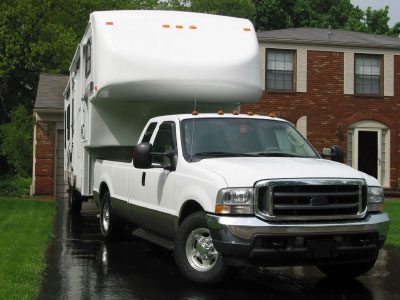
Fuel economy. Horsepower. Torque. These numbers are easy. You see them on the window sticker and in the specs sheet and you get it. Zero-to-sixty times? Familiar. Interior volume? You know what cubic feet means. When you are shopping for a sedan or a truck, these metrics tell you exactly what you are getting for your money.
Most car buyers understand the basics.
Then there are the numbers that trip people up. The ones that cause confusion among new buyers. Ignoring them can have serious consequences. Take gross combination weight rating, or GCWR. If you plan to tow a trailer, you need to know this number. You need to respect it.
What Exactly Is GCWR?
GCWR is a specific weight limit determined by the manufacturer. It represents the maximum total weight of a loaded tow vehicle and its attached loaded trailer. The combined weight of both should never exceed this limit.
It is similar to gross vehicle weight rating, or GVWR, but there is a key difference. GVWR applies to one vehicle. GCWR applies to two attached vehicles. The tow vehicle and the trailer.
Ford Motor Company breaks down how they calculate this number. You add up:
– The vehicle’s listed curb weight
– Allowable payload
– Driver and passenger weight
– Trailer weight
This is not an actual measurement of your current load. It is a ceiling. A hard limit set by the engineers.
Why Does This Number Matter?
Safety. That is the primary reason manufacturers set a GCWR.
Overloading a tow vehicle is dangerous. Overloading a trailer is dangerous. Overloading both? You have a recipe for disaster.
A heavy load is hard to control. But it is more than just handling. Several components are at risk.
Braking systems can overheat. They can fail. If your brakes fail, you cannot safely slow or stop.
Tires may not handle the extra load. A blowout at highway speeds is a nightmare scenario.
The engine and transmission in the tow vehicle might overheat due to the strain. Mechanical failure follows.
Suspension components can bend or break. Lose control of the suspension and you lose control of the vehicle.
There are many ways things can go wrong when you ignore weight limits. You should never surpass your vehicle’s GCWR.
Where to Find Your GCWR
If you are going to tow, play it safe. Learn your vehicle’s GCWR before you hook up a trailer.
Where do you look?
Typically, you can find this information on a label inside the vehicle’s door frame. Look near the area where the driver’s door latches. This is the B-pillar for most sedans and SUVs.
Another option is the internet. Most manufacturers publish this information online. Check the owner’s manual or the manufacturer’s support site.
Acura GCWR Data
Depending on the make and model year, you can find your vehicle’s gross combination weight rating. The chart below covers Acura models from 2006 to 2009.
| Year | Model | GCWR (lbs) |
|---|---|---|
| 2006 | MDX | 8121 |
| 2006 | RL | 5162 |
| 2006 | RSX | 4384 |
| 2006 | TL | 4730 |
| 2006 | TSX | – |
| 2007 | MDX | 10053 |
| 2007 | RL | 5164 |
| 2007 | RDX | 6394 |
| 2007 | TL | 4773 |
| 2007 | TSX | 4407 |
| 2008 | MDX | 10053 |
| 2008 | RL | 5164 |
| 2008 | RSX | 6394 |
| 2008 | TL | 4773 |
| 2008 | TSX | 4407 |
| 2009 | MDX | 10053 |
| 2009 | RL | 5233 |
| 2009 | RSX | 5574 |
| 2009 | TSX | 4550 |
More Acura Specs:
– Acura GVWR
– Acura GAWR
– Acura Cargo Carrying Capacity
– Acura Curb Weight
– Acura Payload
– Acura Towing Capacity
Audi GCWR Data
Here is the data for Audi models from 2006 to 2009.
| Year | Model | GCWR (lbs) |
|---|---|---|
| 2006 | A3 | – |
| 2006 | A4 | – |
| 2006 | A6 | – |
| 2006 | A8 | – |
| 2006 | S4 | – |
| 2006 | TT | – |
| 2007 | A3 | – |
| 2007 | A4 | – |
| 2007 | A6 | – |
| 2007 | A8 | – |
| 2007 | Q7 | 10665 |
| 2007 | RS4 | – |
| 2007 | S4 | – |
| 2007 | S6 | – |
| 2007 | S8 | – |
| 2008 | A3 | – |
| 2008 | A4 | – |
| 2008 | A5 | – |
| 2008 | A6 | – |
| 2008 | A8 | – |
| 2008 | Q7 | 10665 |
| 2008 | R8 | – |
| 2008 | RS4 | – |
| 2008 | S4 | – |
| 2008 | S5 | – |
| 2008 | S6 | – |
| 2008 | S8 | – |
| 2008 | TT | – |
| 2009 | A3 | – |
| 2009 | A4 | – |
| 2009 | A5 | – |
| 2009 | A8 | – |
| 2009 | Q7 | 10665 |
| 2009 | R8 | – |
| 2009 | S4 | – |
| 2009 | S5 | – |
| 2009 | S8 | – |
| 2009 | TT | – |
More Audi Specs:
– Audi GVWR
– Audi GAWR
– Audi Cargo Carrying Capacity
– Audi Curb Weight
– Audi Payload
– Audi Towing Capacity
BMW Towing Limits
The numbers for BMW’s GCWR (Gross Combined Weight Rating) from 2006 to 2009 tell a story of heavy iron and surprisingly low caps on sedans. You look at the 2006 X5 and see a 10,802 lb rating. That’s serious hauling power. The X3 sits lower at 7,673 lbs. The sedans? They barely register. The 325, 330, 525, 530, 550, 650, 750, and 760 models all have dashes. No towing capacity listed. They aren’t built for it. The M3, M5, and M6 also show dashes. Performance variants often lose towing utility.
2007 brings the Alpina B7. Still no GCWR. The X5 climbs slightly to 11,132 lbs. The X3 holds steady at 7,662 lbs. Z4 models remain unlisted.
By 2008, the lineup shifts. The 128 and 135 coupes enter. Still no towing data. The 5-series gets a 528 and 535. The X6 appears for the first time with a 11,044 lb GCWR. The X5 stays at 11,132 lbs. The X3 remains at 7,662 lbs.
2009 sees the 750 drop the V12 for something lighter, but the GCWR isn’t listed. The M6 returns. The X5 dips slightly to 11,066 lbs. The X6 holds at 11,044 lbs. If you’re looking for BMW GCWR by model, the SUVs are the only consistent answers. The sedans and coupes are strictly for driving, not dragging.
“If the spec sheet has a dash, don’t try to tow with it. You’ll strip the transmission.”
Buick Heavy Haulers
Buick in this era is all about family cruisers and one specific SUV. The LaCrosse and Lucerne sedans are locked at 4,645 and 4,914 lbs respectively. That’s not a towing limit. That’s barely enough for a small jet ski and a helmet. The Rainier, a mid-size SUV, hits 10,500 lbs. The Rendezvous does 7,746 lbs. The Terraza, a minivan, manages 8,500 lbs.
2007 repeats the sedan numbers. The Rainier and Rendezvous stay the same.
2008 introduces the Enclave. This is where Buick punches up. The Enclave GCWR jumps to 9,500 lbs. The LaCrosse and Lucerne remain stagnant.
2009 sees the Enclave hold firm at 9,500 lbs. The sedans don’t change. Buick wasn’t building tow-happy sports cars. They were building comfortable vessels for lake houses and campers. If you need Buick GCWR specs, look at the SUVs. The sedans are for commuting, not camping.
Cadillac Capacity
Cadillac plays in the big leagues. The CTS starts low at 4,659 lbs. The CTS-V bumps it to 5,000 lbs. The DTS sits at 5,159 lbs. The SRX starts at 5,314 lbs and climbs to 6,314 lbs by 2007. The STS models hover around 5,000 to 5,500 lbs.
Then there’s the Escalade. This is where the numbers get real. The 2006 Escalade does 12,902 lbs. The ESV extends that to 14,000 lbs. The EXT, with its pickup bed, hits 13,464 lbs. The XLR and XLR-V have no listed capacity. Luxury convertibles aren’t for towing.
2007 standardizes the Escalade line. All three body styles—the regular, ESV, and EXT—hit 14,000 lbs. The SRX jumps significantly to 6,314 lbs. The STS-V climbs to 5,544 lbs.
2008 and 2009 keep the Escalade wall at 14,000 lbs. The CTS-V holds at 5,000 lbs in 2006, then jumps to 5,011 lbs in 2008 and 2009. The STS-V holds at 5,544 lbs. The Escalade Hybrid in 2009 drops to 6,314 lbs. That’s a drop. Hybrids often have lower towing caps due to battery and cooling constraints. For Cadillac GCWR towing, the Escalade ESV is the king. It pulls a small house.
Chevrolet Load Bearers
Chevrolet is the volume leader here. The 2006 data is messy. The Avalanche 1500 does 12,863 lbs. The 2500 version? 16,878 lbs. The Silverado 1500 starts at 10,839 lbs. The 2500 HD and 3500 HD both hit 16,000 lbs. The Suburban 2500 does 13,822 lbs. The Tahoe and Suburban 1500 have dashes. Unlisted.
2007 cleans up some of the 1500 lines. The Silverado 1500 Classic drops to 10,798 lbs. The 2500 HD stays at 16,000 lbs. The Suburban 2500 climbs to 14,000 lbs. The Tahoe appears with 10,000 lbs. The Avalanche 1500 hits 13,000 lbs.
2008 is consistent. The Silverado 1500 holds at 10,000 lbs. The 2500 HD and 3500 HD stay at 16,000 lbs. The Suburban 2500 jumps to 16,000 lbs. The Tahoe Hybrid enters at 12,000 lbs.
2009 brings the Traverse into the mix at 9,500 lbs. The Express vans start appearing. The 1500 does 12,000 lbs. The 2500 drops to 11,788 lbs. The 3500 hits 12,000 lbs. The Silverado 2500 HD and 3500 HD remain at 16,000 lbs. The Suburban 2500 holds at 16,000 lbs. The Tahoe Hybrid stays at 12,000 lbs.
If you need Chevrolet GCWR for heavy hauling, the 2500 HD and 3500 HD trucks are your baseline. 16,000 lbs is the floor for serious work. The Tahoe Hybrid is a compromise, offering 12,000 lbs but saving fuel. The Traverse is a crossover, not a truck. It maxes out at 9,500 lbs. Don’t confuse the two.
Chrysler Towing Stats
Chrysler in this era is tied to the Dodge platform. The 300 sedan starts at 4,862 lbs. The 300C, with its Hemi, bumps to 6,216 lbs. The Pacifica minivan is low, at 4,297 lbs in 2006, then jumps to 7,105 lbs in 2007. The PT Cruiser varies wildly. 8,132 lbs in 2006. Then drops to 4,297 lbs in 2007. Then up to 7,105 lbs in 2008. Then back down to 4,297 lbs in 2009. Erratic.
The Aspen SUV appears in 2007. It hits 11,000 lbs. In 2008, it jumps to 13,966 lbs. In 2009, it drops back to 11,000 lbs. The Aspen Hybrid in 2009 holds at 11,700 lbs. The Town & Country minivan starts at 6,600 lbs, climbs to 7,000 lbs in 2008, and holds there.
The Sebring sedan stays around 4,400 lbs. The Crossfire has no listed capacity.
For Chrysler GCWR towing, the Aspen is the standout. It’s a Chevy Avalanche twin. It can pull a boat. The minivans are mediocre tow vehicles. The sedans are strictly for family trips, not boat trips.
GCWR numbers don’t lie. They tell you exactly how much total weight your vehicle can handle before things start to break. Or catch fire. We are looking at Gross Combined Weight Rating. That includes the car, the trailer, the people, and the groceries. If you exceed this limit, you aren’t just risking a voided warranty. You are risking a very expensive accident.
Here is what the data looks like for the 2006 to 2009 model years. No fluff. Just the pounds.
Ford GCWR
Ford was playing in multiple leagues during this period. You had the heavy-duty workhoses in the E-Series and Super Duty trucks. Then you had the family haulers. And then you had the stuff that really shouldn’t be towing anything at all.
2006 Ford Models
The Crown Victoria sits at 5,592 lbs. Hardly a towing champion. But the E-350 Super Duty? That thing can handle 13,000 lbs combined.
- Crown Victoria: 5,592
- E 150: 11,318
- E 250: 10,912
- E 350 Super Duty: 13,000
- Escape: 4,830
- Escape Hybrid: 4,777
- Explorer: 7,700
- F 150: 11,665
- F 250: 15,000
- F 350: 15,000
- Five Hundred: 4,799
- Focus: 3,771
- Freestar: 7,945
- Freestyle: 6,109
- Fusion: –
- GT: –
- Mustang: –
- Ranger: 9,360
- Taurus: –
2007 Ford Models
The F-250 and F-350 jump to 17,000 lbs. That is a significant bump. The Expedition EL also gets a slight increase over the standard Expedition.
- Crown Victoria: 5,751
- E 150: 11,500
- E 250: 11,000
- E 350 Super Duty: 13,000
- Edge: 6,248
- Escape: 4,830
- Escape Hybrid: 4,777
- Expedition: 14,928
- Expedition EL: 15,078
- Explorer: 8,500
- Explorer Sport Trac: 10,000
- F 150: 11,700
- F 250: 17,000
- F 350: 17,000
- Five Hundred: 4,793
- Focus: 3,771
- Freestar: 7,000
- Freestyle: 6,109
- Fusion: –
- Mustang: 4,611
- Ranger: 5,820
2008 Ford Models
The F-450 appears here. 27,000 lbs. That is for commercial use mostly. Note that the F-250 drops back to 15,000 lbs while the F-350 stays at 17,000 lbs. Inconsistent? Maybe. Check your manual.
- E 150: 11,500
- E 250: 11,500
- E 350 Super Duty: 13,000
- Edge: 6,248
- Escape: 4,940
- Escape Hybrid: 4,788
- Expedition: 14,928
- Expedition EL: 15,078
- Explorer: 8,500
- Explorer Sport Trac: 8,500
- F 150: 11,765
- F 250: 15,000
- F 350: 17,000
- F 450: 27,000
- Focus: –
- Fusion: –
- Mustang: 4,611
- Ranger: 6,000
- Taurus: 4,793
- Taurus X: 6,183
2009 Ford Models
The F-150 sees a massive jump to 14,950 lbs. Likely due to frame or suspension updates. The F-450 drops significantly to 16,983 lbs, which suggests configuration differences or a shift in intended use.
- E 150: 11,500
- E 250: 11,500
- E 350 Super Duty: 13,000
- Edge: 6,248
- Escape: 4,940
- Escape Hybrid: 4,788
- Expedition: 15,000
- Explorer: 8,110
- Explorer Sport Trac: 8,233
- F 150: 14,950
- F 450: 16,983
- Flex: 6,900
- Focus: –
- Fusion: –
- Mustang: 4,611
- Ranger: 6,000
- Taurus: 4,793
- Taurus X: 6,183
GMC GCWR
GMC and Chevrolet share platforms. These numbers mirror Chevy equivalents closely, which makes sense. The Sierra 3500 models fluctuate more than you might expect between years.
2006 GMC Models
- Canyon: 5,179
- Envoy: 10,000
- Envoy XL: 10,000
- Savana 1500: 9,500
- Savana 2500: 12,000
- Savana 3500: 12,000
- Sierra 1500: 8,361
- Sierra 2500: 15,792
- Sierra 3500: 15,792
- Yukon: 11,000
- Yukon XL: 13,000
2007 GMC Models
The Sierra 3500 drops to 15,342 lbs. Then jumps back up. The Canyon gains a bit of payload capacity here.
- Acadia: 9,500
- Canyon: 5,679
- Envoy: 9,854
- Savana 1500: 9,500
- Savana 2500: 12,000
- Savana 3500: 12,000
- Sierra 1500: 9,398
- Sierra 2500: 15,858
- Sierra 3500: 15,342
- Yukon: 10,000
- Yukon XL: 13,000
2008 GMC Models
Sierra 3500 hits 16,000 lbs. The Sierra 1500 is steady at 9,500 lbs. The Yukon Hybrid appears with a 12,000 lb rating.
- Acadia: 9,500
- Canyon: 5,882
- Envoy: 10,000
- Savana 1500: 9,500
- Savana 2500: 12,000
- Savana 3500: 12,000
- Sierra 1500: 9,500
- Sierra 2500: 15,858
- Sierra 3500: 16,000
- Yukon: 10,000
- Yukon Hybrid: 12,000
- Yukon XL: 13,000
2009 GMC Models
The Sierra 2500 creeps up to 15,926 lbs. The Yukon XL drops to 11,000 lbs. Pay attention. That is a two-thousand-pound difference from the previous
Kia GCWR
Kia’s entry into the heavy-duty conversation is sparse in these early years. The Optima holds steady at 5292 lbs across 2006 through 2008. Small stuff like the Rio and Spectra series? No data. Don’t look for it.
The Sedona jumps to 8015 lbs in 2007, then disappears from the spec sheet by 2008. That’s odd. Did they drop the towing rating? Or just stop publishing it? The Sorento is the real workhorse here. It hits 9299 lbs in ’07 and ’08. That’s nearly 10k. Solid for a compact SUV of that era.
Sportage stays flat. 4880 lbs in ’06 and ’07. Nothing changed. The Borrego enters in 2009 with a hefty 9398 lbs. It’s a big truck in disguise.
Land Rover GCWR
Land Rover doesn’t do small. The Range Rover line is a beast. 2006 models start at 13165 lbs for the LR3. The Range Rover itself? 13324 lbs. Sport? 13318 lbs.
By 2007, the LR3 edges up to 13276 lbs. The Range Rover Sport hits 13334 lbs. Note the consistency. These numbers don’t fluctuate much.
The LR2 arrives in 2008 with no rating. Then in 2009, it drops in at a modest 7905 lbs. It’s a smaller SUV. Obviously.
The big boys keep climbing. The LR3 hits 13662 lbs in 2009. Range Rover itself? 13564 lbs. The Sport stays steady at 13334 lbs. These are heavy haulers. You don’t buy one to save gas.
Lexus GCWR
Lexus splits the difference. The ES and GS lines? Empty cells. No towing data. Focus on the SUVs and the heavy sedans.
The LS 430 in 2006 pulls 6140 lbs. That’s a lot for a sedan. The LX 470? 12240 lbs. It’s a Land Cruiser with better leather.
The RX 330 in 2006 does 7510 lbs. The hybrid RX 400h? 8015 lbs. Slightly more torque, slightly more capacity.
2008 brings the LX 570. 14645 lbs. That’s heavy. It’s a tank. The RX 350 drops to 6020 lbs. The hybrid RX 400h drops to 6340 lbs. Why the drop? Different platform? Or just conservative ratings?
The IS-F appears in 2009. No towing. It’s a muscle car. You don’t tow muscle.
Lincoln GCWR
Lincoln is playing a different game. The Town Car is a relic. 6460 lbs in ’06. 6502 lbs in ’08 and ’09. It’s a bus on wheels.
The Navigator is the star. 11900 lbs in ’06. Jumps to 15000 lbs in ’07. It stays there through ’09. That’s 15k. You can tow a house with that.
The Mark LT? 14500 lbs from ’06 to ’08. It’s a pickup disguised as an SUV. It pulls hard.
The MKX enters with 6370 lbs in ’07, then bumps to 7350 lbs in ’08 and ’09. The MKS? 5277 lbs. It’s smaller. Less capacity.
Mazda GCZR
Mazda’s numbers are… utilitarian. The B-series trucks. They don’t change much.
B2300 hovers around 4744 lbs to 4800 lbs. The B4000? 6973 lbs in ’06. Then 7000 lbs in ’07 and ’08. It caps there.
The CX-9 is the big one. 6826 lbs in ’07. Drops to 6484 lbs in ’09. Did they reduce the tow rating? Or is it a typo? Usually, these ratings stay static unless the engine changes. The V6 stayed the same. Maybe they just updated the spreadsheet.
The Tribute Hybrid in ’08 does 4747 lbs. The gas Tribute? 4893 lbs. Hybrid doesn’t help with towing. Makes sense.
Mercedes-Benz GCWR
Mercedes is precise. And high.
The ML class in 2006? 6773 lbs for the ML350. 6893 lbs for the ML500. Small numbers for a German luxury SUV.
But then the GL class arrives. 2007. GL320? 12946 lbs. GL450? 12399 lbs. The G500? 12695 lbs. These are full-size haulers.
The ML63 AMG? 12443 lbs in ’07 and ’08. It’s fast, but it’s also heavy-duty.
The GL550 hits 13084 lbs in ’08 and ’09. That’s serious capacity. The R-Class in 2009? 8590 lbs. It’s a minivan with a badge.
The ML350 stays steady at 12055 lbs from ’07 to ’09. Consistency is key here.
Mercury GCWR
Mercury is dead weight. Literally. But it pulls.
The Mountaineer? 8111 lbs in ’06. Up to 8217 lbs in ’07. Stays there until ’09. It’s a Ford Explorer with a different grille.
The Grand Marquis climbs. 5688 lbs in ’06. 6000 lbs in ’08. 6600 lbs in ’09. They upgraded the powertrain. Or the rating. Either way, it pulls more.
The Mariner Hybrid? 4937 lbs in ’06 and ’07. Drops to 4809 lbs in ’08 and ’09. The non-hybrid Mariner? 4935 lbs then 4991 lbs. The hybrid hurts your towing capacity. That’s the rule.
MINI GCWR
MINI doesn’t tow. At least, not anymore.
The Cooper Hardtop? Nothing. The Convertible? Nothing. The Clubman? Nothing. The John Cooper Works? Still nothing.
These cars are small. They are light. They are fun. They are not for hauling anything heavier than a weekend’s laundry. If you need to tow, look elsewhere.
Mitsubishi GCWR
Mitsubishi is inconsistent.
The Endeavor in ’06? 7519 lbs. Drops to 6108 lbs in ’07. Goes back up to 7552 lbs in ’08. Why? Did they fix a suspension issue? Or just change the rating? It’s confusing.
The Outlander? 4891 lbs in ’06. Up to 5682 lbs in ’07. Down to 5045 lbs in ’08. It fluctuates.
The Raider? A Dodge Raider. 8600 lbs in ’06. 8583 lbs in ’07. 8600 lbs in ’08. It’s stable. It’s a truck. It pulls.
The Lancer? 3895 lbs in ’06. Then… gone. No data for ’07, ’08, or ’09. It’s a sedan. Who cares?
Nissan GCWR
Nissan’s heavy hitters dominate the mid-2000s towing charts. If you were hauling anything substantial in 2006, the Armada and Titan were your only real options. The Armada sat at 11,818 lbs while the Titan pushed 11,465 lbs. The Frontier held steady around 10,676 lbs. Lighter duty? The Maxima and Altima were barely breaking 4,700 lbs. By 2007, Nissan bumped the Armada to 12,800 lbs and the Titan to 11,600 lbs. The Frontier climbed to 11,133 lbs.
The 2008 model year saw a massive jump for the Armada. It leapt to 15,100 lbs. That’s a significant increase. The Frontier dipped slightly to 10,676 lbs. The Xterra took a hit, dropping from 9,658 lbs in 2007 to 9,300 lbs in 2008. Why? Probably engineering tweaks or new weight standards. The Rogue entered the scene with a modest 4,430 lbs GCWR.
2009 brought minor adjustments. The Armada held at 15,100 lbs. The Titan remained at 11,688 lbs. The Frontier returned to 11,133 lbs. The Murano saw a drop to 7,505 lbs. Most sedans and crossovers stayed flat. The GT-R? Still no towing capacity listed. These numbers aren’t just stats. They tell you what the chassis was built for.
“The 2008 Armada’s jump to 15,100 lbs changed the game for full-size SUV buyers.”
Pontiac GCWR
Pontiac was in its final days. The data reflects a brand shrinking its lineup. In 2006, the Grand Prix led with 4,634 lbs. The Montana SV6 was the heaviest hauler at 8,500 lbs. The G6 and GTO were close behind at 4,530 lbs and 4,578 lbs respectively. The Vibe was light at 4,351 lbs.
By 2007, the G5 appeared with 4,141 lbs. The Torrent climbed slightly to 7,407 lbs. The Grand Prix lost a few pounds, settling at 4,627 lbs. The GTO was gone. The Solstice still had zero towing capacity.
The 2008 G8 entered the chat. It carried 6,035 lbs. That’s a solid number for a rear-wheel-drive sedan. The G6 dropped to 4,455 lbs. The Torrent stayed at 7,310 lbs. The Vibe dipped to 4,350 lbs.
2009 saw the G5 drop to 3,902 lbs. The G6 held at 4,455 lbs. The G8 remained at 6,035 lbs. The Vibe picked up slightly to 4,506 lbs. Pontiac didn’t last beyond this era. The numbers show a company trying to squeeze utility out of sporty platforms. It didn’t work. The G8 was the last stand. 6,035 lbs was its peak.
Porsche GCWR
Porsche didn’t care about towing. Or so they claimed. The 911, Boxster, and Cayman all have a dash. No GCWR. You can’t tow them. Period.
The Cayenne was the exception. In 2006, it held 12,628 lbs. In 2008, it held that same 12,628 lbs. Then, in 2009, Porsche nudged it up to 12,650 lbs. A 22 lb increase. That’s it.
Why so conservative? Porsche prioritizes handling. Towing kills the center of gravity. The Cayenne is a sports car in disguise. Adding a trailer compromises that identity. The numbers confirm it. They barely cracked 13,000 lbs when other brands were hitting 15,000+. This isn’t a bug. It’s a feature. You buy a Porsche to drive it. Not to haul stuff.
Saab GCWR
Saab built cars for people who cared about torque and safety. The 9-3 and 9-5 were sedans. The 9-7X was a rebadged Chevrolet Trailblazer EXT.
In 2006, the 9-3 sat at 5,430 lbs. The 9-5 was heavier at 7,120 lbs. The 9-7X led the pack at 10,500 lbs. The 9-2X was light at 5,220 lbs.
The 9-3 got lighter in 2007. 5,380 lbs. The 9-5 stayed flat at 7,120 lbs. The 9-7X also held at 10,500 lbs.
2008 was the same story. 5,380 lbs for the 9-3. 7,120 lbs for the 9-5. 10,500 lbs for the 9-7X.
But 2009? The 9-3 jumped to 5,680 lbs. Why the increase? Maybe reinforced chassis mounts. Or just a correction. The 9-5 and 9-7X stayed flat. 7,120 lbs and 10,500 lbs.
Saab went bankrupt in 2011. These numbers represent the end of an era. The 9-7X was the only vehicle that could genuinely tow a boat. The sedans? They could pull a small trailer. Barely.
Saturn GCWR
Saturn was trying to be practical. The Relay minivan was the workhorse. In 2006, it handled 8,500 lbs. The VUE was a compact crossover. It sat at 4,857 lbs. The Ion was tiny at 3,946 lbs.
2007 brought the Aura. It carried 4,678 lbs. The Outlook entered with 9,500 lbs. That’s huge for a crossover. The Relay dropped to 7,918 lbs. The VUE Hybrid was 4,857 lbs. The Sky? Zero towing capacity.
2008 was a mess. The Outlook dropped drastically to 6,872 lbs. Why? Weight distribution issues? The VUE increased to 5,475 lbs. The VUE Hybrid was 5,439 lbs. The Aura stayed at 4,678 lbs. The Astra and Sky still had no towing capacity.
2009 saw the Outlook drop again. 6,852 lbs. The VUE held at 5,475 lbs. The VUE Hybrid held at 5,439 lbs. Saturn was collapsing. The numbers reflect shrinking resources. The Outlook’s drop is suspicious. It went from 9,500 lbs to 6,872 lbs in one year. That’s a 2,628 lb cut. Something was wrong with the chassis or the rating process.
Scion GCWR
Scion was Toyota’s youth brand. They focused on style, not utility. The tC, xA, xB, and xD all have dashes. No GCWR.
2006: tC, xA, xB. All dashes.
2007: tC. Dash.
2008: tC, xB, xD. All dashes.
2009: tC, xB, xD. All dashes.
Scion didn’t support towing. Period. You couldn’t tow a boat. You couldn’t tow a trailer. The platforms were too light. The chassis wasn’t rated for it. If you needed to tow, you bought a RAV4. Not a Scion. This isn’t a limitation. It’s a design choice. Scion cars are for commuting. Not for hauling.
smart GCWR
smart made microcars. The fortwo is tiny. It has no towing capacity. Not in 2008. Not in any year.
The fortwo weighed roughly 2,000 lbs. Adding a trailer would destabilize it immediately. The suspension couldn’t handle the load. The brakes couldn’t stop the combo. It’s physically impossible to tow safely with a smart car. The dash represents reality
The numbers don’t lie. They just sit there in spreadsheets until you need them. For towing, the Gross Combined Weight Rating is the hard ceiling. If you go over, you’re not just risking a fine. You’re risking suspension failure.
Volkswagen GCWR
Volkswagen played a game of mass over matter during the mid-2000s. The brand’s approach to towing varied wildly by platform.
2006 Models
Most crossovers and sedans didn’t publish specific Combined Weight Ratings for this year. The Touareg was the exception. It sat comfortably at 12,952 lbs. The Golf, Jetta, and Beetle lineup? Data unavailable.
2007 Models
The Touareg bumped up slightly. New 13,034 lbs GCWR. The rest of the lineup—Eos, GTI, Passat, Rabbit—still showed as lacking published specs.
2008 Models
A gap year for data. The R32 and GLI arrived, but no GCWR figures were listed for any VW model.
2009 Models
The landscape shifted.
* The Touareg 2 dropped back to 12,952 lbs.
* The Routan minivan was rated for 6,771 lbs.
* The new Tiguan appeared with a modest 5,748 lbs rating.
If you’re trying to tow a small trailer with a 2009 Jetta or Beetle, the answer remains unclear. The data isn’t there.
Volvo GCWR
Volvo’s numbers tell a different story. Smaller cars. Lower limits. Higher precision.
2006 Models
The XC90 was the king here at 8,694 lbs. The mid-size S80 and XC70 hovered around 7,100 lbs.
* S60: 6,843 lbs
* V70: 6,746 lbs
* C70: 7,222 lbs
* S40/V50: 5,375–5,476 lbs
2007 Models
The C70 took a hit. 5,942 lbs. Down from 7,222. The XC90 also dipped slightly to 8,570 lbs.
2008 Models
Stability returned for some.
* The XC90 held steady at 8,570 lbs.
* The XC70 jumped to 7,549 lbs.
* The C30 hatchback sat at 5,105 lbs.
2009 Models
Minor tweaks across the board.
* XC90: 8,476 lbs (down 94 lbs)
* XC70: 7,549 lbs (steady)
* S80: 7,425 lbs
* C30: 5,351 lbs
Why the drop on the 2009 XC90? Platform refreshes often change suspension tuning. Lower ratings protect the drivetrain. It’s conservative engineering. Safe engineering.
The Gap in the Data
Notice the missing years? 2008 for Volkswagen was a blank slate. 2006 for the Beetle had no rating. This isn’t an oversight. It’s how the DMV and manufacturers reported data back then. If you’re looking for a specific Volkswagen GCWR for a non-towing-capable model, you won’t find it.
Why This Matters
Most people confuse GVWR with GCWR. They look at the door jamb sticker. They see **