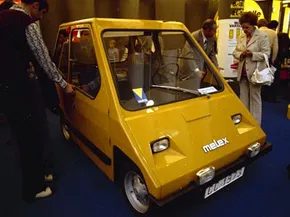
You can’t walk down a main street in Chicago, Los Angeles, or New York without bumping into metal boxes on wheels. Cars aren’t just transportation here. They are the infrastructure. They built the suburbs, dictated the flow of commerce, and shaped American culture for over a century. Most of those boxes still run on gas.
The engines under the hoods rely on the Otto cycle. Four strokes. Compression, combustion, expansion, exhaust. It’s a mechanical rhythm established by German engineer Nicolaus Otto in the late 19th century. Henry Ford didn’t invent this. He just made it affordable with the Model T. But the reliance on oil has been a sore spot for critics for decades. High costs. Poor fuel efficiency. Environmental damage. The complaints haven’t stopped.
Then there are the hybrids. And the electrics.
They are gaining traction. Not because they are cheap, but because they are different. They save fuel. They cut emissions. They encourage a different way of driving. Yet, they remain a niche. In 2008, only about 40,000 hybrids moved off the lot in the United States. That is a drop in the bucket compared to the millions of gasoline guzzlers clogging highways.
But here is the twist. We think electric cars are new. We think they are the future. The three major US automakers are racing to put showroom-ready models on lots. They are pitching innovation.
They are wrong.
The electric car is not a futuristic concept. It is an antique.
Go back to the 1890s. Gas-powered cars were barely more than noisy, unreliable prototypes. They sputtered. They broke down. They smelled terrible. Meanwhile, electric vehicles were already popular. They were quiet. They were clean. They had potential for mass production.
The history of electric cars is not a straight line. It is a cycle. A forgotten chapter we are trying to reopen.
The First Electric Car
Who actually built the first electric car? And why did it fade into obscurity?
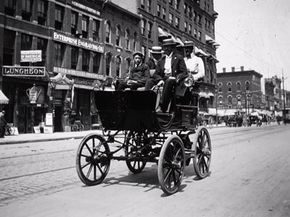
The idea of a self-propelled vehicle isn’t new. Leonardo da Vinci sketched primitive concepts back in the 15th century. But the real automotive age didn’t kick off until the late 19th century. That’s when restless inventors finally made cars a plausible form of transport. It wasn’t just about gasoline. Electric motors. Diesel. Steam. All of them were in the mix. Competition was fierce. Nobody cared about saving the planet then. They just wanted something that moved.
Defining the First Electric Car
So when was the first electric car built? The answer depends on how you define “car.”
Thomas Davenport, an American from Vermont, built the first working electric motor and vehicle between 1834 and 1835. It was essentially a small locomotive. It used two electromagnets, a pivot, and a battery. Think about that timeline. Andrew Jackson was president in 1834. Samuel Taylor Coleridge had just died. Edgar Degas was born. It feels like a different era.
Davenport’s design was too expensive to scale. The materials cost a fortune. It would take decades before electric vehicles became practical.
Other names popped up in that early window. Robert Anderson of Scotland likely designed an electric carriage between 1832 and 1839. Sibrandus Stratingh, a Dutch inventor, built an electromagnetic cart in the 1830s. These were prototypes. Toys for the wealthy. Not mass-market solutions.
Thomas Parker and the London Tube
If we’re talking about a car that could actually be mass-produced and driven on real roads, the credit goes to Thomas Parker. He built his electric vehicle in 1884.
Parker was British. He also electrified the London Underground. He knew power systems. His interest in fuel efficiency drove him to build this car. Smoke and pollution in London were choking the city. Graham Parker, Thomas’ great-grandson, noted that this environmental stress sparked the idea for eco-friendly driving. Parker wasn’t trying to save the whales. He was trying to clear the air.
The EV Golden Age (Briefly)
By the turn of the century, electric cars were outselling gas-powered cars.
Wait. Read that again.
In the early 1900s, electric vehicles were more popular than their internal combustion counterparts. Why did they lose? That’s the next page.
The Electric Car’s Early Reign and Gasoline’s Takeover
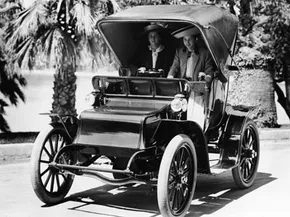
In the late 1800s and early 1900s, the electric car manufacturing industry was relatively robust and successful. In 1900, for instance, out of the total of 2,370 automobiles found in New York, Chicago and Boston, 800 of those cars were fully electric. Surprisingly, only 400 cars were powered by gasoline and the remaining 1,170 were steam-powered automobiles — popular because at the time steam technology was familiar and proven .
After just a few decades of improvement, electric cars around this time were clean, quiet and relatively efficient. Most resembled horse-drawn carriages, since that’s what most automobiles looked like at the time — a horse cart without the horse. In 1899, there were about 12 manufacturers making electric cars in the United States, and many of the cars were used as cabs in cities where the driving distances were often shorter — mainly due to the limited charge of the batteries.
Gasoline-powered cars during this time, on the other hand, were extremely noisy and smelled awful. They were often unreliable and had to be started (cranked) by hand, which was actually dangerous because it could lead to some nasty injuries. Fuel efficiency was embarrassing, and cars around this time didn’t really support our current notion of eco-friendly driving. But after a short while, the loudness and power of gasoline-powered cars actually became a positive, exotic attribute, and the kinks surrounding inefficiency and hazardous operation were eventually worked out.
One thing gas-powered cars had going for them was speed and range. Major obstacles for the electric car popped up in the form of the search for practical, rechargeable batteries. Even Thomas Edison, the American inventor (and a proponent of electric cars), spent some time trying to improve the electric car’s battery. In fact, he was even able to extend an automobile’s range to 100 miles. But his battery had its flaws; it was too heavy, easily damaged and expensive. Other battery improvements around the same time typically suffered from a combination of the same setbacks. By the time Henry Ford introduced his Model T, American roads were somewhat better and the demand for long-range vehicles was in place. The internal combustion engine quickly gained momentum and surpassed the electric motor as the popular choice among motorists. The Model T gave the people what they wanted in a reliable and inexpensive package.
However, by no means does the history of the electric car end around the turn of the 20th century. A few electric prototypes emerged during the 1960s and 1970s, and General Motors EV1, the subject of the 2006 documentary “Who Killed the Electric Car?” enjoyed some exposure during the 1990s. Recently, Toyota’s RAV4 EV and the Tesla Roadster have caught people’s attention, but high costs have made it difficult for either one of these vehicles to reach the mainstream. The three major U.S. automakers have announced plans to produce affordable electric vehicles in the near future, so, who knows? A new story may soon begin.