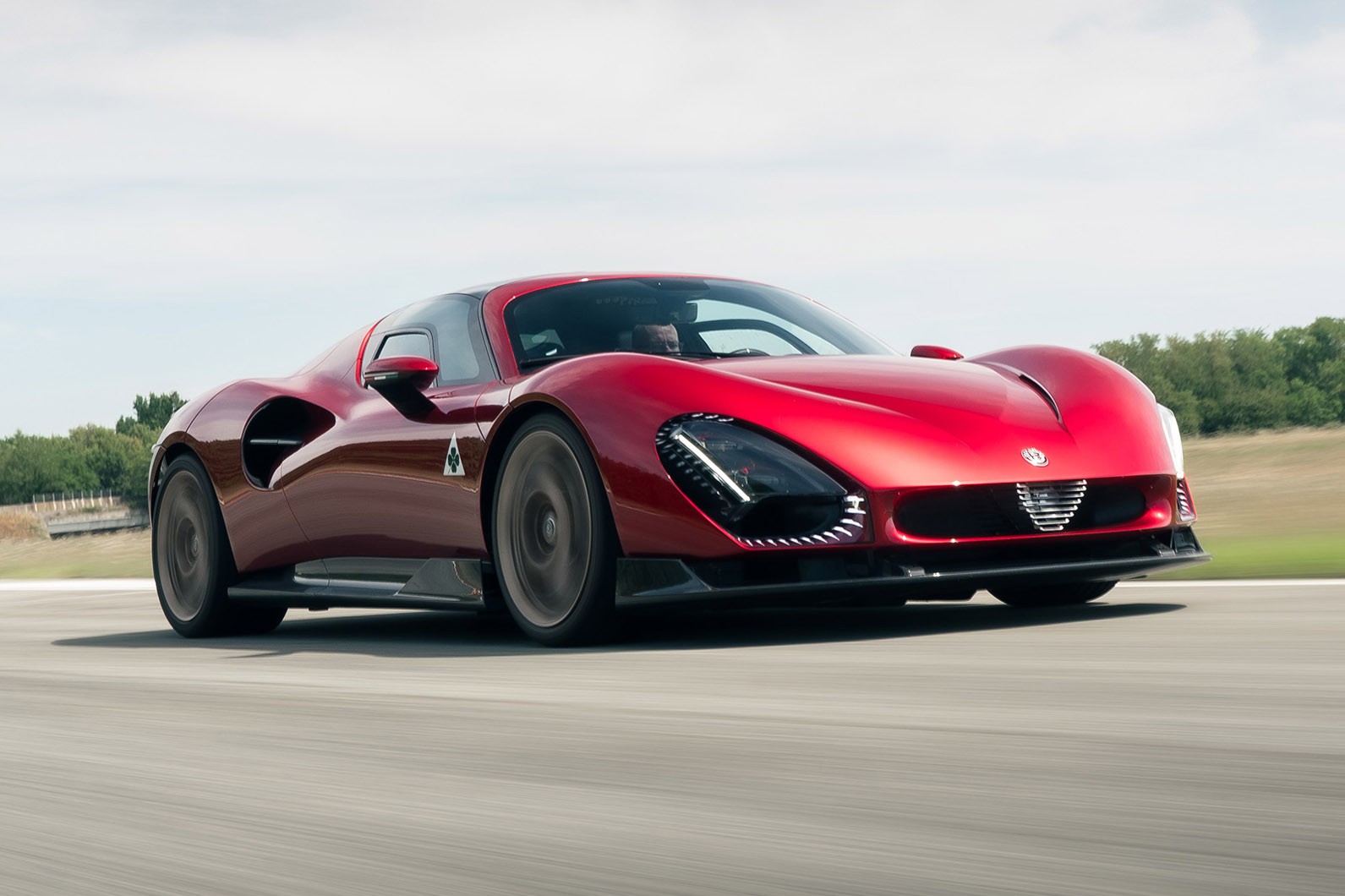
I just stepped out of a meeting room where we were essentially playing dress-up with metal and carbon fiber.
Or rather, they were letting me dream.
That’s what you have to do if you’re one of the thirty-three lucky souls buying the new Alfa Romeo 33 Stradelale. You get to specify it. Wildly. If they can do it. They won’t give me the final bill yet. They guard that number like state secrets.
But here’s the kicker.
The entire production run was sold out. Before it was designed. Before the engineers even nodded. Before the bosses at Stellantis knew it existed.
It’s a £2 million car from a brand that also sells crossovers for the price of a nice holiday home. £30k. It sounds insane. A total disconnect. Except. It works. It feels right for Alfa. And more importantly.
It’s actually good to drive.
How Customer Feedback Shaped The Alfa 33 Design Process
Let’s rewind.
In 2022, potential buyers saw sketches. Just lines on paper. Collectors. Fanatics. The sort of people who measure their lives in rev-matches and red spark plugs. They looked at those sketches and said. “I’ll take one.”
Alfa listened. Not the polite nod of corporate listening. Real listening. They took that input straight into the design phase. They even set up a committee called La Bottega. Their job? To oversee this limited-run beast once the go-ahead came through.
Camilla Rostagno leads La Bottega. She tells me they operated like a startup. Fast. Agile. No bureaucracy slowing the gears.
“We were like a start-up: agile and fast.”
That agility explains the timeline. By 2023 when the public saw the 33, the first car was already booked for delivery on 17 December 2014.
Wait.
Check the math. That is barely two years.
Why Building A £2 Million Car This Fast Is Hard
Jean-Philippe Delaire doesn’t love the speed. He’s the chief engineer. Ex-Citroën WRC tech guy. The man behind the Peugeot 508 PSE which, honestly, was decent. He finds the timeline… concerning. To use his gentle euphemism. “Consternating.”
You can see why. Building a new platform, tuning a V6, hand-finishing interiors for thirty-three unique customers in that timeframe is madness.
So how did they do it?
Stellantis.
It helps when your parent company owns Jeep, Chrysler, Peugeot, and Fiat.
Rostagno is sitting with me at the Balocco test track. A loop of tarmac hidden between Milan and Turin where the cars learn to behave. Or don’t. She points to the Stellantis connection. They didn’t have to invent every bolt. They could borrow the “best-in-class” hardware. The electronics. The safety structures. The baseline mechanics.
Then they layered the soul on top.
“We had something to start with,” she says. “We worked to make it a true Alfa.”
They took reliable parts and made them Alfa. The V6 sings. The handling bites. The look turns heads in Turin traffic. It’s expensive. Yes. £2m. But it wasn’t built on thin air. It was built on shared platforms, customer passion, and a lot of hurried engineering.
Which leaves me wondering.
Did the customers know it was going to be this quick?