You probably felt a pang of déjà vu.
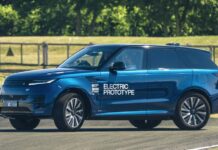
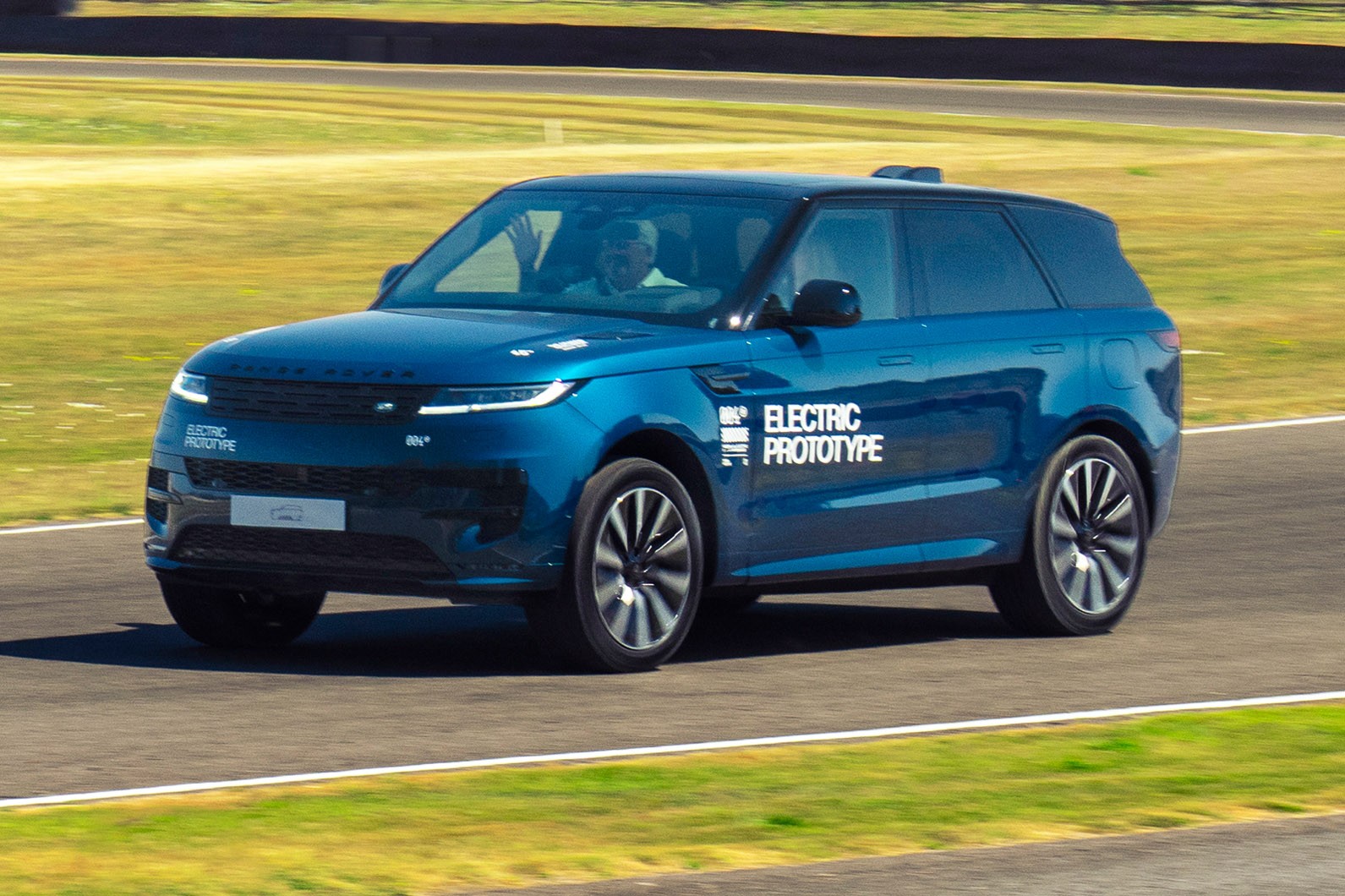
A year ago, Matt Saunders was kicking gravel off a prototype of the full-size electric Range Rover. It was supposed to launch immediately. It didn’t. Now? I’m doing the exact same dance in the Range Rover Sport EV. Another late-stage prototype. Another track. Another promise of an imminent market arrival that keeps slipping.
Is JLR playing with our time?
Technically, these two SUVs are clones. The Sport is just the little brother with different suspension tuning. Same bones. Same problems. Same potential. JLR insists they needed more time for testing, that perfection demands patience. Anyone who has looked at the US market, however, knows the truth. Big, expensive electric SUVs aren’t exactly selling themselves out here. But the pressure is mounting. Porsche brought their Cayenne EV. BMW is queuing up with the iX5. The window is closing.
The Platform: Born for Gas, Built for Power
The engineering story is familiar territory.
The Range Rover Sport EV rides on the MLA platform. It wasn’t born electric. It was designed for internal combustion engines, retrofitted for the battery age. Look under the skin, and it’s obvious. The battery electronics hide in the transmission tunnel—that old V8 space. The front motor? It sits in a cradle designed to mimic the impact behavior of an engine block. Safety engineers didn’t want to gamble with the crash dynamics.
Does it show inside?
Surprisingly, no.
The floor isn’t raised. The packaging feels standard. You don’t sacrifice legroom or cargo space. JLR claims the weight matches the plug-in hybrid versions. That’s impressive for a car with nearly 120 kWh of chemistry underneath you. Most EVs get heavier. This one stayed flat.
Off-Range Performance Matters Most
Let’s talk about the motors.
They are homegrown. JLR engineers didn’t shop for third-party drives because nothing off the shelf delivered the torque they wanted. They needed instant grunt from zero RPM. Off-road traction relies on low-end torque. So, they built their own. These motors churn out 444 bhp in the base version and 542 bhp in the top spec.
Where do they make them? Right next to the combustion engines at a JLR plant. It’s a statement. We aren’t abandoning ICE. We are coexisting.
The electrical architecture runs on 800V. Why does that matter? Speed. Faster charging. The exact kilowatt rating remains under wraps, but the voltage step is standard fare for luxury EVs now. It puts the Sport in the same conversation as the Tesla Model S Plaid or the Lucid Air for charging ease, if not necessarily raw speed.
The secret to an electric off-roader isn’t peak horsepower. It’s instant torque delivery at low speeds.
Battery Chemistry and Range Realism
The pack comes from AESC. They use double-stacked cylindrical cells. You might know AESC; they supply Tesla too.
The usable capacity? 118.5 kWh.
It’s a solid number. Not huge, not tiny. Compared to the Porsche Cayenne Turbo E-Hybrid or the fully electric Cayenne concepts, it’s competitive. Compared to the incoming BMW iX5, which packs a monstrous 144 kWh? The Sport looks conservative. JLR projects 330 miles of range on the US EPA cycle. That’s their conservative number. WLTP tests, common in Europe, would show a higher figure. The EPA cycle is brutal. Hitting that 330-mile mark is respectable, though. It keeps the Sport viable for daily use.
Efficiency?
Don’t hold your breath.
JLR engineers won’t pretend this is an efficiency champion. Look at the shape. Bluff. Boxy. Designed to cut through mud and snow, not air. Add the standard all-season tires, which offer off-road grip at the expense of rolling resistance, and you have a physics problem. You’re fighting drag. You’re fighting friction.
The result is a car that works as an electric SUV, but one that burns energy faster than sleeker competitors. Is it worth it? If you actually use that off-road capability, yes. If you park it in a garage, probably not.
Which SUV suits you?
- Choose the Sport EV if you prioritize off-road capability, instant torque, and the distinct Land Rover chassis feel without the vibration of an engine.
- Skip it if you are chasing maximum miles per kilowatt or minimalist design purity. This is a tool for terrain, not just tarmac.
The Sport EV doesn’t apologize for what it is. It’s heavy. It’s inefficient by sedan standards. It’s built to go where other electric cars can’t. The V8 is gone. The silence is absolute. The hills remain.