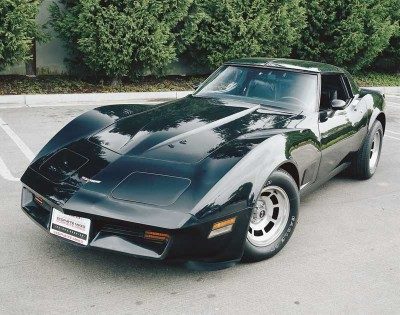
The early 1980s were brutal for heavy American muscle. Corporate Average Fuel Economy (CAFE) standards were tightening the noose around gas-guzzlers. The Corvette wasn’t exempt. If it was going to survive the decade, it needed to lose weight.
Chevrolet stripped about 250 pounds from the 1980 C3. They swapped the steel differential housing and front-frame crossmember for aluminum. Plastics replaced metal in more places than ever before. It was a diet, pure and simple.
The engine numbers tell a split story. The base L48 350 cubic-inch small-block kept its aluminum intake manifold from the L82 but lost power to stricter emissions tuning. It settled at 190 bhp at 4,400 rpm and 280 lb-ft of torque at 2,400 rpm. The higher-performance L82? It actually gained five horses. That pushed it to 230 total horsepower.
The 1980 Corvette C3 lost 250 pounds and dropped its drag coefficient to 0.443, but power figures varied wildly by region and trim.
California buyers got the short end of the stick. State emissions laws forced them into a detoxed 180-horsepower 305 small-block. That engine only came with an automatic transmission. No manual option for the Golden State.
Aerodynamics got a minor overhaul for better mileage. Front and rear spoilers were reshaped and merged into the bodywork. The grille was raked back slightly. The coefficient of drag (Cd) dropped from 0.503 to 0.443. It wasn’t fast. It was just less slow.
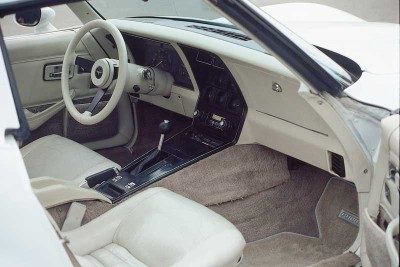
Exterior chrome vanished where it could. Crossed-flags emblems on the front fenders were gone. Inside, the cabin saw some boring but practical shifts. Air conditioning became standard. The tilt/telescope steering wheel was now standard too. Power door lock buttons moved to a new location.
The speedometer was capped at 85 mph. Another government mandate. Rear storage behind the seats was combined into a single compartment. The battery stayed in its own cubbyhole behind the driver. Survive the standards. Lose the weight. Keep driving.
The weight-saving moves arrived just in time. Early 1979 saw another fuel crisis hit the US. OPEC wasn’t the main culprit this time. It was the overthrow of the Shah of Iran that triggered the chaos. The result felt familiar to American drivers. Supplies tightened. Fuel prices skyrocketed. The auto market plunged. The national economy took a nosedive with it.
The Corvette’s survival seemed uncertain once again. Yet the car persisted. Sales dropped roughly 20 percent from 1979 levels. Still, 40,614 units rolled off the line in 1980. That number is respectable. Consider what the car was. It was heavy. It drank fuel. It was a specialty vehicle that had grown prohibitively expensive. The base price sat at $13,140.24 without options. That’s a lot of money for the average buyer.
Press reception remained split. Critics had always been divided since the Shark generation began. Performance metrics, however, held strong. The L82 engine achieved 0-60 mph in 7.1 to 7.7 seconds. That remained a key selling point. Some reviewers disliked the lightweighting efforts. They pointed to the “lighter-duty” rear axle as a compromise. The push for fuel efficiency over brute power rubbed some the wrong way. Fit and finish issues persisted. Quality control wasn’t perfect.
1980 Corvette Specifications
Chevy stripped 150 pounds from the C3. They added standard spoilers integrated into a reshaped nose and tail. The cockpit received updates. Emblems were refreshed.
Here are the specs for the 1980 model:
- Engine: 5.0L (305 cubic-inch) V8
- Horsepower: 190 hp @ 4400 rpm
- Torque: 250 lb-ft @ 2800 rpm
- Transmission: 4-speed manual or 3-speed automatic
- Curb Weight: Approx. 3,150 lbs (varies by transmission/options)
- 0-60 mph: 7.1–7.7 seconds (L82 engine)
- Base Price: $13,140.24
“The Corvette continued to ride high despite the turbulent economic climate of 1980.”
Why the 1980 Model Matters
The 1980 Corvette represents a pivot point. It wasn’t just about surviving a recession. It was about adapting to a new reality. Buyers wanted performance but couldn’t ignore the gas pump. The L82 engine balanced these needs. It offered decent acceleration without guzzling gasoline like the earlier big-blocks.
How the Shark Changed in ’80
The visual updates were subtle but significant. The nose and tail reshaping improved aerodynamics. Standard spoilers helped stability at high speeds. The interior tweaks focused on ergonomics. The weight reduction came from thinner glass and lighter components. These weren’t cosmetic changes. They were survival tactics.
Comparison: 1979 vs 1980 Corvette
The 1979 model faced similar
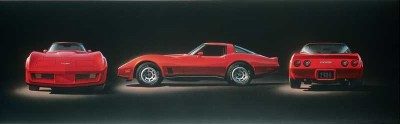
The 1982 Corvette: A Statistical Deep Dive Into The Final C3
The numbers tell a story that the marketing brochures often obscured. We are looking at the final year of the C3 generation, a car that was simultaneously shrinking in spirit while holding its ground in dimensions. The 1982 coupe sat on a 98-inch wheelbase, measuring 185.3 inches long and just 69 inches wide. It was low at 48 inches tall, but heavy. Curb weight sat at 3,495 pounds. That is dense for a sports car of that era.
The chassis was competent but aging. It used independent suspension all around. Up front, double A-arms and coil springs did the work. Tubular hydraulic shocks kept the body in check. An anti-roll bar added some lateral stiffness. The rear was different. It used lateral leaf springs with struts. U-joint halfshafts and trailing arms completed the setup. It was not a modern multi-link affair, but it was independent.
Powertrain and Performance
Under the hood, you had three versions of the OHV V-8. Displacement varied slightly in the official specs but mostly hovered around the 350 cubic inch mark, with one version listed as 5.0 liters and the others as 5.7 liters in the source data. The bore and stroke configuration shifted depending on the output.
The base engine pushed 180 horsepower at 4,200 RPM. Torque was 255 lb-ft at 2,000 RPM. It used a single 4-barrel carburetor. If you were in California, this was the only option. It cost $50 less than the standard engine.
There was a mid-tier option making 185 horsepower at 4,000 RPM. Torque sat at 270 lb-ft at 2,400 RPM. Same carb setup.
The top tier was the 220 horsepower engine. It spun to 5,200 RPM for power. Torque dropped slightly to 260 lb-ft at 3,600 RPM. This was the one most enthusiasts chased.
Transmission choices were limited. A 3-speed Hydra-Matic automatic was standard. A 4-speed manual was available. The automatic had a 3.55:1 axle ratio. The manual used a 3.07:1 ratio. It felt sluggish by modern standards, but the C3 was built for cruising, not drag strips.
Production and Pricing Reality
Base price for the 2-door coupe was $13,140.24. Total production for this body style was 40,614 units. Not a massive run compared to the early 70s, but steady.
Options defined the final value. Power door locks appeared on 32,692 cars for $140. Removable glass roof panels were chosen by 19,695 buyers for $391. Rear window defoggers were popular, selected on 36,589 vehicles for $109.
Handling upgrades were niche. The Gymkhana Suspension package went on 9,907 cars for $55. Heavy-duty shock absorbers were rarer, appearing on just 1,695 vehicles for $35.
Cruise control was a common sight, found in 30,821 examples. The 230 horsepower engine was a significant option, chosen by 5,069 buyers for $595. The 4-speed manual transmission was ordered in 5,726 instances. The automatic was overwhelmingly preferred, appearing in 34,838 cars.
Aluminum wheels were a standout choice, installed on 34,128 vehicles for $407. Tire upgrades varied. White letter SBR tires in P255/60R15 size were fitted to 26,208 cars for $62. The larger P255/70R15 white letters went on 13,140 cars for $426.16.
Audio and Convenience
Electronics were basic but functional. The AM/FM stereo with an 8-track tape player was a hit, installed in 15,708 cars for $155. The cassette