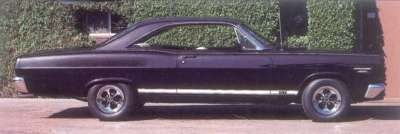
Mercury had already tried the intermediate class once before. It didn’t work out. The company needed a win. So they doubled down. They built something bigger. Heavier. Stronger. This was the second attempt at the Mercury Comet for the 1966 and 1967 model years.
Why the 1966-1967 Mercury Comet Matters
The early sixties saw a rush of new mid-size cars. Ford and GM were fighting for dominance. Mercury wanted in. Their first try fell short. It lacked punch. It lacked presence. The market didn’t respect it. By 1966, Mercury decided to stop playing small. They took the platform and stretched it. They reinforced the frame. They added weight. The result was a car that finally felt like a serious contender.
The Shift to Bigger and Beefier
This wasn’t just a facelift. It was a fundamental rethink. The 1966 Comet was longer. It was wider. It sat on a longer wheelbase than its predecessor. This gave the cabin more room. It gave the trunk more space. More importantly, it changed the car’s stance. It looked substantial. It looked like it belonged in the same conversation as the Chevy Chevelle or the Dodge Dart.
The 1966 Mercury Comet was the answer to a failed first attempt. It was bigger. It was beefier. It was finally ready to compete.
Under the Hood: Engine Options and Performance
Power was the key to survival. Mercury packed these cars with options that mattered to enthusiasts. The base engine was still a straight-six. But most buyers looked elsewhere. The V8s were where the interest lay.
- 200 CID Inline-Six : The entry-level option. Reliable. But slow.
- 289 CID V8 : The heart of the Comet. Standard in many models. Produced 200 to 271 horsepower depending on tuning.
- 390 CID V8 : The heavy hitter. Reserved for the S-33 and top-tier models. Delivered serious torque and presence.
The 289 was the sweet spot. It fit the budget. It fit the trunk. It fit the performance expectations of the era. Gearheads recognized the potential immediately.
Design and Styling: A Mature Look
The styling shed the awkwardness of the earlier Comet. Lines were cleaner. The front end was sharper. The rear was more integrated. Mercury wanted a car that looked grown-up. The result was a profile that held its own against the competition. It wasn’t flashy. It was confident.
Where the 1966-1967 Mercury Comet Fits Today
Collectors look for specific trims. The Cyclone and S-33 are the holy grails. They represent the performance peak of this generation. Standard sedans and coupes are plentiful. But they lack the cachet of the higher models. The S-33, in particular, is sought after for its unique badging and upgraded suspension.
The story of the 1966-1967 Mercury Comet is one of redemption. Mercury learned from its mistake. It built a better
Durability wasn’t the selling point you wanted to hear. It was the only point they had.
For the first generation of Comets (1960-1965), the car played second fiddle to the Ford Falcon. Buyers knew exactly what they were getting: a Falcon dressed up in Mercury finery. It was an upmarket compact. Nothing more.
Ben D. Mills, Lincoln-Mercury General Manager, and Paul F. Lorenz, his sales chief, realized the Comet needed a hook. They needed attention. So they chose endurance.
They marketed the Comet as indestructible.
It wasn’t romantic. It was engineering brute force. But it worked.
The Whiz Kid’s Endurance Campaign
Mills was part of the famous “Whiz Kids.” These were seven ex-Air Force officers and one other recruit who helped Henry Ford II save the company after WWII. Mills was the engineer-turned-lawyer who understood the machinery and the money.
He had a Bronze Star from the war. He had programming and progress analysis for the U.S. Army Air Force under his belt. He knew how to push limits.
As GM of Lincoln-Mercury since 1958, he pushed the Comet through hell.
The highlight was a 100,000-mile run at Daytona International Speedway. Four 1964 Comets circled the track. They set 732 FIA endurance records. The average speed? Over 105 mph.
Then came the cross-continental trek.
A factory team of 1965 Comets drove 16,247 miles from the tip of South America to Fairbanks, Alaska. Forty days. No breakdowns. No spark plug replacements. Not even a carburetor adjustment for the altitude, according to race-car builder Don Bailey.
“Mechanically we didn’t even adjust the carburetor,” Bailey told the press.
Comets were durable. And yes, that durability sold cars.
From 1961 to 1964, the Comet outsold the full-size Mercury every single year. It became Lincoln-Mercury’s best-selling line. Sales dipped in 1965.
But Mercury had an ace up its sleeve.
The 1966 Mercury Comet Lineup
The 1966 model year marked a hard break.
Before 1966, the Comet was a “senior compact.” It was longer and wider than the Falcon, with quad headlights and “important” styling. The 1962-1963 Meteor had tried to fill the intermediate role. It failed. The Comet filled in the gaps until 1965.
In 1966, the Comet stopped pretending.
It grew up.
It became a genuine intermediate. The wheelbase for coupes and sedans lengthened. The styling changed. It wasn’t just a Falcon with a different grille anymore. It was a real competitor in the intermediate market.
Drag racing would soon take over the marketing narrative. But for 1966, the shift from compact to intermediate was the real story.
The Comet was no longer just tough. It was big.
What happens when a compact stops being small? The competition gets tighter. The V8 options get louder. The line between a car and a muscle machine blurs.
The 1966 Comet didn’t just survive the transition. It forced the segment to change.
How big is big enough? In 1966, Mercury said “bigger.”
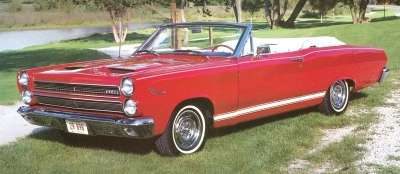
Mercury Comet upsizes to challenge GM’s A-Body giants
The 1966 Mercury Comet didn’t just change; it graduated. Previously, the Comet leaned heavily on the compact Falcon’s platform. That changed instantly. Now, the Comet sat on the same unitized backbone as the intermediate 1966 Ford Fairlane.
It was a complete inversion. The Falcon became the spin-off, built on a shortened version of the new Fairlane/Comet structure. Both vehicles were designed from the ground up. Upsizing made sense. It gave Ford’s intermediate lineup the physical presence it needed.
Competing with the A-Body fleet
The new size put the Comet squarely in the thick of the most contested segment of the American auto market. It now faced off against GM’s A-Body intermediates. That includes the Chevrolet Chevelle, Pontiac Tempest, and Oldsmobile F-85. The Buick Special and Sky Lark were also in the mix.
Chrysler wasn’t far behind. The Comet had to hold its ground against the Plymouth Belvedere and Dodge Coronet. Rambler’s Classic also claimed a slice of that growing market share. This wasn’t just about space. It was about survival in a class that was rapidly becoming the heart of the industry.
Horsepower wars and the 390 V-8
The mechanical upgrades were just as significant as the dimensions. Ford’s engineers had ammunition for the mid-Sixties horsepower wars. The 1966 Comet could finally be equipped with a 390 cubic-inch V-8. Before this model year, the biggest engine under the hood was the small-block 289.
The jump in performance was stark. The 289 maxed out at 225 horsepower. The new 390 in the Cyclone GT delivered 335 horsepower. That is a massive gain. Weight also increased, but not drastically. The 1966 GT hardtop added only 321 pounds over the 1965 Cyclone. Efficiency met brutality.
Model breakdown: 202, Capri, Caliente, Cyclone
The 1966 Comet range was split into four main series. There was the 202, Capri, Caliente, and Cyclone. Station wagon buyers had two choices: the Voyager or the Villager.
The base 202 series was a specific creature. It came only as a two- or four-door sedan. It stood 7.1 inches shorter than the rest of the Comet family due to a truncated rear deck. Its overall length measured 195.9 inches. Trunk space shrank to 15 cubic feet, compared to the 17 cubic feet found in the Capri, Caliente, and Cyclone models.
Yet, the unassuming 202 remained the volume leader. It was the Comet’s best-selling line in 1966. People liked the value. They liked the durability. But they didn’t want the extra length of the intermediate.
Trimming the Line: Capri and Caliente
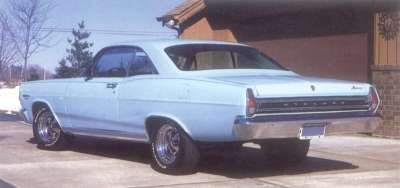
If you skipped the base model, the Capri was your next stop. It arrived as either a four-door sedan or a two-door hardtop coupe. Think of it as the successor to the 404 series that ran in 1964 and 1965. Mercury didn’t skimp on the small stuff here. Standard touches included bright moldings along the wheel lips and rocker panels. The interior got a deluxe steering wheel. You could choose all-vinyl seating or vinyl paired with cloth. A locking glovebox came standard. It was practical.
Mercury built its millionth Comet in 1966, a four-door Caliente.
Then there was the Caliente. This was the luxury trim for the 1966 Comet. It wasn’t just about looks. Standard equipment included simulated woodgrain trim inside. Loop-pile carpeting covered the floor. Deluxe armrests featured courtesy lights and paddle-style handles. The heater and defroster controls were lighted. Full instrumentation was standard. You also got a remote driver’s-side mirror.
The Caliente wasn’t limited to body styles. You could get it as a convertible. Or a sedan. Or the hardtop. It was the top-tier option before you started looking at custom packages. That millionth car rolling off the line in 1966? A four-door Caliente.
1966 Mercury Comet Powertrains
Now to the engine bay. The 1966 Mercury Comet powertrains varied widely. Every Comet through this era, including station wagons, had a choice of two base engines.
The economical choice was the 200-cubic-inch inline-six. It was a pushrod design. Output sat at 120 horsepower. It was adequate. It wasn’t thrilling.
The more powerful alternative was the 289 V-8. This unit pushed 200 horsepower. A significant jump.
But if you wanted real va-va-voom, you looked at the optional 390-cubic-inch V-8s. Mercury split these by transmission type.
- Manual transmission models: Got the 265-horsepower version with a two-barrel carburetor.
- Automatic transmission models: Got the 275-horsepower version with a two-barrel carburetor.
Mercury built its millionth Comet in 1966, a four-door Caliente.
Why the split? Automatics needed a bit more torque to get the extra weight moving. The 275-horsepower rating made sense there. The manual version didn’t need that extra shove. It could handle 265 horsepower just fine.
This setup gave the Comet some serious range. You could buy it as an economy commuter. Or a light muscle car. Or a luxury cruiser. The hardware was there.
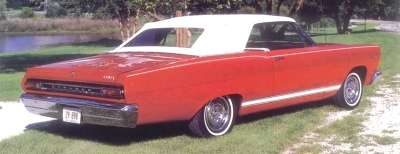
The 1966 Comet Cyclone GT: A 335-Horsepower Indy 500 Contender
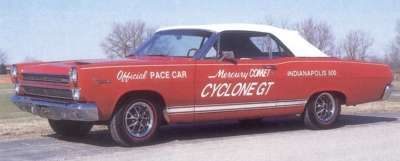
This replica of the Cyclone GT picked to lead the 1966 Indy 500 pack captures the raw intent of Ford’s mid-size muscle. It wasn’t just about looks. It was about brute force wrapped in steel.
Base models dragged a manual three-speed gearbox. First gear lacked synchronization. You learned to double-clutch or suffer the grind. V-8 Comets got a fully synchronized unit, which was nice. But if you wanted to slip a stick, you paid extra. Options ranged from the Multi-Drive Merc-O-Matic three-speed automatic to a floor-mounted four-speed. Wagons couldn’t have the four-speed. Practicality often trumped performance in the station wagon market.
Bucket Seats and Big Blocks
The performance tier was the Cyclone series. It came strictly as a bucket-seat hardtop or a convertible. That convertible body style was new for the lineup. Every Comet drop-top featured glass rear windows and five-ply fabric tops. They weren’t cheap toys.
Standard power under the hood was the two-barrel 289 V-8. It was competent. But the real story was the GT option package.
The 390 V-8 GT Package
The GT trim changed everything. It swapped the small-block for a 390 V-8. Ford tweaked this big-block to spin out 335 horsepower at 4,800 rpm. Torque hit 427 pound-feet at a meaty 3,200 rpm. That low-end grunt made it a street king.
How did it achieve those numbers?
- Dual exhausts replaced the single pipe found on standard 390 Comets.
- A hydraulic camshaft with 0.48-inch valve lift replaced the standard 0.40-inch lift.
- Compression ratio climbed to 10.5:1. One full point higher than the milder big-blocks.
- A four-barrel Holley carburetor with 1.562-inch bores fed the mixture.
Visual cues were just as important. Chrome engine trim sparkled in the bay. The hood featured a twin-scoop fiberglass design. The scoops were non-functional. They were purely aesthetic, screaming performance to anyone watching from the curb.
Transmission Choices and the GTA
The Cyclone GT came standard with the all-synchronized three-speed manual. Floor shift. Simple. Effective.
If you wanted more control, you could order the “four on the floor” for an extra $188. That’s significant money in 1966 dollars.
But there was a third path. For just two bucks more than the automatic, you could get the GT’s exclusive Sport Shift Merc-O-Matic. This wasn’t your average slushbox.
The three-speed Sport Shift had selector slots for first and second ranges. You could hold the transmission in low or second gear for as long as you wanted.
When equipped with this specific transmission, the car earned a new badge. It became a GTA.
The standard Multi-Drive Merc-O-Matic didn’t offer that level of driver input. The Sport Shift let you lock into lower gears for hard acceleration or engine
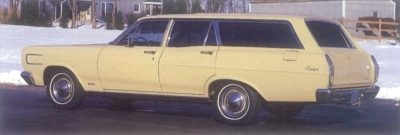
Most drivers today know the Comet as a compact economy car. They don’t know about the 1966 GT.
That year, Mercury shoved a 410-horsepower engine into a package most people ignored. It wasn’t just a badge job. You got heavy-duty springs. Heavy-duty shocks. A stabilizer bar that actually worked. The “power-booster” engine fan kept things cool under pressure.
The wheels were no joke either. Heavy-duty 5.5-inch rims wrapped in 7.75 × 14 nylon-cord tires.
Visually, it stood out. Rocker stripes. Special insignia. That’s what you paid extra for.
Pricing and The Indianapolis 500 Effect
The base price for a Cyclone GT sat at $2,891.
That’s 1966 money.
Add the usual options and you weren’t walking away cheap. Four-way power seats. A clock. A tachometer. Power windows. Power brakes. Power steering. An AM/FM radio.
A fully loaded GT routinely topped $3,500.
Then came the Indy 500.
Mercury picked a Cyclone GT convertible to pace the 1966 race.
Publicity hits hard. Sales figures back it up.
Mercury sold twice as many Cyclone GTs as standard Cyclones that year.
Here are the numbers:
– GT Hardtops: 13,812
– GT Convertibles: 2,158
– Standard Cyclone Hardtops: 6,889
– Standard Cyclone Ragtops: 1,305
The GT was the hot ticket. The standard Comet? Not so much.
The Comet Wagon: Utility Without the Hype
Comet station wagons moved slowly.
They didn’t sell like the GTs. Fewer owners found these wagons.
But they were practical.
Both the Villager and Voyager models featured dual-action tailgates. This was a new feature for Mercury and Ford in 1966. You could open the gate down. You could open it out. It was standard on the Villager. Extra cost on the Voyager.
Visual differences mattered here too.
The Voyager had plain body sides. The Villager got “walnut” Di-Noc panels on the sides and tailgate. It looked more upscale.
Underneath, both wagons sat on a 113-inch wheelbase. That’s shorter than the 116-inch wheelbase on other body styles.
Fold down the second-row seatbacks and you get 109.5 inches of load length.
Total cargo capacity?
85.2 cubic feet. Plus another 8.5 cubic feet under the rear deck.
Interiors were all-vinyl. Standard.
Option list included:
– Rear-facing third seats with safety belts
– Roof racks
– Electric rear windows
It wasn’t muscle. It was haulage.
Why Stacked Headlights?
Look at a 1965 Ford or Mercury Comet.
Stacked headlights.
Look at a 1965 big Mercury or Ford Fairlane.
Standard quad headlights.
Why the difference?
Motor Trend asked the question back then.
Bill Shenk, a designer in the Comet studio, gave the most graphic explanation.
In 1997, Shenk wrote a booklet about the era. The stacked theme didn’t start in 1965. It started in 1962-1963 in the Mercury studio.
Lee Iacocca. President of Ford Motor Company.
Don Petersen. Corporate sales manager.
They walked into the studio. They saw the stacked look. They loved it.
They told Gene Bordinat, design vice president, to put them on the 1965 Ford.
Before that request, Ford was trying to adapt European-style rectangular headlamps to the 1965 Ford model.
They were having trouble getting them legalized.
Regulations are a pain.
Iacocca and Petersen wanted a solution. The stacked heads were the answer.
So the Comet got them. The big Fords didn’t.
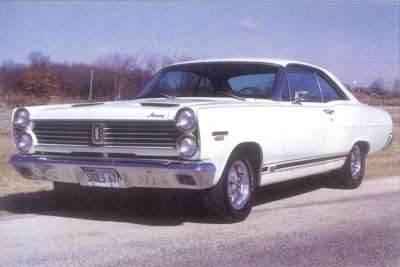
Why the Mercury Comet Stacked Its Headlights
The story of the 1965 Mercury Comet stacked headlights is a tangled mess of corporate mandates, cost-cutting, and accidental industry trends. There are three competing accounts for how the vertical lamps ended up on the car, and none of them tell a simple story.
Leo Shenk claims Lee Iacocca forced the Ford division to switch to vertical lights. The real problem was differentiation. Leo Bordinat, the styling director, insisted Mercury use side-by-side quads with a conventional grille to stay distinct from Ford. But the Comet’s front fenders were already tooled for stacked lights. So they went with it.
A.B. (Buzz) Grisinger, Lincoln-Mercury’s design director at the time, backs up the existence of the conflict. He remembers Bordinat coming over and demanding an alternate theme so the 1965 Mercury wouldn’t look like the 1965 Ford. Grisinger notes that everyone in the industry was experimenting with vertical headlights then. It wasn’t unique to Dearborn.
The Ford Side of the Coin
Joe Oros, Ford’s styling director, tells a different story. He says the stacked headlights originated in a Ford studio, not Mercury. Saved notes show work began in January 1962. This timeline debunks the theory that Ford stole the idea from the 1963 Pontiac Grand Prix. Unless Ford designers had a sneak peek at a preproduction Pontiac, the vertical lamps were a Ford invention.
Gale Halderman, former Ford design manager, agrees. He recalls the 1965 program was chaotic. The Mustang and Galaxie were happening simultaneously. Tooling costs were critical.
Bordinat was a genius at saving money. The creased, squarish 1965 Ford front fender used a shallow stamping die bent along a horizontal crease. There was an economic reason for the stacked lights. They followed the volume line of that cheap stamping process.
Halderman has no memory of Iacocca or Petersen forcing a Mercury theme onto Ford. It’s more likely both divisions pursued the same theme. Bordinat discouraged the Mercury version to keep the brands visually distinct.
A Temporary Fad
Vertical headlights became a Sixties fad. Once established on the 1965 Comet, they stayed for two more years. The related Fairlane adopted them in 1966 and 1967. Cadillacs, Buicks, Plymouths, and AMCs also used stacked lights before 1969. It was a trend, not a revolution.
1966 Mercury Comet Performance
Car Life magazine tested a 1966 Mercury Cyclone GT. They didn’t like it.
The magazine pointed out a 56.4/43.6 weight distribution. The Goodyear Power Cushion tires were barely adequate. Drum brakes were marginal. The steering was slow and overboosted.
Handling was mediocre. The 390-cubic-inch engine drew criticism. Car Life wrote, “…the 390/4-barrel has never been much of a top-end performer. It develops plenty of usable torque in the lower reaches, and it pumps up more than enough horsepower for its nominal purpose. But, as a performer, it just doesn’t deliver.”
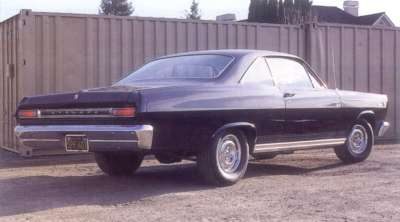
Why the 390 V-8 in GTs struggled to breathe
The numbers on paper looked decent. The 390 cubic-inch V-8 in the Cyclone GT produced 335 horsepower. Real-world testing told a different story. Car Life magazine had little patience for the engine’s limitations. They didn’t mince words. The problem lay in the cylinder heads. Restrictive valve passages choked the engine’s ability to breathe. It couldn’t exhale efficiently.
Hydraulic lifters added another layer of frustration. They capped the revs. You simply couldn’t push past 5,000 rpm. Even with an open exhaust system, the lifters pumped up and stalled performance. The engine felt dead at the top end.
Performance figures reflected this bottleneck. An automatic transmission and 3.25:1 rear axle ratio yielded a top speed of 120 mph. The quarter-mile time was a sluggish 15.2 seconds at 90 mph. Zero to 60 mph was quicker. It took 6.6 seconds. That gap between quick acceleration and weak top-end power proved one thing. The 390 made its torque low in the rev range. It was a low-rev torque monster, not a high-revving performer.
Management shuffles hurt Mercury’s focus
The Comet itself didn’t change much for 1967. What changed were the people in charge at Lincoln-Mercury. In 1964, Ben D. Mills moved up to corporate vice president of purchasing. His assistant, Paul F. Lorenz, took over as general manager. Then came 1966. Gar Laux arrived from the Ford Division. He had been general sales manager under Lee Iacocca.
Laux replaced Lorenz. This meant Lorenz only oversaw the 1966 selling season. Laux took the helm for 1967. Strategy shifted under new leadership. Marketing themes evolved.
The Cougar effect on Comet sales
Mercury was sliding in the mid-Sixties. Big Mercury sales dropped hard. 1967 sales hit just under 123,000 units. That was a 29% drop from 1966’s 173,000. It was also 32.5% below the 1965 peak of 182,000. Full-sized cars had reclaimed their title as the best-selling line since 1965. Comets lagged behind.
Demand for Comets cratered. 1966 saw a healthy 170,000 sales. 1967 plunged to 81,000. Labor problems hit all automakers that year. But Mercury’s own product cannibalism played a bigger role. The Cougar arrived in 1967. It stole sales from the Comet.
Mercury built almost 151,000 Cougars. The new sports coupe drove the company to a record sales year. Customers lured by the Cougar’s style likely abandoned upmarket Comets. The Comet lost its allure.
Marketing the 1967 Mercury Comet as ‘The Man’s Car’
Management decided to drop the “durability” angle. They pivoted to personality. The 1967 Comet was now “The Man’s Car.” Dealer brochaces screamed about excitement. The Cyclone two-door hardtop or convertible got the spotlight.
“The man who loves the excitement of high performance will just naturally take to the Cyclone,” the copy read. It emphasized the Cyclone 289 V-8. “Man-powered with the Cyclone 289 V-8… this is the Man’s Car with a heritage of performance.”
Mercury Cyclone was for men who liked big action. The messaging was aggressive. It targeted ego. It ignored engineering constraints. It sold an image that the 390 engine couldn’t quite deliver at high speeds. The Comet survived, but the era of pure durability was over. Performance branding took over.
The Man’s Car and the Comet’s Identity Crisis
The 1967 Cyclone GT hardtop started at $3,034. That’s $143 more than the previous year.
Madison Avenue pushed the “Man’s Car” campaign hard. It was a deliberate jab at the women’s movement. Women’s lib was seen as fringe. The Vietnam protests were heating up. Bra-burning and draft-card burning were real things back then. The establishment hated it. Mercury wanted to offer stability in rocky times. One solid institution. The automobile.
You can only guess how that marketing hurt Comet sales to women.
Design Shifts and Mechanical Consolidation
Mercury was backing away from the Comet name for its intermediate line. Only the 202 sedans and Voyager wagon kept the badge. Everything else was sold by series name. Styling and furnishings kept the family bond intact. A full-width, single-element grille replaced the 1966 two-section setup. Vertical taillights ousted the horizontal lamps on coupes and sedans. A revised rear bumper added half an inch to the overall length.
Under the hood, the basics stayed put. The 200-cubic-inch six and 289-cubic-inch V-8 were unchanged. The 390 engine changed. The two-barrel version from 1966 was consolidated into a single 270-horsepower unit. You could get it with a manual or automatic. The Sport Shift autobox got a new name: Select-Shift Merc-O-Matic. It was the only automatic option now.
The 427 V-8 Finally Comes Out of Hiding
The biggest change between 1966 and 1967? The 427-cubic-inch V-8s. They were hiding in plain sight in 1966. An obscure note in the sales brochure said an optional high-performance 427 would be available by special order after January 1, 1966. Ford told us they were rare in intermediates.
In 1967, they were open secrets. Listed in the Mercury catalog.
The “Cyclone 427” made 410 horsepower at 5,600 rpm. Torque hit 476 pound-feet at 3,400 rpm. One four-barrel carb.
The “Cyclone 427 Super” bumped it to 425 bhp at 6,000 rpm. 480 pound-feet of torque at 3,700 rpm. Two four-barrel carbs.
Both engines shared traits. Solid lifters. Six-quart oil pans. 11.1:1 compression ratio. You could get either in any closed 1967 Comet two-door model. Except the GT hardtop. Even the bobtailed 202 sedan under 3,000 pounds could take the hit.
They cost $1,129 extra for a V-8 intermediate. Four-speed gearboxes only.
Built for Drag Racing
The 427 V-8 came from the same 352-cubic-inch Y-block ancestor as the 390. But that’s where the similarity ended. The 390 was for street use. The 427 was engineered for all-out drag racing.
Castings were heavier duty. Internal parts were beefed up. Pistons. Rods. Forged-steel crankshaft. Cross-bolted main-bearing caps. The profile was slightly higher.
Despite the power, a relative handful of 427s were ordered in 1967 Comets.
Option Lists and The End of an Era
Less exciting stuff happened too. The 1967 Caliente four-door sedan got a Grande interior option. Knitted nylon upholstery in a diamond pattern. Cost $105.
An eight-track Stereo-Sonic tape player was new. Power front disc brakes were new.
Carryover options included a vinyl roof. In-dash Whisper-Aire air conditioning. Remote decklid release.
For 1968, the Montego and Cyclone nameplates replaced most of the Comet line. Different story. The 1966 and 1967 models marked the peak of the Comet line.
On the next page, listings of models, prices, and production of the 1966-1967 Mercury Comet.
For more information on different types of cars, see:
- Muscle Cars
- Sports Cars
1966-1967 Mercury Comet Models, Prices, Production
The Mercury Comet hit its stride in 1966-1967. It took a step up in size and performance. Here are 1966-1967 Mercury Comet specifications, covering the model’s heyday:
The 1967 Comet GT: A Slump in Numbers
The 1967 Mercury Comet Cyclone with GT equipment headed the Comet roster, as it did in 1966, but the numbers tell a different story.
Sales of the high-performance variants cratered.
Where the Cyclone line moved over 24,000 units in 1966, the 1967 model year saw that figure collapse to just 6,910.
Why did the GT hardtop coupe lose its crown in volume, even if it remained the performance flagship?
1967 Mercury Comet 202 Base Models
The entry-level 202 model saw a sharp decline in total production, dropping from 56,404 units in 1966 to 24,532 in 1967.
The two-door sedan, which accounted for the vast majority of base sales previously, produced only 14,251 units.
The four-door sedan fared worse, falling from over 20,000 units to a mere 10,281.
Base prices crept up slightly.
The two-door 202 started at $2,284, up from $2,206.
The four-door model went from $2,263 to $2,336.
Weights remained virtually static, with the two-door at 2,868 pounds and the four-door at 2,906 pounds.
1967 Mercury Comet Capri Trims
The Capri series also took a hit.
Total production fell from 30,666 to 20,963 units.
The four-door sedan dropped from 15,635 to 9,292 units.
The hardtop coupe held up better relatively, moving 11,671 units compared to the previous year’s 15,031.
Pricing adjustments were minimal.
The four-door Capri moved from $2,378 to $2,436.
The hardtop coupe went from $2,400 to $2,459.
Wheelbase remained the standard 116 inches for these models.
Weight figures saw only marginal increases, with the four-door at 2,940 pounds and the hardtop at 2,970 pounds.
1967 Mercury Comet Caliente Configuration Changes
The Caliente line followed the industry trend of consolidation.
Total production shrank from 47,717 units in 1966 to 20,658 in 1967.
The convertible coupe, a staple of the previous year with 3,922 units sold, saw production slashed to just 1,539 units.
The hardtop coupe dropped from 25,862 to 9,966 units.
The four-door sedan fell from 17,933 to 9,153 units.
Prices climbed across the board.
The four-door Caliente started at $2,535.
The hardtop cost $2,558.
The convertible moved up to $2,818.
These models sat on the same 116-inch wheelbase.
Weights increased slightly, with the four-door at 2,952 pounds, the hardtop at 2,982 pounds, and the convertible at 3,250 pounds.
1967 Mercury Comet Cyclone Production Crash
The Cyclone series saw the most dramatic contraction.
In 1966, the Cyclone line moved 24,164 units.
In 1967, that number plummeted to 6,910.
This is not a typo.
The GT hardtop coupe actually gained a small amount of volume, rising from 13,812 units in 1966 to 3,419 units in 1967? No, wait.
The 1966 GT hardtop sold 13,812 units.
The 1967 GT hardtop sold 3,419 units.
That is a massive drop.
The standard hardtop coupe fell from 6,889 units to 2,682 units.
The convertible coupe, which had 1,305 units in 1966, dropped to just 431 units.
The GT convertible saw the most severe decline, falling from 2,1