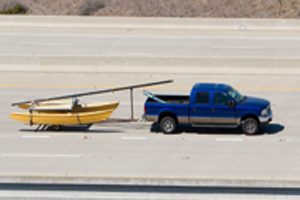
Towing capacity isn’t a suggestion. It is the hard limit set by engineers before they even touch the wrench. Exceed it and you risk shredding transmissions, warping frames, or losing control on a highway merge. The number you need lives in your owner’s manual. Ignore the hitch rating. Those aftermarket brackets often have higher limits than the car’s actual drivetrain. You tow by the weakest link. In this case, the vehicle.
Passenger weight matters. Cargo matters. Don’t treat a luxury sedan like a workhorse and expect it to pull a boat without thinking. If your passengers weigh more than 150 lbs each, that weight eats into your payload. Payload eats into your towing capacity. It is a simple equation. Get it wrong and you are driving a brick.
We are looking at specific years here. 2006 through 2009. These are older models now. Parts are scarce. Repairs are expensive. Know your limits before you hit the road.
Acura Towing Capacity
Acura plays a tricky game with towing. They make performance sedans. They also make midsize SUVs. Do not confuse the two.
2006 Models
The MDX is the only serious tow vehicle here. It handles 3,500 lbs. That is respectable for a unibody SUV. The RL, RSX, and TL? Stick to 1,000 lbs or 1,500 lbs. The TL was rated low. The RSX could manage 1,500 lbs with the right package. The TSX had no towing rating. Do not try it.
2007-2009 Models
The MDX jumped to 5,000 lbs in 2007. That is a massive increase. It changed the character of the vehicle entirely. The RL stayed stubborn at 1,000 lbs. The RDX appeared in 2007 with a 1,500 lbs limit. The TL remained capped at 1,000 lbs through 2008, then dropped out of the table for 2009. The TSX picked up a modest 1,000 lbs rating in 2007 and held it through 2009.
Always check the specific trim. A sport-tuned suspension might lower your payload and thus your towing capacity.
Audi Towing Capacity
Audi is cautious. They prioritize ride quality and handling over brute force. Most of their lineup in this era refuses to tow anything substantial.
2006 Models
Zero towing capacity for the A3, A4, A6, A8, S4, and TT. If you need to pull a trailer in an A4, you are out of luck. The Q7? That is a proper off-roader. It tows 5,500 lbs. That is serious capability.
2007-2009 Models
The R8 arrived. It is a supercar. It tows nothing. The S5, S6, S8, and TT continue the trend of zero towing. The Q7 remains the hero of the brand, holding steady at 5,500 lbs across 2007, 2008, and 2009. The A5 and A8 still refuse to pull. Stick to the Q7 if you need utility.
BMW Towing Capacity
BMW follows a similar path to Audi. Sedans and coupes generally have no business pulling heavy loads. The SUVs are where the muscle lives.
2006 Models
The 325, 330, 5-series, 7-series, M3, M5, M6, and Z4ZR4M) all have no towing rating. They are for driving. The X3 handles 3,500 lbs. The X5 handles 6,000 lbs. The 650 and 750 models are heavy luxury cruisers. They still get no tow rating in 2006.
2007-2009 Models
The X3 stays at 3,500 lbs. The X5 holds at 6,000 lbs. The X6 appeared in 2008 and shares the X5’s 6,000 lbs rating. The M5 and M6 are still locked out. The Alpina B7? No tow rating. The 1-series and 3-series coupes? Nothing. If you see a BMW sedan towing a trailer in this era, they are likely exceeding the limit. It is a common mistake.
Buick Towing Capacity
Buick offers a mix. The Rainier is a forgotten gem here. It has real utility. The Enclave is new in 2008.
2006 Models
The LaCrosse and Lucerne are limited to 1,000 lbs. The Rainier is the standout. It tows 5,700 lbs. The Rendezvous and Terraza handle 3,500 lbs.
2007-2009 Models
The Rainier got slightly stronger in 2007, hitting 5,800 lbs. It disappears after that. The Enclave launched in 2008 with a 2,000 lbs rating. It holds that through 2009. The LaCrosse and Lucerne remain stuck at 1,000 lbs. They are comfort cars. Treat them as such.
Cadillac Towing Capacity
Cadillac brings the big guns. The Escalade lineage is heavy. It is built for towing.
2006 Models
The CTS, CTS-V, DTS, SRX, STS, and STS-V are all capped at 1,000 lbs. Do not try to tow a boat with a CTS-V. It is a waste of horsepower. The Escalade family is the star. The standard Escalade tows 7,400 lbs. The ESV (extended) goes to 7,800 lbs. The EXT (pickup variant) handles 7,500 lbs. The XLR and XLR-V have no rating.
2007-2009 Models
The Escalade ratings climb. 2007 sees 8,000 lbs for the standard, 7,800 lbs for ESV, and 7,600 lbs for EXT. 2008 holds those numbers. 2009 pushes the standard Escalade to 8,300 lbs. The ESV drops slightly to 7,600 lbs. The
The mid-2000s were a messy era for towing specs. Manufacturers tweaked engines, added hybrid drivetrains, and reclassified models overnight. If you’re looking at a used truck or SUV from this window, the numbers don’t always make sense at first glance. A 2006 Silverado 1500 pulls 5,700 lbs. A 2007 model drops to 4,600 lbs. Then it stays there. Why? Engine swaps, emissions updates, and shifting weight distributions.
You need precision here. Guessing costs you tires, brakes, and potentially your rear differential.
Chevrolet: The Hybrid Experiment and the Tahoe Slump
Chevy’s lineup shifted drastically between 2006 and 2009. The Avalanche started strong. In 2006, the 1500 trimmed pulled 7,300 lbs. The 2500 heavy-duty version hit 10,200 lbs. That was peak capability for that body style. By 2009, the Avalanche 1500 dropped to 5,000 lbs. It’s a significant decline. You lose nearly 2,000 lbs of capacity just by hitting the 2009 model year.
The Colorado had a steady climb. It started at a meager 1,600 lbs in 2006. Two years later, in 2008, it jumped to 3,000 lbs. It stayed there through 2009. If you’re towing a small camper, that 2008+ Colorado is your sweet spot. The 2006 model is barely useful for anything other than a small utility trailer.
Then there’s the hybrid trend. Chevy went all-in early. The Silverado 1500 Hybrid in 2006 maxed out at 6,700 lbs. That was actually higher than the standard gas V8s of the time. The Tahoe Hybrid in 2008 and 2009 pulled 6,200 lbs. Compare that to the standard Tahoe. In 2006, it pulled 5,700 lbs. By 2007, it dropped to 4,500 lbs. It never recovered. The hybrid Tahoe out-towed its gas counterpart in the later years of this dataset. That’s a fact worth remembering if you’re buying used.
The 2006 Tahoe pulled 5,700 lbs. The 2007 Tahoe pulled 4,500 lbs. The 2009 Tahoe Hybrid pulled 6,200 lbs.
The Suburban followed a similar, albeit more complex, path. The 2500 series gained ground over time. 2006: 7,900 lbs. 2008: 9,600 lbs. That’s a 1,700 lb increase. The 1500 series, however, saw its capacity erode. 2006: 7,500 lbs. 2009: 5,100 lbs. The heavy-duty 2500 series became the more capable platform for towing heavy loads in the later years.
Trucks like the Silverado 2500 HD held steady around 10,000 lbs. The 3500 HD hovered between 9,500 and 9,700 lbs. These numbers are consistent, but they are lower than you might expect from a “three-quarter ton” truck. Don’t assume class implies capability without checking the specific year.
The Express vans were reliable workhorses. The 1500 model stayed flat at 4,300 lbs across all four years. The 2500 and 3500 models saw slight fluctuations. The 2500 went from 4,300 (2006) to 6,300 (2009). The 3500 stayed around 6,200 lbs. If you need cargo space and towing, the 2500 Express is the logical choice for post-2006 models.
Smaller cars like the Cobalt and Impala topped out at 1,000 lbs. The Malibu? No towing capacity listed. The Corvette? Also zero. If your trailer weighs more than a motorcycle with a few bags, stick to the trucks and SUVs.
Chrysler: The Aspen Anomaly and Town & Country Growth
Chrysler’s towing numbers are a study in consolidation. The PT Cruiser started at 3,500 lbs in 2006. Then it dropped to 1,000 lbs in 2007. Then up to 2,600 lbs in 2008. Then back to 1,000 lbs in 2009. The inconsistency is jarring. You have to check the specific trim and engine combination for these minivans and wagons.
The Town & Country minivan saw steady improvement. 2006: 1,700 lbs. 2007: 1,700 lbs. 2008: 3,600 lbs. 2009: 3,600 lbs. That jump between 2007 and 2008 is massive. Almost double the capacity. It happened because Chrysler likely updated the hitch rating or the cooling system. If you’re towing a small boat or camper, a 2008+ Town & Country is significantly more capable than a 2006 or 2007 model.
The Aspen SUV changed the landscape. Introduced in 2007, it pulled 8,950 lbs. It kept that number through 2009. The Aspen Hybrid in 2009 pulled 6,000 lbs. That’s respectable for a hybrid, but it’s 30% less than the gas V8 version. The 300C sedan pulled 2,000 lbs. The base 300? Only 1,000 lbs. The difference is the engine. The C trim usually got the larger V6 or V8. The base models didn’t.
The Crossfire convertible had no towing capacity. The Sebring sedan capped out at 1,000 lbs. Don’t try to tow with these. They aren’t built for it. The Pacifica minivan also saw a spike. 2006: 1,000 lbs. 2007: 2,600 lbs. Then it dropped back to 1,000 lbs in 2008 and 2009. Again, check the year and trim carefully.
The 2008 Town & Country pulled 3,600 lbs. The 2006 model pulled just 1,700 lbs.
Dodge: The Ram 3500 Takes a Leap
Dodge’s trucks tell the most dramatic story of this decade. The Ram 1500 started weak. 2006: 2,900 lbs. It stayed there in 2007 and 2008. Then, in 2009, it jumped to 3,800 lbs. That’s a near-30% increase. The redesign for the 2009 model year brought better frame engineering and engine options.
The heavy-duty trucks were the real contenders. The Ram 2500 moved from 9,050 lbs in 2006 to 9,300 lbs in 2009. Small gains, but consistent. The Ram 3500, however, saw a massive surge. 2006: 10,500 lbs. 2007: 10,650 lbs. 2008: 10,700 lbs. 2009: 12,300 lbs. That final jump is huge. The 2009 Ram 3500 could pull nearly 2,000 lbs more than the 2006 model. If you’re buying a used dually, aim for the
2006–2009 GMC Sierra and Sierra Hybrid towing
The Sierra 1500 saw a jump in 2007. It went from 4,000 to 4,800 pounds. That held steady through 2009. The heavy-duty Sierra 2500 started strong at 10,500 lbs in 2006. It dipped slightly to 10,400 in 2007 and 2008. Then it ticked back up to 10,500 in 2009. The Sierra 3500 hovered around 10,000 to 10,100.
Small trucks? The Canyon gained a bit of muscle. 2006 was 1,800 lbs. By 2008, it hit 2,400. It stayed there.
The Yukon line was inconsistent. 2006 Yukon maxed at 5,700 lbs. 2007 dropped to 4,500. 2009 climbed back to 4,800. The XL versions told a different story. 2006 was 7,500. 2007 fell to 7,100. 2009 saw a massive drop to 5,100. Why? Maybe frame stiffness. Maybe weight distribution. The data just says “5,100.”
Hybrids entered the chat. The Yukon Hybrid showed up in 2008 with 6,200 lbs. It matched that in 2009. The Sierra Hybrid appeared in 2009 but listed no capacity. Probably not rated for anything heavy.
Honda Pilot and Ridgeline towing specs
Honda’s mid-size game changed. The Pilot started at 3,500 lbs in 2006. It disappeared from the ratings in 2007. Came back in 2008 at 3,500. Stayed there in 2009.
The Ridgeline was stronger. 5,000 lbs in 2006. Gone in 2007. Back at 5,000 in 2008. The Odyssey stayed flat at 3,500 lbs across the board.
Small cars struggled. The Civic was 1,500 in 2006–2008. Dropped to 1,000 in 2009. The Accord was 1,000 in 2006–2007. No rating in 2008–2009. The CR-V? Never rated. Not even close.
HUMMER H2 vs H3 towing limits
HUMMER was all about brute force. The H2 started at 6,500 lbs in 2006. Climbed to 6,600 in 2007. Then jumped to 8,200 in 2008. It stayed at 8,200 through 2009.
The H3 was lighter. 3,000 lbs flat. 2006 to 2009. No changes.
The H3T pickup added a new variable. It showed up in 2009 with 4,400 lbs. Still less than the H2, but more than the standard H3.
Hyundai Tucson and Santa Fe towing capacity
Hyundai wasn’t pulling much in this era. The Tucson sat at 1,000 lbs for 2006–2008. The Santa Fe started higher at 2,700 in 2006. Then dropped to 1,650 in 2007 and 2008. The Elantra was weak. 1,500 in 2006. Then 750 in 2007 and 2008.
The Veracruz was never rated. The Accent? Zero. The Sonata? 1,000 lbs. The Azera? 1,000 lbs.
Infiniti FX and QX56 towing ratings
Infiniti’s luxury SUVs could pull. The FX35 and FX45 were consistent at 3,500 lbs from 2006 to 2008. In 2009, the FX35 dropped off the list. The FX50 took its place at 3,500.
The QX56 was the heavy hitter. 9,000 lbs in 2006 and 2007. It vanished in 2008. Returned in 2009 at 9,000.
The sedans? G35, M35, M45. All 1,000 lbs. Then they dropped off the list entirely in 2008–2009.
Isuzu Ascender and i-series towing
Isuzu was winding down. The Ascender stayed static. 5,300 lbs for 2006, 2007, and 2008.
The pickup-style i-series improved. The i-350 was 4,000 lbs in 2006 and 2007. The i-370 jumped to 5,500 in 2008. The i-280 was 1,700. The i-290 climbed from 2,100 in 2007 to 2,200 in 2008.
Jaguar and Land Rover towing capabilities
Jaguar didn’t pull anything. The S-Type, X-Type, XJ8, XJR, XK8, XKR, XF, XKR Coupe. All dashes. Zero ratings.
Land Rover was different. The LR3 and Range Rover (2006) maxed at 7,700 lbs. The Range Rover Sport was 7,700 in 2006. 7,716 in 2007. It held that 7,716 number in 2008 and 2009. The LR2 showed up in 2009 at 3,500 lbs.
The Heavy Hitters: Lexus and Lincoln Towing Limits
If you are pulling a boat or a heavy trailer in a Lexus or Lincoln, you need to know exactly where the line is. The numbers change fast.
In 2006 and 2007, the Lexus Lexus GX 470 towing capacity was a solid 6,500 lbs. The Lexus LX 470 towing capacity matched it. If you had the Lexus RX 330 towing capacity or RX 400h, you were capped at 3,500 lbs. Sedans? Forget it. The Lexus ES 330 towing capacity was zero. The LS 430 could pull 2,000 lbs, but that was about it.
By 2008, the Lexus Lexus LX 570 towing capacity jumped to 8,500 lbs. That is serious muscle. The RX dropped to 2,000 lbs. Lincoln followed a similar pattern. The Lincoln Mark LT towing capacity sat at 8,900 lbs for the 2006-2008 models. The Navigator held steady at 6,000 lbs. If you drove the Town Car or MKX, your limit was 2,000 lbs.
Mazda: Small Trucks and Crossovers
Mazda’s towing numbers depend on if you are driving a pickup or a crossover. The B-Series trucks carried the weight.
In 2006, the Mazda B4000 towing capacity hit 3,140 lbs. The Mazda B3000 towing capacity was 2,500 lbs. The Mazda B2300 towing capacity was around 1,600 lbs. The MPV could pull 2,000 lbs. The Mazda Tribute towing capacity started at 1,500 lbs but rose to 2,000 lbs for the hybrid in 2008.
The CX-7 and CX-9 joined the party in 2007 with 2,000 lbs each. By 2009, the B4000 still held 3,140 lbs. But if you put a Mazda3 or Mazda6 in the driveway, your towing capacity was zero. Don’t try it.
Mercedes-Benz: SUVs Do the Heavy Lifting
Mercedes separates its cars from its trucks. The sedans and coupes generally cannot tow anything. The Mercedes-Benz C-Class towing capacity is zero. The E-Class towing capacity is zero. Even the SLR McLaren does nothing.
But the SUVs? They pack a punch. In 2006, the ML350 and ML500 pulled 2,000 lbs. That changed in 2007. The new ML320, ML350, ML500, and ML550 all jumped to 7,200 lbs. The ML63 AMG matched that. The GL-Class started strong too. The Mercedes-Benz GL320 towing capacity was 7,500 lbs. The G500 pulled 7,000 lbs.
By 2009, the R-Class entered the fray with a Mercedes-Benz R-Class towing capacity of 3,500 lbs. The ML and GL lines stayed strong at 7,200 and 7,500 lbs respectively. If you want to tow with a Mercedes, buy an SUV.
Mercury and MINI: The Niche Players
Mercury was dying, but the trucks worked. The Mercury Mountaineer towing capacity was 3,500 lbs from 2006 through 2009. The Mercury Monterey towing capacity matched it. The Grand Marquis could pull 1,500 lbs. The Mariner (non-hybrid) also did 1,500 lbs. The hybrid version dropped to 1,000 lbs. The Sable was limited to 1,000 lbs in 2008 and 2009.
MINI? No. Zero. From the MINI Cooper Convertible to the John Cooper Works, none of them towed anything in these years. The frame isn’t built for it. Save your time.
Mitsubishi and Nissan: Off-Road Ready
Mitsubishi’s towing numbers fluctuated wildly. The Mitsubishi Raider towing capacity was 4,050 lbs in 2006, then dropped to 4,000 lbs. The Mitsubishi Montero towing capacity was 5,000 lbs in 2006. The Mitsubishi Outlander towing capacity was 1,500 lbs in 2006, jumped to 2,000 lbs in 2007, then back to 1,500 lbs in 2008. The Endeavor went from 3,500 lbs down to 2,000 lbs and back up. The Mitsubishi Lancer towing capacity was 1,000 lbs in 2006, then vanished.
Nissan was consistent with their trucks. The Nissan Titan towing capacity was 6,500 lbs across all four years. The Nissan Frontier towing capacity sat at 6,300 lbs. The Armada matched the Titan at 6,500 lbs. The Nissan Pathfinder towing capacity held at 6,000 lbs. The Xterra was lower at 5,000 lbs.
Sedans like the Nissan Altima towing capacity were stuck at 1,000 lbs. The GT-R? Zero. The Versa? Zero.
The Bottom Line
Check your year and model. The difference between 2006 and 2008 can be thousands of pounds. A 2008 Lexus LX 570 pulls 8,500 lbs. A 2008 Lexus RX 350 pulls 2,000 lbs. Know your limits. Don’t guess.
“Towing capacity isn’t a suggestion. It’s a hard limit based on frame strength, cooling, and transmission durability.”
If you are below the line, you are safe. If you are over it, you are playing roulette with your drivetrain. Keep it simple. Know your specs.
Pontiac, Porsche, and Saab Towing Limits
Pontiac’s lineup in the late 2000s was a mix of desperate attempts to stay relevant and solid if unexciting haulers. The muscle cars—the GTO, G6, and Grand Prix—were heavy. They could pull a small trailer if you needed to move a jet ski or a tiny boat, but the limit sat at a modest 1000 lbs. That’s barely enough for a utility trailer with gear. The Montana SV6 and Torrent were the workhorses, both rated for 3500 lbs. The Vibe, built on the Corolla platform, managed 1500 lbs in ’06 and ’07, then dropped to 1000 lbs by ’09. The Solstice? It couldn’t tow anything. It was a sports car, not a tow vehicle.
Porsche took a different approach. The Cayenne was the only game in town for towing, and it didn’t mess around. From ’06 through ’09, it held steady at 7716 lbs. That is serious hauling capability for a brand that builds supercars. The 911, Boxster, and Cayman had zero towing capacity. Don’t even ask.
Saab sat in the middle. The 9-5 could handle 3500 lbs, while the 9-3 was capped at 2000 lbs. The 9-7X, essentially a rebadied Trailblazer, was a beast with a 5500 lbs limit. The 9-2X, based on the Subaru Impreza, matched the 9-3 at 2000 lbs.
Saturn and Scion: Minimal to None
Saturn’s strategy was confusing. The Aura, Ion, and VUE were small cars. The Aura and Ion could tow 1000 lbs. The VUE and VUE Hybrid did 1500 lbs. If you needed more muscle, the Relay minivan hit 3500 lbs, and the Outlook SUV managed 2000 lbs. The Sky and Astra had no towing capacity. The hybrid variants of the Aura didn’t add any towing prowess.
Scion was strictly for parking spots and track days. The tC, xB, and xD all had a towing capacity of 0 lbs. You could not tow with a Scion. Not in 2006, not in 2009.
Smart and Subaru: City Cars vs. All-Weather Haulers
The smart fortwo (2008) couldn’t tow anything. It’s a microcar. It barely fits one person comfortably.
Subaru was more practical. The Forester could tow 2400 lbs from ’06 to ’08, then lost that ability in ’09. The Legacy and Outback were consistent, both rated for 2700 lbs throughout the period, though the Impreza Wagon and Outback Sport dropped to zero capacity in ’08 and ’09. The B9 Tribeca held strong at 3500 lbs in ’06 and ’07, then dropped to 2700 lbs in ’08 and ’09. The Baja pickup? 2400 lbs in ’06 and ’07, then gone. The WRX STI never towed anything.
Suzuki and Toyota: Range of Capabilities
Suzuki struggled with consistency. The Grand Vitara did 3000 lbs in ’06, ’07, and ’08, then vanished in ’09. The XL7 started at 3000 lbs and climbed to 3500 lbs in ’07 and ’08, but also disappeared in ’09. The Forenza and Reno were small, hitting 1000 lbs. The SX4, Equator, and later Vitara had zero capacity.
Toyota was the reliable king here. The Tundra started at 6800 lbs in ’06, dropped to 4800 lbs in ’07 and ’08. The Sequoia jumped from 6500 lbs to 7800 lbs in ’08. The Land Cruiser was the standout, climbing from 6500 lbs to 8500 lbs in ’08 and hitting 9935 lbs in ’09. The 4Runner and FJ Cruiser were steady at 5000 lbs. The Sienna, Tacoma, and Highlander Hybrid did 3500 lbs by ’09. The RAV4, Matrix, Corolla, Avalon, and Camry (non-hybrid) were lighter hitters, ranging from 1000 to 1500 lbs. The Prius and Yaris couldn’t tow at all.
Volkswagen and Final Specs
Volkswagen’s lineup was mostly passenger cars that couldn’t tow. The Passat, Jetta, Golf, GTI, Beetle, Eos, GLI, R32, and Rabbit had zero capacity. The Routan minivan did 2000 lbs in ’09. The Tiguan started at 2200 lbs in ’09. The Touareg was the only serious tow vehicle, hitting 7716 lbs consistently from ’06 through ’09.
“Towing capacity isn’t just a number; it’s a limit defined by cooling, suspension, and braking. Ignoring it ruins transmissions.”
For all these brands, the full specs include GVWR, GAWR, GCWR, cargo carrying capacity, curb weight, and payload. These figures matter. They define what the vehicle can actually carry and pull without breaking. A high towing capacity means nothing if your payload capacity is exhausted by the cargo in the bed.
The table above is almost entirely empty. That silence speaks volumes. If you are digging through archived specs for older Swedish iron, you won’t find much comfort in the numbers. Most entries from 2006 to 2009 show a hyphen. A dash. Nothing.
This isn’t an oversight. It’s a design philosophy.
The Non-Towing Era
Volvo didn’t build these cars to haul trailers. They built them to move people safely. The 2006-2009 Volvo towing capacity landscape is sparse because the market demand wasn’t there, and the platform limitations were real.
Look at the 2006 S60. It carries a 3300 lbs rating. That’s it. One outlier in a sea of negatives. The rest of the lineup?
- C70 : No rating.
- S40 : No rating.
- S80 : No rating.
- V50 : No rating.
- V70 : No rating.
- XC70 : No rating.
- XC90 : No rating.
By 2007, the S60 lost its rating entirely. Why? Engineering changes. Suspension tweaks. Or maybe just a shift in corporate strategy. The data disappears.
From 2008 to 2009, the entire model lineup—C30, C70, S40, S60, S80, V50, V70, XC70, XC90 —shows zero towing capacity.
This wasn’t a lack of capability in the chassis. It was a lack of approval. Volvo’s engineering teams were conservative. If they didn’t test it to destruction and certify it, it doesn’t get a number. Period.
Why This Matters for Owners
If you own a 2007-2009 Volvo XC90, you might assume it can tow a small boat. You’d be wrong. Without a manufacturer rating, the legal and financial risk is yours alone. Insurance policies often void coverage if you tow beyond rated limits. Even if the engine could move the load, the transmission cooling, the rear differential gearing, and the suspension travel weren’t validated for that stress.
The 2006 S60 is the exception. It had the rear-wheel-drive layout (or all-wheel-drive, depending on trim) and the engine torque to handle light loads. But even then, 3300 lbs is tight. That’s a small utility trailer or a modest jet ski. Not a camper.
The Bigger Picture
These hyphens aren’t just missing data points. They’re boundaries.
Volvo’s focus during this era was on safety, cabin air quality, and durability. Towing was a secondary market, largely dominated by American trucks and some European SUVs that prioritized payload. Volvo played it safe.
If you’re looking for Volvo GVWR or GAWR numbers, they exist. But towing capacity? That’s a specific certification. And for these years, Volvo largely declined to certify.
Check your owner’s manual. If it