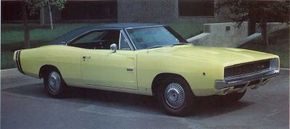
Mopar loyalists still get a twitch in their eye when they remember the final scene in Bullitt. Steve McQueen’s black-and-white striped 1968 Dodge Charger R/T didn’t just hold its own against the Mustang; it left it in the dust. The producers of that 1968 thriller didn’t just pick a car for the plot. They picked the perfect antagonist for McQueen’s cool, detached Frank Bullitt.
The vehicle in question was the redesigned 1968 Dodge Charger R/T Hemi. It wasn’t just another muscle car. It had star quality.
A Styling High Point for the ’60s
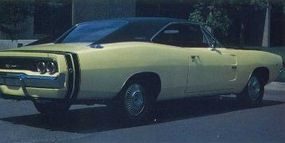
Look at the body. The new hidden-headlamp grille changed everything. It gave the Charger a clean, aggressive face that other cars in the segment couldn’t match. The body was curvy. Elegant. The backlight was recessed, and the tail was refined. Chrome was used sparingly, which was rare for the era. This design represented a high point for late-’60s muscle car aesthetics. It looked fast even when it was parked.
But the looks were only half the battle. The performance had to back it up.
Under the Hood and Around the Corner
For $3,506, you got more than just a pretty paint job. The R/T trim came equipped with the 375-horsepower 440-cid four-barrel Magnum V-8. That engine was serious business. It was paired with heavy-duty brakes, which you needed when you were pushing that much power.
The R/T handling package tightened up the suspension. F70X14 tires wrapped the wheels. These weren’t just for show. They provided the grip needed to handle the torque.
Inside the Cockpit
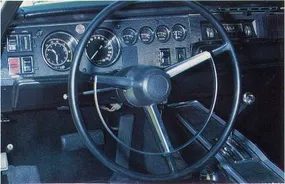
Step inside, and the space-age vibes of the original Charger were gone. The designers swapped out the flashy, futuristic decor for something more functional. It was less about looking like a spaceship and more about being a driver’s car.
You could also customize the exterior. The rear bumblebee stripe was optional. Leave it off if you want a cleaner look. Add it if you want to scream for attention.
The Charger R/T wasn’t just a car. It was a statement. And in Bullitt, it spoke volumes.
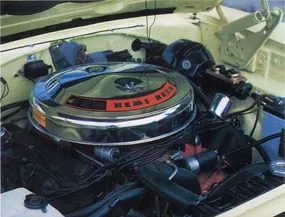
The Only Choice: 426 Hemi
If you wanted a 1968 Chrysler Road Runner, you got the 426 Hemi. There was no other engine. It cost $605 extra over the standard setup, a steep premium that demanded serious performance to justify.
Chrysler didn’t leave the block alone for the 1968 model year. They strengthened it. The changes were subtle but meaningful. A cam with slightly longer duration replaced the previous setup. New valve springs joined the party, keeping things stable at high RPMs. Revisions to the oil system reduced consumption. It was a known issue in earlier years, and they fixed it.
The rating stayed at 425 bhp. Underrated, as usual. But numbers on paper didn’t tell the whole story. Car and Driver tested the bright orange monster and found something rare.
“There just isn’t more honest horsepower available off the showroom floor than you get from this bright orange monster.”
Honest horsepower. That’s the key phrase. Factory ratings were often conservative to manage warranty risks and insurance groups. The 426 Hemi delivered more than the badge suggested. It delivered raw, unfiltered power.
The combination of the stronger internal components and the refined valvetrain made the engine more reliable. Not necessarily faster in a straight line, but more consistent. Less prone to breaking down under the stress of hard launches. That mattered to buyers. They weren’t just buying speed. They were buying durability with a side of violence.
Was it worth the $605? For most Road Runner owners in 1968, yes. They didn’t want the four-speed manual with the TorqueFlite automatic. They wanted the Hemi. They wanted the noise. They wanted the look.
The orange paint helped. It screamed presence. You couldn’t miss it on the street. And when you pushed it, the 426 Hemi didn’t hesitate. It pulled hard. It pulled long. It pulled like nothing else from Chrysler.
The Drivetrain Dilemma: TorqueFlite vs. the Stick
You had choices. The 426 Hemi could live in a car with a floor-shifter TorqueFlite automatic or a four-speed manual fitted with a Hurst Competition-Plus shifter. Most buyers went for the automatic. Why? Because straight-line acceleration favors torque converters over clutches, especially when the converter is dialed in for drag strips.
Hemi models came standard with a special high-stall-speed torque converter. This wasn’t just any slip. It locked up hard at speed, allowing the engine to stay in its power band while launching. Standard gears were 3.23:1. You could manually upshift at 6500 rpm if you were brave. Or let the TorqueFlite do the work at 5500. The automatic didn’t lose much time shifting, and it saved wear on your clutch.
In stop-and-go traffic, the Hemi behaved like a docile small-block. No vibration. No harsh engagement. It was smooth. But hit the gas on the quarter-mile and things changed. The Hemi was more than half a second quicker than a 440 Charger. It also hit the trapdoor 10 mph faster. That’s not a rounding error. That’s a gulf.
The Hemi could be driven like a docile small-block yet was more than half a second quicker and 10 mph faster in the quarter-mile than a 440 Charger.
This versatility is what made the big-block dangerous. You could commute in it. You could race it. You didn’t have to choose between comfort and performance. The TorqueFlite handled the power. The high-stall converter multiplied torque off the line. And the 3.23 rear ends kept highway speeds reasonable without dragging the engine down.
Manual drivers had the Hurst shifter. It felt mechanical. Direct. But the automatic was faster for most people. Most people couldn’t hold the clutch and shift perfectly every time. The TorqueFlite did. It locked up. It launched. It went.
What happens when you push those limits? The engine screams. The tires smoke. The quarter-mile disappears.
The 1968 Charger: Flawed by Design, Loved by the Masses
The 1968 Charger arrived with compromises that would have soured a lesser driver. The bucket seats were notoriously flat, offering zero lateral support during hard cornering. Then there was the roofline. Those thick, curved “flying buttress” pillars weren’t just stylistic flair; they created massive blind spots. You couldn’t see out the back to save your life.
Worse still, the R/T models were nose-heavy. Throw your weight into a turn and the front end would plow. It wasn’t graceful. It was a chore. To make the car actually driveable, you had to pay extra. A tachometer? Optional. Power front disc brakes? That cost extra too. Power steering? Another line item on the dealer invoice.
So why did sales skyrocket?
They didn’t just increase. They went six times higher than the 1967 numbers. People loved the look. The anonymity worked for Dodge. The general public didn’t care about the handling quirks or the missing equipment. They saw a sleek, fast-looking car and bought it.
This leaves the lingering question that haunted street racers and magazine editors alike: How would Steve McQueen’s Charger have fared in a race against a Hemi-powered rival?
The King of the Hill: 1968 Dodge Charger R/T Hemi
If you wanted the real deal, you ordered the R/T with the 426 Hemi. It was rare. It was expensive. It was fast.
Only 475 were built. At a base price of $4,800, it was a serious investment. The car sat on a 117-inch wheelbase and weighed a substantial 4,300 pounds. But weight means nothing when you have 425 horsepower and 490 lb-ft of torque sitting over the front axle.
The engine was an overhead-valve V-8. It used dual four-barrel carburetors to feed the 10.25:1 compression ratio. The result? A monster that pulled hard.
Performance Numbers
The factory didn’t always guarantee times, but the numbers tell the story.
- 0-60 mph: 5.3 seconds
- 1/4 Mile: 13.8 seconds @ 105 mph
That quarter-mile time was competitive against almost anything on the road in 1968. The Hemi Charger wasn’t about finesse. It was about brute force. It was one of the fastest and wildest muscle cars of its era.
For those who want to dig deeper into the machinery, the culture behind these cars is worth exploring. The engine is the soul of the muscle car. Understanding how horsepower works changes how you drive. And if you think NASCAR isn’t related, look at the philosophy: raw power, minimal weight, maximum speed.
Other cars tried to compete. The 1969 Mercury Cougar Eliminator tried to shake off the Mustang’s shadow with stripes and spoilers. The 1969 Chevrolet Camaro ZL1 brought an all-aluminum, race-proven V-8, but it was so rare and expensive it barely made a dent. The 1970 Plymouth Road Runner Hemi was another beast entirely. But in 1968, the Charger stood alone in its unique blend of style and speed.
It wasn’t perfect. The visibility was poor. The seats were hard. The handling was heavy. But it sold. And when you put a Hemi in it, it became legendary.
Do you still see them on the streets? Or are they just stories in a library of classic muscle cars