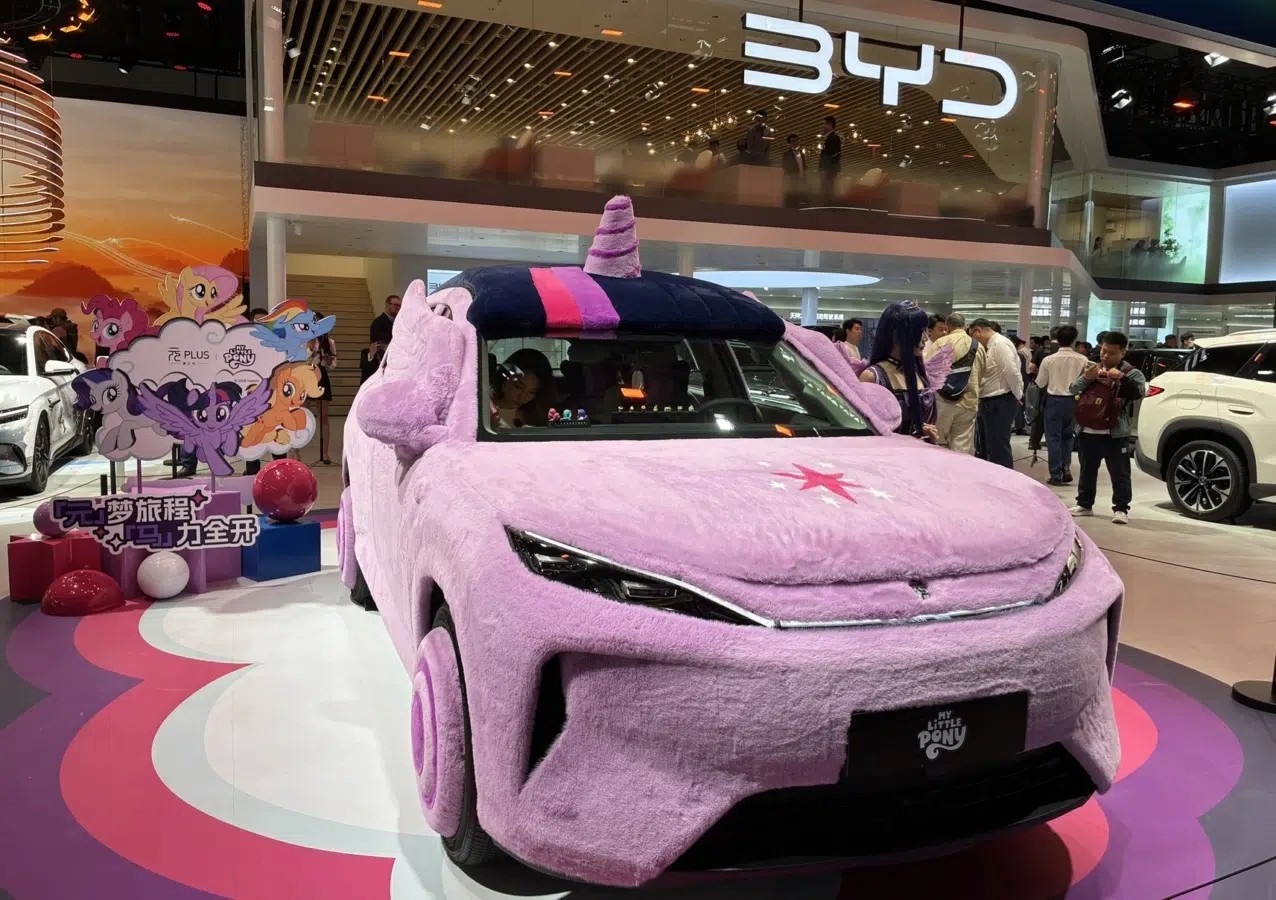
Chinese electric vehicle (EV) giant BYD is reportedly in negotiations to take over a portion of Volkswagen’s historic Dresden factory. This potential deal highlights a shifting dynamic in the European auto industry, where legacy manufacturers are downsizing capacity while Chinese competitors seek local production footholds to bypass trade barriers and enhance brand prestige.
A Strategic Move for Brand and Logistics
According to sources familiar with the matter, BYD is discussing an investment in the second half of Volkswagen’s “Transparent Factory” in Dresden. The agreement would allow the Chinese automaker to manufacture EVs on-site, leveraging the prestigious “Made in Germany” label to bolster its image in Europe.
This move comes as BYD accelerates its European expansion. In March alone, the company sold 3,438 cars in Germany—a 327% year-over-year increase. While BYD had previously identified Spain as its preferred location for a second European plant due to lower costs and clean energy infrastructure, a German facility offers distinct marketing and logistical advantages.
A German production site is not just about manufacturing; it is a powerful tool for brand awareness in the heart of Europe’s automotive market.
The Political Context: Tariffs and Investment Flows
The potential deal unfolds against a backdrop of complex geopolitical tensions regarding EU trade policies. Germany notably voted against additional EU tariffs on Chinese-made EVs, a stance that has been viewed favorably by Beijing. Conversely, countries that supported the tariffs, such as Poland, have seen Chinese automakers redirect investments elsewhere.
- Poland: Supported tariffs; subsequently lost Leapmotor production plans at Stellantis’ Tychy plant.
- Spain: Abstained from voting; emerged as the site for Leapmotor’s B10 production.
Beijing has reportedly instructed Chinese automakers to pause major investments in EU nations that backed the tariffs. With the EU currently negotiating to replace anti-subsidy tariffs with a “minimum price” mechanism, local production becomes a strategic workaround for Chinese firms facing import duties of up to 27% (10% standard duty + 17% anti-subsidy tariff).
Volkswagen’s Capacity Reduction Strategy
For Volkswagen, this arrangement aligns with a broader strategy to reduce excess capacity and cut costs. CEO Oliver Blume recently described sharing unused factory space with Chinese automakers as a “clever solution.”
- Global Goal: VW aims to reduce global production capacity from 12 million to 9 million vehicles.
- Dresden Specifics: Vehicle production at the Dresden plant (Gläserne Manufaktur) is set to end in 2025. The facility, which opened in 2002 for the VW Phaeton and later produced Bentleys and the ID.3, currently employs around 205 people and produces approximately 6,000 units annually.
Part of the site is already planned to become an innovation hub in cooperation with the state of Saxony and TU Dresden, with the university expected to rent nearly half the space.
Other Chinese Players in the Mix
BYD is not the only Chinese manufacturer exploring European production options through legacy OEM facilities.
- Xpeng: Already manufactures in Europe via Magna Steyr in Austria. Xpeng is also a technical partner to Volkswagen in China, providing E/E architecture and software for VW’s China-specific EVs. VW holds a 5% stake in Xpeng.
- MG (SAIC): Previously considered Hungary and Spain for a new EV factory. Sources indicate MG is also interested in utilizing Volkswagen’s European plants.
No final decisions have been made regarding these partnerships, and both BYD and Volkswagen declined to comment on the reports.
Challenges and Scrutiny
While the Dresden deal would give BYD a symbolic foothold in Europe’s largest auto market, the company faces ongoing scrutiny. Concerns regarding labor conditions at its Hungary plant were raised in the European Parliament, and past allegations of poor working conditions at its Brazil factory have drawn international attention. Additionally, rumors that BYD might slow its Hungary plant ramp-up in favor of Turkey (which is not subject to EU EV tariffs) were denied by the company, which insists its Hungary project remains on track.
Conclusion
The potential takeover of part of Volkswagen’s Dresden plant by BYD represents a pragmatic convergence of interests: Volkswagen offloads excess capacity while BYD secures local production to mitigate tariff risks and elevate its brand status. As European automakers shrink and Chinese firms expand, the reshaping of the continent’s manufacturing landscape is accelerating, driven by both economic efficiency and geopolitical strategy.