After a period of documented struggles, Nissan is unveiling a comprehensive roadmap to reclaim its market position. At the recent “Nissan Vision” event in Yokohama, Japan, CEO Ivan Espinosa detailed a multi-pronged strategy designed to modernize the brand through artificial intelligence, aggressive electrification, and a disciplined refinement of its global product portfolio.
The Intelligence Era: AI Drive Technology (AIDT)
Nissan is positioning itself to ride the current wave of artificial intelligence by integrating it directly into the driving experience. The company is developing AI Drive Technology (AIDT), an evolution of its existing ProPilot driver-assistance systems.
While specific technical details remain under wraps, the goal is to move toward a more seamless, semi-autonomous experience. Nissan aims for ambitious integration, targeting 90 percent of its entire lineup to feature AIDT. The rollout will begin with the redesigned Elgrand van in the Japanese market, with enhanced ProPilot capabilities expected to follow in 2027.
Electrification: Closing the Hybrid Gap
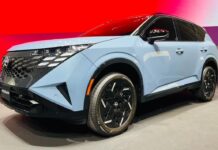
A significant criticism of Nissan in recent years—particularly in the North American market—has been its perceived delay in adopting hybrid technology compared to rivals like Toyota. Nissan is moving to rectify this with the introduction of its third-generation E-Power system.
- The Rogue/X-Trail Hybrid: For the 2027 model year, Nissan will bring the E-Power system to the US market via the Rogue (known globally as the X-Trail).
- Efficiency Gains: Nissan claims this new system achieves a 42 percent thermal efficiency, slightly surpassing the 41 percent efficiency figures reported by industry leaders Toyota and Hyundai.
This shift is critical. As pure EV demand fluctuates, hybrids have become the essential “bridge” technology for consumers who want electrification without the limitations of charging infrastructure.
The Return of the Xterra: Targeting the Rugged Segment
In a move that will resonate strongly with North American enthusiasts, Nissan has officially confirmed the return of the Xterra.
Positioned as a “Heartbeat” model—a term Nissan uses for vehicles central to its strategic growth—the new Xterra will focus on rugged capability. Key details include:
– Body-on-frame construction: Ensuring a traditional, durable build.
– Purpose-built design: Moving away from car-based crossovers toward true off-road utility.
– Potential Powertrain: While unconfirmed, industry insiders suggest Nissan may opt for a naturally aspirated V6 rather than the smaller hybrid four-cylinders used by competitors, aiming to compete directly with the Ford Bronco and Toyota 4Runner.
Strategic Consolidation: Less is More
Perhaps the most significant shift is Nissan’s decision to “slim down.” The company is moving away from a bloated catalog of niche vehicles to focus on high-volume, high-margin models.
The Plan for Rationalization:
1. Lineup Reduction: Nissan will reduce its global offerings from over 60 models to approximately 45 across the Nissan and Infiniti brands.
2. Focus on “Core” Models: High-performing vehicles like the Rogue are expected to drive 80 percent of total sales.
3. Efficiency Goals: By phasing out low-performing models, Nissan aims to increase the average sales volume per model by more than 30 percent.
The ultimate objective is clear: reach one million annual sales in the US and Canada by 2030, and 550,000 units in Japan.
“Our vision defines where Nissan is headed, with customer experience as our guiding priority. By advancing mobility intelligence, we will deliver intuitive, advanced, and reliable products.” — Ivan Espinosa, Nissan CEO
Conclusion
Nissan is attempting to move from a defensive “recovery” phase into an offensive “growth” phase. By combining high-tech AI integration with a return to rugged, traditional segments and a leaner, more efficient product lineup, the automaker is betting that focus—rather than sheer variety—will drive its resurgence.