First impressions
An electric heart fits the Range Rover Sport. It feels right. Serene. Fast. Composed.
We loved our short time with the prototype. We have doubts about the range, though. Is it versatile enough? Owners expect a lot from this badge. Until Land Rover confirms the real-world range and charging speeds, the Sport Electric is a ghost.
“This is not an electric Range Rover.” Martin Limpert, MD, said this early on. He was emphatic. “It’s a Range Rover that happens to be electric.”
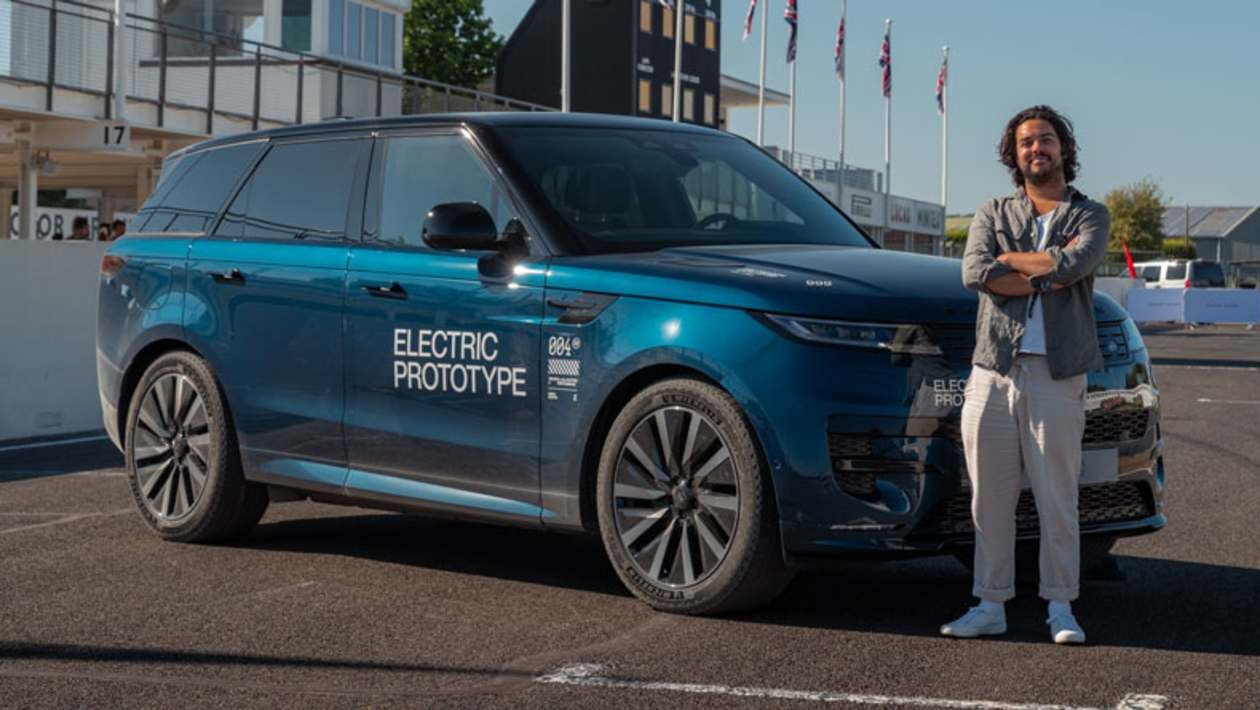
That distinction matters. The car launched alongside this drive isn’t hidden under camo. No need to disguise it. It looks exactly like the petrol or diesel versions. Maybe 22-inch wheels differ slightly. The upper grille is a bit more closed off. The rear bumper has tweaks. That’s it. You’d swear you’re in an old machine.
This familiarity is a feature. Engineers did heavy lifting.
This isn’t a half-baked conversion. The MLA platform was born to handle electric powertrains.
Where the propshaft and fuel tank used to sit, a big battery pack lives now. Built in Wolverhampton, the lithium-ion cells are stacked in two layers. That vertical space gave Land Rover about 118 kWh of capacity.
Generous? For 2026 maybe. Next year’s BMW iX5 will pack 140 kWh. The competition is getting mean.
Under the skin
No internal combustion engine means new space for new hardware. Land Rover fitted its own e-motors front and rear. They make up to 542 bhp together. The transmission tunnel hides some battery management gear. Charging ports sit on both sides.
The layout is flexible. Credit to the MLA package.
Here’s the clever bit. The motors are identical in power but different in placement. The front motor sits upright. Just like an inline-six would. The rear motor lies on its side. Why? So it doesn’t eat into the boot.
No extra trunk space. No frunk either. But the floor is flat-ish, and the charge cables hide under the spare tire area.
True 50/50 torque split. No bulky transfer cases needed. No locking differentials snapping into place. Just software telling wheels what to do. One caveat remains: no seven-seat option for the long-wheelbase version. The Volvo EX90 keeps its throne for now.
Range? Still TBD. Don’t expect it to match the BMW’s 525-mile WLTP claim. That would be miraculous. We expect a deficit of roughly 200 miles. Reality check time.
Off-road capability is supposed to be intact. That’s the selling point. A diesel RRS handles mud; this should too. We put it through its paces. Controlled, sure, but real.
On the road
Get in. Feel nothing different.
Pull away. The car glides. The throttle calibration is better than the PHEV. Smoother. More resolved. We hit some gravel. The serenity held. The ride is exceptional. The noise floor? Non-existent.
Braking feels responsive. One-pedal driving is standard. High regen replaces the ‘Sport’ mode of the petrol version. It brings the car to a stop smoothly. No judder. Not quite as polished as the iX3 yet, but close. Remember, this is a prototype.
Off-road testing begins. We toggle the drive modes. Rock crawl selected. No low-range gear. No mechanical diffs. Just code.
The software changes the throttle map. Mimics the old hardware. The car climbs a 45-degree simulated slope. Torque applies gently. No sweat. No drama. Going down, regen eats most of the momentum. You still hold the brakes to stay upright. It works. It feels made for electric torque.
Back on the road. Dynamics sharpen. It’s a heavy beast, but composed. Lighter than you’d think, possibly same as the PHEV. The center of gravity is lower. Helps.
Brake feel at high speeds? Good. The handover from regen to friction is invisible. The old transmission hesitance? Gone. Turbo lag? A memory. Acceleration is instant. Not obnoxiously fast, but generous.
It feels… right. Too right, even. You start asking if the combustion engine was ever the better choice. For a luxury off-roader, the EV powertrain ticks every box. Quiet torque. Instant response.
The bigger Range Rover EV joins the Sport soon. Questions loom about charging. Range anxiety will hit some buyers. Performance numbers will disappoint purists.
Still, driving one feels natural. Like switching from gas to an electric oven. Weird that it took us this long.
Verdict
A new sense of calm. The EV powertrain suits the Sport.
Pros:
* Uncompromised interior space
* True 50/50 AWD control
* Silent and incredibly composed
* Software-defined off-road modes work
Cons:
* Range will lag behind competitors like BMW iX5
* Charging speed details still vague
* No 7-seat option
It’s an unknown quantity, technically. But emotionally? It clicks. Why did we wait? 🤔