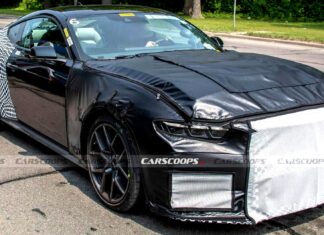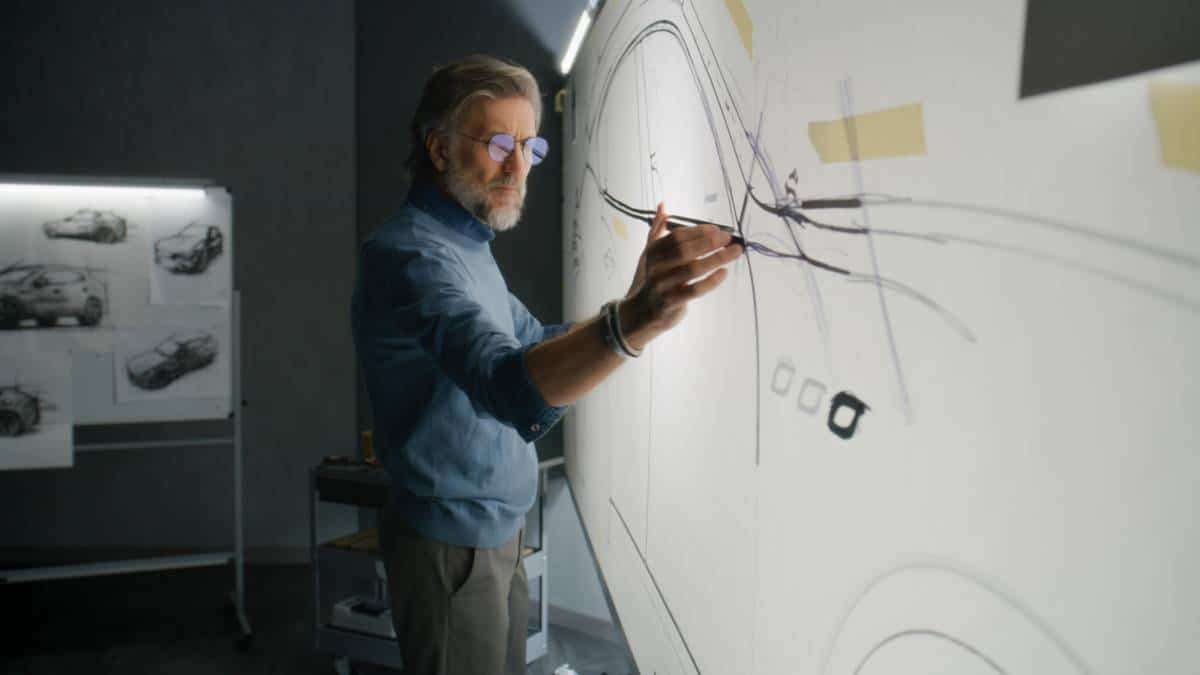
The bond between cars and aesthetics isn’t new. American sedans stretched their hoods. Italian sports cars curvaceous their way into history. Every era stamped its lines onto steel. Now, electrification is ripping up the rulebook. Technical constraints are shifting. Volumes are redistributing. Old codes are shaking. This isn’t just a style update. It’s a reimagining of what a car is.
The Death of the Grille
Look at any modern electric vehicle. What hits you first? Fluidity. The silhouette flows. Designers know autonomy is won in the wind tunnel. Every decimal point shaved off the drag coefficient buys you extra miles. That math changes everything. Radiator grilles are closing up. Disappearing. Internal combustion needed huge air intakes for cooling. Electric motors? Not so much. The front fascia is becoming a smooth sheet. Side panels are taut. Almost featureless. Decorative bumps are gone. This pursuit of aerodynamic efficiency creates a look that’s instantly recognizable.
Flat underbodies, mandated by the battery slab sandwiched in the floor, enhance the feeling of gliding. The beltline rises. Proportions shift. We’re seeing teardrop shapes. Precisely truncated rears. Pillars that vanish into the glass. This isn’t just about speed. It’s a rejection of 20th-century excess. Surfaces are sculpted. Light plays across them. Relief without the air resistance.
The quest for efficiency isn’t just about range—it’s creating a new visual language that rejects the boxy, aggressive cues of the past.
Space Packaging and the “Skateboard” Platform
The battery pack dictates the shape. It sits flat. Low down. This lowers the center of gravity, sure, but it also flattens the ride height. The cabin space? It expands. Or rather, it’s repositioned. Wheelbases stretch. The cabin moves to the corners. That “two-box” design of traditional cars—engine in front, trunk in back—is dissolving. You get a “one-box” or “mono-volume” aesthetic. More glass. Less metal.
Think of the Tesla Model S Plaid. Or the Porsche Taycan. They don’t look like gas cars with hidden badges. They look like something else. The lack of a traditional engine bay allows for a frunk, yes, but more importantly, it allows for a continuous glasshouse. Rooflines sweep back without the awkward bulge of a transmission tunnel intruding into the cabin. The result? A vehicle that looks like it was born in a CFD simulation rather than a clay studio.
The Hidden Cost of Smoothness
It’s not all perfect. Smooth surfaces reflect heat. They trap it. Electric cars don’t have the massive radiators of ICE vehicles to push heat out, but they still need thermal management for the battery and motors. Designers are playing a tricky game. How do you cool without holes? You use active grille shutters. You weave air channels into the bodywork that are invisible until you look closely. You use computational fluid dynamics to find microscopic indentations that channel airflow exactly where it needs to go.
This precision manufacturing demands new materials. Aluminum. Composites. Plastics that can be molded into complex, smooth shapes. Steel is harder to shape into
Interior Geometry: The Flat Floor Advantage
The physical constraints of the Internal Combustion Engine (ICE) are gone. That bulky transmission tunnel that ruined the center rear seat? It’s vanished. With electric vehicle architecture, the motor and battery pack are compact enough to allow for a completely flat floor. This isn’t just a aesthetic choice; it’s a fundamental shift in how space is distributed.
The result is surprising. Rear passengers get genuinely generous legroom. The middle passenger no longer has to perch on a lump of steel. Seats can be positioned differently, reclined at angles that were previously impossible without compromising structural integrity or trunk space. The cabin feels larger than the exterior dimensions suggest. Storage options multiply in zones once occupied by mechanical components. Modular flexibility improves. The interior volume feels liberated.
Materials: Hearing the Difference
Electric motors are quiet. Too quiet, sometimes. That silence makes every other sound in the cabin hyper-visible. The thud of a door closing. The friction of fabric. The creak of a seal. These nuances, previously masked by engine roar and road noise, now demand attention.
Designers are responding with a new rigor in material selection. Recycled plastics are no longer just a sustainability buzzword; they are integrated into refined assemblies. Durability is key. The perceived quality of the interior is now measured by these sensory details. If the material feels cheap or sounds hollow, you notice it. The cabin has become a curated space where acoustic refinement is as important as visual design. You are sitting in a listening room as much as a vehicle.
The Digital Cockpit: Beyond the Dashboard
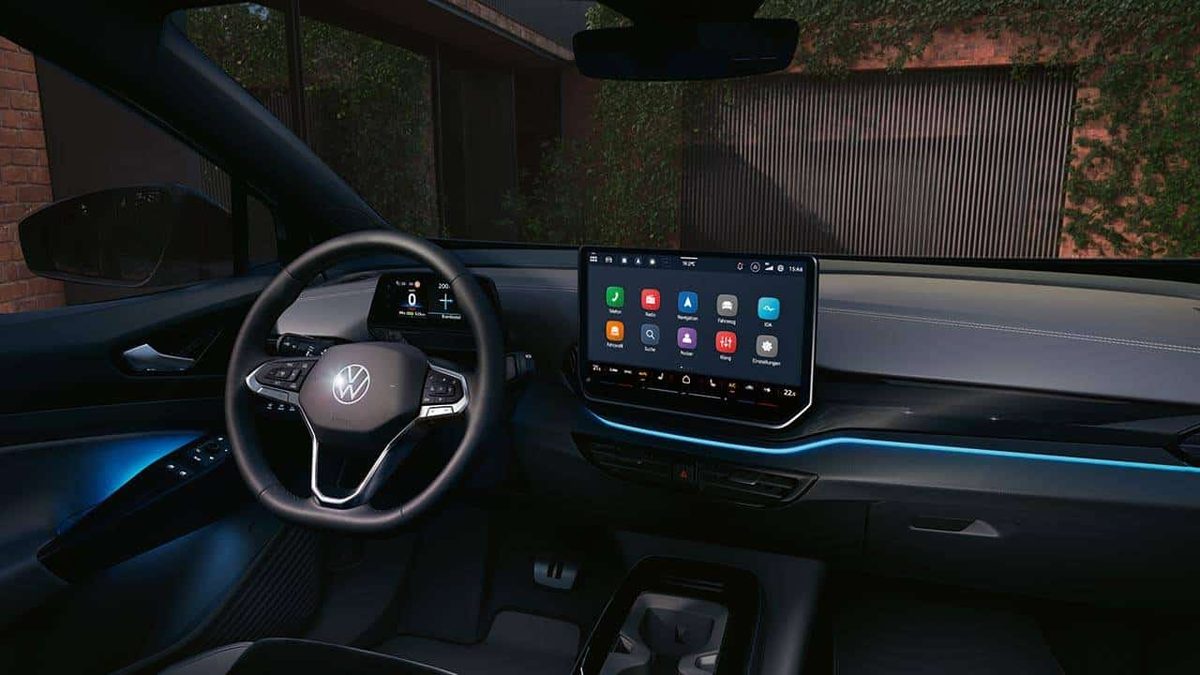
The instrument cluster is dead. Long live the screen. Traditional analog gauges have been replaced by large, high-resolution displays. This isn’t just a tech trend. It’s a functional necessity for electric vehicles.
You need to monitor remaining range. You need to anticipate charging stops. You need to optimize your driving style to maximize distance. These data points require clear, dynamic, and customizable visualization. Analog dopes can’t adapt to changing conditions. Digital interfaces can.
The driver now controls the display. Priorities shift. Presentation modes change. Contextual information appears on demand. The relationship with the car has changed. Physical buttons and knobs are giving way to tactile and voice interactions. The boundary between the car and your smartphone is blurring. Software updates add features without new hardware. This temporal flexibility is unprecedented in automotive history.
Minimalism vs. Usability
Designers are exploiting this digital freedom. Dashboards are being stripped back. Surfaces are minimalist. Abstract. Large illuminated panels dominate the field of view. Some interiors look more like a modern living room than a cockpit.
This aesthetic shift sparks debate. Are we losing readability for the sake of visual purity? The question divides users. Some crave the simplicity. Others miss the immediate, glanceable clarity of physical dials. There is no consensus. The electric car is not just a different powertrain. It is a different philosophy of interaction. And that philosophy is still being written.

Why the old rules no longer apply
It isn’t just a stylistic tantrum. This break from classic aesthetics is a calculated move for cultural and commercial differentiation. Automakers need their EVs to be instantly recognizable. They are signaling a technological novelty that separates these machines from their internal combustion predecessors. By ignoring established canons, they assert that these cars belong to a different universe.
Several structural motivations drive this shift:
- Using forms that reject industrial-era conventions to scream modernity.
- Creating a unique visual identity for easy urban recognition and distinct positioning.
- Targeting a demographic that views a car purchase as a symbolic act of innovation.
- Leveraging the architectural freedom of electric platforms to push automotive design boundaries.
There are risks. Stray too far from familiar proportions, and you alienate the traditionalist. The balance between bold formal audacity and commercial acceptability is razor-thin.
Do enthusiasts actually like it?
The reception of these new shapes splits the automotive community. Some purists welcome the aesthetic emancipation as fresh air in a sclerotic industry. Others mourn the loss of details they consider the soul of a car: the sound of an engine, the complexity of a sculpted grille, the visible robustness of mechanical architecture.
This tension reveals a generational and cultural shift. Younger drivers, unburdened by inherited codes, find rationality in clean lines. They appreciate the coherence between function and form. Traditionalists have to unlearn how to read a silhouette. That acculturation process takes time.
Manufacturers know this. They now offer varied ranges where bold lines coexist with reassuring designs that keep familiar attributes. This diversity shows commercial caution in a still-forming market. Yet the trend seems irreversible. The EV is imposing its own formal vocabulary, redrawing the contours of what we call a beautiful car.
Electric vehicle design is not a minor stylistic variation in automotive history. It materializes a technical, economic, and cultural rupture whose full scale we barely grasp. These new forms interrogate our relationship with mobility. They challenge our aesthetic criteria and our very conception of the automobile. They sketch the contours of a mutating urban landscape, where the car becomes just one element in a redesigned mobility ecosystem.