Credit bureaus make our lives miserable with three-digit judgments. They decide if you get a mortgage, a credit card, or a job. It’s a numbers game rigged against you. But what if that judgmental stare followed your vehicle around instead?
Enter AutoCheck.
It’s a service owned by Experian, the same giant crunching your credit data. They took that same algorithmic heavy lifting and applied it to nearly half a billion used cars in the US. The result? A single score that tells you if a car is a lemon or a lemonade stand.
You don’t need a loan officer or a week of patience. It takes two seconds. It costs thirty bucks for one report. Forty-five if you’re hunting for multiple vehicles.
AutoCheck has been doing this since 2002. Yet, Carfax still gets all the glory. Why? Different data sources. Same goal: keeping you from buying a rusted hulk.
Behind the Algorithm
Lynn Kator, senior director of marketing at Experian Automotive, puts it simply.
“We take a lot of info and distill it into one easy-to-understand number… Any and all information helps the consumer make a more educated decision.”
AutoCheck doesn’t just guess. It pulls from specific, gritty sources. DMVs. Salvage yards. Dealer auctions. Police reports. Even FEMA records.
“Automotive auctions in particular, where they’re physically inspecting the vehicle,” are goldmines for specific data points, Kator noted.
Here is how the scoring breakdown actually works.
Title Status
If a car has been salvaged, rebuilt, or burned to a crisp, the title reflects it. You can’t hide a fire damage brand.
Odometer Integrity
Tampering leaves traces. Broken odometers show up. Suspiciously low mileage does too. Think about a 1995 Toyota Camry with 10,000 miles. That’s a red flag. Unless you live in a museum, that Camry has done some driving.
Problem Flags
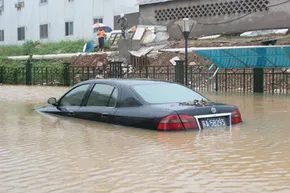
This is where the heavy stuff lives. Frame damage. Water intrusion. Remember Hurricane Katrina? Cars that sank and were raised come back into the market with branded titles. AutoCheck flags those. It also catches official “lemon” designations.
Usage History
Was it a rental? A taxi? A police cruiser? These vehicles get driven hard but often maintained better than the average commuter car. Accidents and theft attempts also land here. If the car wasn’t pampered, AutoCheck knows.
None of this checks for torn upholstery or carpet stains. You still have to look at the seat with your own eyes.
Branded Titles Explained
AutoCheck obsesses over branded titles. A “brand” is a permanent mark on the document. It stays with the car forever.
Kator lists the common brands:
– Junked
– Salvaged
– Flooded
A clean title has no brands. That’s the goal. Everything else is a warning sign.
The AutoCheck score aggregates all this noise into a number. It’s not perfect. It doesn’t know if the previous owner changed the oil every 3,000 miles. It doesn’t know if the AC blows cold. But it knows if the car was submerged in floodwaters or rolled over.
Is a high score a guarantee of reliability? No. But a low score? That’s a reason to walk away.
How many cars are in the database? Half a billion. That’s a lot of data points. Does it cover every vehicle made since 1981? Practically.
The score helps. It doesn’t replace a mechanic’s inspection. It doesn’t replace a test drive. But it cuts through the marketing fluff.
You’re paying $30 to see if someone lied to you. That’s not a luxury. That’s self-defense.
What else does the score ignore? The wear and tear of daily life. The engine noise. The way the transmission shifts. The AutoCheck number is a snapshot of history. Not a prediction of the future.
Still, knowing a car was in an accident matters. Knowing it was a fleet vehicle matters. Knowing the odometer was rolled back matters.
The score condenses all that into a single digit.
It’s not magic. It’s just better data than what you’d find on Craigslist.
The question remains: do you trust a number more than a handshake? Most buyers do. And maybe they should.
Reading the Room: Scores and Context
AutoCheck lets you skim the surface or dig into the dirt, but most people just want the number. You see that blue box on page one. You check the score. You decide if you’re buying or running. It’s efficient. It’s also potentially dangerous if you don’t look at the context.
A raw score means nothing in a vacuum. You need to compare it. AutoCheck provides a “Similar Vehicles Score” range right under the main rating. This is where the nuance lives. Let’s say you’re looking at a used Honda Civic with a score of 40. That looks bad. It looks like a lemon. But look at the range below it. If cars with the same VIN history typically score between 35 and 45, you’re not buying a disaster. You’re buying a common, well-documented commuter. You got the best of a bad bunch.
Now flip it. You find a vehicle with a “good” 75. It looks safe. It looks clean. But the similar vehicles in that segment usually sit between 85 and 95. That 75 isn’t good. It’s a red flag wrapped in green paint. That car has something wrong with it. A hidden frame issue. A history of neglect. You need to read the full report to find out why. Or you walk away. There is no middle ground here.
If you are one of those people who needs to know every bolt was tightened to spec, the summary on the first page will feel insulting. It’s too brief. You want the deep dive. AutoCheck gives you case numbers for police-reported accidents. You can see the timeline. You can see the gaps. It’s not just a score. It’s a dossier.
The Missing Variable: Price
AutoCheck tells you about the car’s past. It does not tell you what it’s worth today. The system ignores price. It focuses on history.
This is a deliberate choice. Valuation is messy. Market conditions shift daily. Instead, AutoCheck points you toward partners like NADA Guides, Kelly Blue Book, Edmunds, and eBay Motors. You have to cross-reference the history report with these pricing tools. Do it yourself. The data is out there. You just have to connect the dots.
The Safety Net: Buyback Protection
You spent the cash for the report. You spent the bigger cash for the car. What happens if AutoCheck missed something?
They have your back. Mostly. The buyback protection covers you if you discover a branded title that was hidden or if the car had a commercial use you didn’t expect. Specifically, if you find out the car was an LAPD cruiser, they will buy it back. They’ll also cover up to $500 in aftermarket parts. That means your custom stereo in that 1999 Dodge Neon is protected.
But there are hoops. Lots of them. You cannot just complain later. You have to follow the rules exactly:
- Purchase the AutoCheck report for the specific VIN.
- Buy the vehicle.
- Register the car with AutoCheck within 90 days of the purchase.
- Still own the car when you initiate the claim.
- Start the buyback process within one year of the purchase date.
If the car was stolen and recovered, you are out of luck. The policy does not cover stolen vehicles. It covers misreported history. There is a difference.
The Living Report
Keep in mind that an AutoCheck score is not static. It changes. As new data enters the database, the score updates. An accident report from last week might drop your score. An emissions test failure might appear.
However, some things are permanent. A branded title sticks. It never goes away. Once it’s there, it’s there forever.
If you are paranoid, you can run the same VIN repeatedly. It costs more. It’s tedious. But if you are that nervous, ask yourself why you are buying that car in the first place. Maybe the anxiety is the warning sign you need to heed. Look at another car. The right one usually doesn’t make you feel this way.
Verifying the shifty things people do to their cars is a tricky business, and AutoCheck knows it. Not every accident makes the record. Why report a little scraped paint and a dinged fender if you can tap out the bumps and spot-repair the paint? Why report a landscaping truck backing nearly over your hood if your brother can replace the front end at his shop after hours? He’s got paint that will mostly match if you look at it under one of those sodium-yellow streetlamps. No biggie.
Consumer Reports did a check on AutoCheck and CarFax and found they both did a reasonably good job of reporting exactly what they promised — but there were a few issues. They compared clean reports with pictures of the same cars on auction Web sites and found cars crumpled beyond recognition in some cases. “Wrecks can maintain clean titles if the vehicle doesn’t have collision insurance, is self-insured as with many rental and fleet vehicles, or has damage falling below the ‘total loss’ threshold, which can vary by state,” according to the report .
Despite that, Consumer Reports did recommend using automotive history reports, as well as a few other lesser-known sources, for checking out a car’s sordid past:
-
AutoCheck and CarFax
-
National Insurance Crime Bureau
-
National Highway Traffic Safety Administration
There’s also no way for you, dear consumer, to verify those happy green checkmarks on an AutoCheck report. However, you can — and absolutely everyone recommends this, including Lynn Kator at AutoCheck — take any used car you’re seriously considering buying for an inspection by a professional.