World Cup fever is peaking. Dacia didn’t miss the chance.
They launched the Striker.
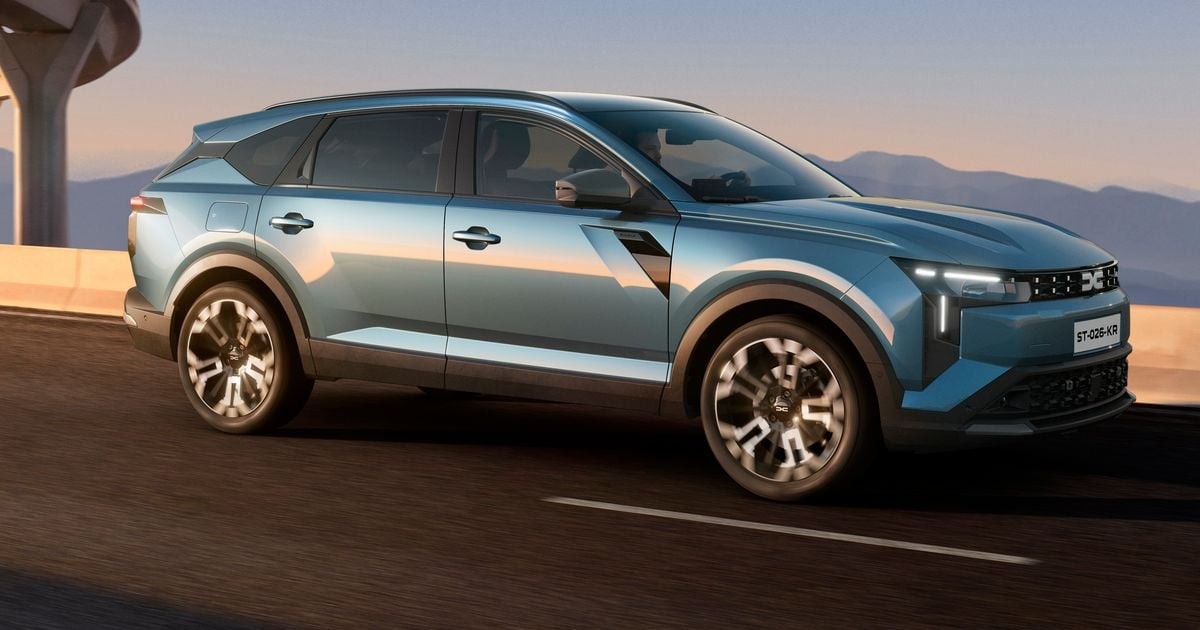
It wants to kick a few goals. Specifically sales goals. The thing looks like a Subaru Outback from twenty years ago. Wagon body. High ground clearance. Black plastic cladding around the wheels. It screams rugged utility. Except Dacia dropped the actual wagon from the lineup. Sad, but here we are.
The ride height is the main flex. 190mm for front-wheel drive. 200mm if you want the four-wheel-drive setup. That’s SUV territory. But wait. The car itself is only 1.53 meters tall. Barely higher than a Golf Variant. It sits high because it’s lifted, not because it’s huge.
At 4.62 meters long, it’s Dacia’s longest car ever. It eats the Bigster for lunch length-wise (Bigster is 4.57m), even if the SUV stands much taller at 1.7 meters. You can dress it up in 17, 18, or 19-inch wheels depending on what trim you grab.
Inside? Practicality first. A slash of colored fabric on the dash adds a hint of personality to an otherwise utilitarian space. Some ‘starkle’ plastic on the doors tries hard to look fancy. It doesn’t. You get a hidden ice scraper in the dashboard. Removable cup holders. An optional sliding drawer under the armrest.
Boot space hits 600 liters. Higher trims get a fancy three-part floor. You can flatten it or lift it to hide valuables or keep your groceries from sliding around.
Driver gets a 7.0-inch optical instrument cluster. Center dash houses a 10.1-inch touchscreen. Not bad for the price.
Dacia is obsessed with modular storage. The YouClip system has nine anchor points. You can clip a pet seat to them. A water bottle. A children’s blanket. There’s even a storage net that turns into a shopping bag.
It’s the IKEA effect, but for your car interior.
Power options are interesting. Europe gets three. The entry level uses the 1.2-liter three-cylinder turbo. It makes 103kW. It’s a mild hybrid. Can run on petrol or LPG.
Step up to the Hybrid 155. That’s a 1.8-liter four-cylinder paired with an electric motor. Total output hits 114kW through an automatic gearbox with four gears for petrol and two for electric. It’s complicated enough.
The top dog is the Hybrid 150 4×4. The same 1.2-liter turbo pushes the front wheels via a dual-clutch. The rear gets a 21kW electric motor on a two-speed transaxle. Combined system power is 110kW.
You get hill descent control. Five drive modes. Snow, mud, sand, off-road.
None of this matters if you can’t afford it. But Dacia keeps prices low. Starts at €25,00 in Europe. That’s about A$41,05. It undercuts the Skoda Octavia estate by roughly €4,000. That’s a significant gap.
Dacia’s upward climb is working. The Bigster led European small SUV sales in the first half of 22. They’re dropping a third C-segment model in 27 to round out the family with the Bigster and the Striker.
Australia doesn’t get the Dacia badge directly. Except for the Duster. Renault sells that one under its own name here anyway.
So, will the Striker land here? Probably not. Dacia isn’t looking to invade Australia again.
But it’s worth watching. Sometimes the weirdest cars make the most sense. Especially when they cost half as much as the competition.