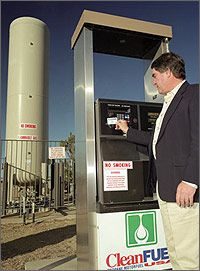
More than nine million cars on the road right now are running on liquefied petroleum gas. That is a massive number. The data comes from the World Liquefied Petroleum Gas Association, which tracks these stats across 38 countries. We aren’t talking about some fringe experiment either. Propane-powered vehicles have been around for decades. They are not new.
The financial case is compelling. Autogas is cheaper than gasoline. Always has been. Even without government incentives or tax breaks, the price per gallon usually favors LPG. When you add in those incentives, the savings get ridiculous.
Then there is the environmental angle. WLPGA claims a propane setup cuts carbon monoxide emissions by 50%. Hydrocarbons drop by 40%. Nitrogen oxides go down by 35%. Ozone-forming potential is cut in half. Fewer pollutants. Cleaner air. The math is simple.
Performance-wise, autogas is a high-octane fuel. It matches gasoline and diesel in power delivery. Many owners swear it runs smoother. Less vibration. Less wear on engine components. A quieter life for your piston rings.
Factory-Installed Options vs. Aftermarket Conversions
Buying a car built for LPG is the easiest path. You do not need to hire a technician to bolt on tanks and lines. Some manufacturers offer these models directly. Ford. General Motors. Daimler-Chrysler. They all have had propane options in their lineup.
You will rarely spot these cars on a dealership lot. They are special orders. You have to ask for them. Sometimes there is no production model for LPG, but the factory will install an LPG system as an option.
Specific models that have seen factory autogas versions include:
- Ford Crown Victoria
- Dodge Ram
- Ford F-150
- Chevrolet Cavalier
- Toyota Camry
These are common vehicles. Familiar platforms. The infrastructure supports them. If you want to switch to autogas, starting with a pre-configured unit saves headaches. It also keeps the warranty intact. Factory installations are tested. They are integrated into the car’s computer.
The infrastructure for refueling is another story. That varies wildly by region. But the fuel itself is consistent. Propane is stored under pressure. It stays liquid until it hits the vaporizer in the engine bay. Then it turns to gas. Burns clean.
Why buy a conversion kit when you can order it straight from the factory? Control. Reliability. And the knowledge that the car was built to handle the fuel from day one. Not patched together later.
Building a car that runs solely on LP-gas is rare. Mostly happens in Europe. The engine is tuned for maximum propane efficiency. This setup reduces wear and improves long-term mileage. But consumers have a valid concern. Finding a fill-up point is hard.
So most LP-gas cars get dual fuel systems. One for gasoline. One for propane. They switch automatically. You can drive on clean, cheap propane when available. Need a quick fill? Hit up your local gas station. It’s flexible.
Infrastructure isn’t the barrier you think
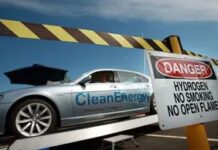
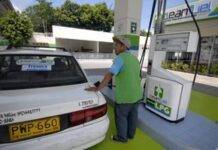
How hard is it to find a station? Not hard at all. Unlike hydrogen. The infrastructure for LP-gas is large and stable. You can use the Alternative Fuels Data Center to locate the nearest refueling points.
Take my location in Buffalo, N.Y. Five LP-gas refueling points within 25 miles. That’s accessible. Not a ghost town. The network exists. You just have to look.
The Reality of Swapping to LPG
Converting a standard petrol engine to run on liquefied petroleum gas isn’t just about flipping a switch. It’s a mechanical surgery. You aren’t simply replacing fuel; you’re changing the entire chemistry of the combustion cycle. Autogas, or LPG, is a byproduct of both crude oil refining and natural gas processing. It sits in a sweet spot between propane and butane, but that mix changes with the seasons. In winter, it’s mostly propane because it vaporizes easier in the cold. Summer brings more butane. This variability matters.
The core challenge? LPG is a gas at atmospheric pressure. Petrol is a liquid. To get it into the cylinders, you need a pressurized system. That means tanks, lines, and regulators. The tank itself is often the biggest physical change. You’re looking at a large, cylindrical steel vessel, usually placed in the spare wheel well or the boot. You lose luggage space. You also raise the center of gravity slightly, which can tweak handling dynamics, though rarely in a dangerous way.
Key Components of the Conversion
A proper kit does more than just inject gas. It manages pressure and temperature. Here is what you actually install:
- The Tank: Usually holds between 40 and 60 liters of fuel. It’s pressurized to around 16 bar. That’s high. Safety is built into the design with multiple rupture discs.
- The Regulator-Reducer: This is the heart of the system. It takes the high-pressure liquid from the tank and reduces it to a low-pressure gas. It also uses engine coolant to keep the LPG warm. Why? Because expanding gas gets cold. Fast. Without heat exchange, the fuel freezes, and the car stops.
- The Injectors or Mixer: Modern systems use electronic injectors, similar to petrol direct injection but for gas. Older kits used a venturi mixer, which sucked the gas in. The electronic route is far more precise. It talks to the engine’s ECU or uses its own controller to adjust the air-fuel ratio on the fly.
- The Switch: You need a way to toggle between petrol and LPG. Most modern cars start on petrol to warm up the catalytic converter, then switch to LPG once the engine is at operating temperature. You see a small indicator light on the dash. Green for gas. Red for petrol.
Installation Complexity
This isn’t a weekend DIY project for most people. You’re dealing with high-pressure lines running through the chassis. One leak at 16 bar is not a minor inconvenience. It’s a hazard. The fuel lines need to be copper-nickel alloy or specialized polymer, not standard rubber. Rubber degrades. Copper doesn’t.
The ECU integration is tricky. LPG has a different stoichiometric ratio than petrol. It requires more air per unit of fuel. If the mapping is off, you get a lean condition. Lean conditions cause overheating. Overheating kills exhaust valves. You don’t want to melt your valves on an LPG system. Professional tuners adjust the ignition timing and fuel trims to compensate for LPG’s higher octane rating. It burns cleaner, but it burns hotter and faster in some phases.
“LPG has a higher octane rating than petrol, allowing for more aggressive timing, but it also has