


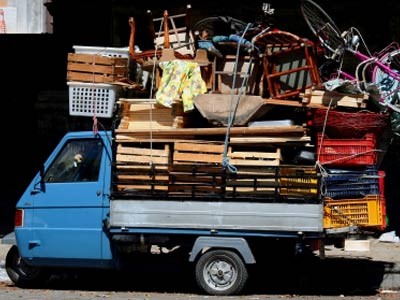
We’re obsessed with MPG. Checks 0-60 times. Measure the cubic feet of the trunk and find the torque figures. Buying a car is a numbers game. But there is one norm that is ignored until it is too late. This is not a recommended price. This is not an EPA assessment. This is the gross axle weight rating.
Ignore it at your peril.
What is GAWR?
All cars, trucks, SUVs and RVs have strict restrictions. It is determined by the manufacturer. This limit is the maximum weight allowed on one axle. The front axle is equipped with a unique GAWR. Rear axles have theirs. These are not interchangeable.
Think of GAWR as a structural roof. Make sure that the axle load does not exceed this value. Period.
This definition sounds simple. This is the maximum weight. But what counts as weight? There is more than just steel under your feet. This is the quality of the vehicle itself. That’s all the passengers in the seats. It’s the groceries in the back. When towing, this also includes the weight of the trailer tongue. All the mass is distributed on two axes.
GAW and GAWR: Do not confuse them
This is where people get confused. You are confusing GAWR and GAW.
GAWR is static. This is the number printed by the engineer. It does not change for any particular axis.
GAW is dynamic. Total axle weight on the road today. This number fluctuates every time you load or unload.
Imagine a pickup truck. You load four 100-pound boulders into the bed. The GAW on the rear axle jumps by 400 pounds. GAWR remains exactly the same. If you dump the rocks, the GAW drops. GAWR is not affected.
The rules are strict. Your actual GAW can never exceed your rated GAWR.
Why overload is dangerous
Safety is the reason the limit exists. Overloading any vehicle is dangerous. Uneven distribution makes the situation even worse. Excessive weight on the rear axle can cause a chain reaction of failure points.
- Steering: You lose responsiveness. The front feels numb.
- Braking: The front brakes do the heavy lifting. Rear overload increases braking distance. The efficiency of the system decreases.
- Tires: The rear tires may not be able to handle the pressure. Blowouts happen.
- Suspension: Components bend. They break. You lose control.
Trailers face the same threat. It has its own GAWR limit. For safety reasons, the correct loading is not negotiable. If the trailer is unbalanced, disaster awaits.
Where to find GAWR
You don’t need a mechanical engineering degree to find this number. Look inside the driver’s door frame. There is usually a label on the jamb where the door latches. It lists the ratings.
You can also search online. Most manufacturers publish vehicle specifications on their websites. GAWR is listed with other information.
Acura GAWR
If you need quick access, browse by brand. Specifications for Acura models from 2006-2009 are:
2006 Acura GAWR
MDX:-
RL:-
*RSX:-
* TL: –
* TSX: –
2007 Acura GAWR
MDX: 2888/3175
RL:-
*RDX: 2546/2381
* TL: –
* TSX: 2335/2030
2008 Acura GAWR
MDX: 2888/3175
RL:-
*RSX:2546/2381
* TL: –
* TSX: 2335/2030
2009 Acura GAWR
MDX: 2888/3175
RL:-
*RSX:2546/2381
* TSX: 2325/2090
Acura Details:
Acura GVWR
Acura GCWR
*Acura cargo capacity
* Acura Curb Weight
* Acura payload
* Acura towing capacity
Audi GAWR
2006 Audi GAWR
A3:-
A4:-
A6:-
A8:-
*S4:-
* TT: –
2007 Audi GAWR
A3:-
A4:-
A6:-
A8:-
* Q7: –
RS4:-
S4:-
S6:-
S8:-
2008 Audi GAWR
A3:-
A4:-
A5:-
A6:-
A8:-
* Q7: –
R8:-
RS4:-
S4:-
S5:-
S6:-
*S8:-
* TT: –
2009 Audi GAWR
A3:-
A4:-
A5:-
A8:-
* Q7: –
R8:-
S4:-
S5:-
S8:-
* TT: –
Audi detailed specifications:
Audi GVWR
Audi GCWR
* Audi Cargo Carrying Capacity
* Audi Curb Weight
*Audi payload
* Audi’s towing capacity
For more information on vehicle weight, towing and other related topics, follow the links on the next page.
BMW GAWR data (2006-2009)
The accuracy of the German design is not necessarily reflected in the weight data. Or maybe it is. Most 2006-2009 BMW models are listed blank in the standard table with their axle weight rating (GAWR). This means you’ll need to dig deeper if you’re changing the chassis or towing heavy loads.
We have special numbers for the BMW 2007 Z4 model. The front axle can support 2,767 pounds. Rear load capacity is 3770 lbs. This imbalance largely explains how RWD sports cars handle loads.
M model? M3, M5, M6. There are no numbers. These performance variations may have the same rating as the base version or may fall into a gray area at the manufacturer’s discretion.
BMW launched the X6 in 2008 to expand its product range. GAWR is not listed yet. Models 128 and 135 also join the list. Z4M retained its position. If you are looking at BMW 2009 M3, the information is not there yet.
Buick GAWR Data (2006-2009)
Buick has maintained consistent numbers for large SUVs. The Buick 2006 Enclave did not exist at the time. However, Terraza had specific ratings. Front Axle: 1148 lbs. Rear: 960 lbs. The rear figures seem small for a mid-size SUV. Maybe the front has more weight on its platform.
The Rainier and Lucerne were introduced in 2006. The Rainier weighs 2,950 pounds in the front and 3,200 pounds in the rear. Lucerne? Blank.
Enclave was launched in 2008. Weight is 3197 lbs front and 3527 lbs rear. These figures remained stable in 2009. The LaCrosse and Lucerne are still unspecified in these materials.
Cadillac GAWR Data (2006-2009)
The Cadillac leans heavily. The Escalade Family dominated the numbers with huge ratings.
In 2006 Cadillac Escalade front axle was 3350 lbs. The rear can hold up to 4,000 pounds. Does the ESV version flipped the script slightly? No, the rear weight is down to 2,809 lbs. This appears to be a typo in the source data or a very specific axle configuration. The EXT carries a massive 3,800 pounds up front and 4,000 pounds in the rear.
The 2006 CTS weighs a modest 2232 pounds with the front wheels and 2379 pounds with the rear wheels.
By 2007, information on most models had been lost. CTS ratings remain unchanged. Certain numbers of Escalade versions have been removed from the table.
The Escalade Hybrid was launched in 2009. GAWR is not publicly traded. STS-V and XLR-V remain in the shadows.
Chevrolet GAWR Data (2006-2009)
Chevrolet trucks tell true stories. The rating is related to the size of the bed and the strength of the frame.
Chevrolet 2006 Silverado 1500 Front axle weight is 3650 lbs. The rear part weighed 4000 lbs. The weight of the 2500 HD increases to 4,410 pounds in the front and 6,084 pounds in the rear. The 3500 HD is a beast, weighing in at 4,670 pounds in the front and 8,550 pounds in the rear.
The Suburban have the same formula. The rating of the 1500 version is 3200/4000. The 2500 version scores 3800/5500.
Avalanche 1500 starts at 3400/4000. The 2500 version went up to 4380/5500.
In 2009, things got weird. Chevrolet 2009 Silverado 1500 Front axle weight is 6800 lbs? This is not suitable for a half ton. It may have been replaced by a later assessment or a data error may have occurred. The rear shows 3650 lbs. Meanwhile, the 2500 HD front end weight jumps to 9200 lbs. This is a significant increase compared to 2008.
From 2006 to 2008, Colorado’s rating remained stable at 2533/2896. In 2009, the rating dropped to 5000/2633. The previous figures again appear to be exaggerated or distorted.
The TrailBlazer was downgraded in 2009. In 2008 it was 2950/3200. In 2009, the front weight was reduced to 2450 lbs. Why? Probably a frame upgrade.
Chrysler GAWR Data (2006-2009)
In the early days, Chrysler cars dominated… with blank entries. GAWR data is not available for the 300C, Crossfire, PT Cruiser, Sebring, and Town & Country.
The Aspen raced in 2007. Load capacity is 3,100 pounds in the front and 3,900 pounds in the rear. The situation continued until 2009.
The Aspen Hybrid was introduced in 2009. Front rear rating increased to 3,600 lbs. The rear weight remains at 3900 lbs. Adding hybrid components may require stiffening the front suspension, repositioning the battery and changing the weight distribution.
Dodge GAWr Data (2006-2009)
Dodge and Chrysler share a platform, so their specifications overlap. Ram trucks are a big hit here.
The Dodge 2006 Ram 3500 had a staggered rating. Front: 4110 lbs. Rear: 9350 lbs. This rear axle is designed for serious towing. The 2500 version scored 4410/4630.
Sprinter vans also have specific ratings. The 2500 van has a payload capacity of 3,857 pounds in the front and 5,356 pounds in the rear. The 3500 van is the same up front, but gains 5356 pounds in the rear. The wagon version increases the rear wheel weight to 7053 lbs.
Caliber introduced in 2007. Small SUV ratings: 2380 lbs front, 2200 lbs rear.
Durango stuck to 3100/3900 for most years. Dakota is 3100/3600.
By 2009, the Ram 3500 dropped its rear rating to 6,200 pounds. That’s a big change from 9350 lbs in 2006. Maybe the 2009 model had different axle options or the official specs were revised. The Sprinter 3500 van’s rear rating has also dropped to 4,410 pounds.
Journey was launched in 2009 and was rated 2750/2900.
The lack of information is worrying. They keep you guessing. Or contact your dealer. Or check the sticker on the door frame. Only that label is true. Everything else is just numbers in a table.
Ford load limits by model
Ford’s GAWR numbers tell you exactly how much weight each axle can handle without bending metal or snapping bushings. If you are towing or carrying heavy gear, these specs matter more than curb weight.
2006
The E-Series vans dominate the heavy-duty segment here. An E 150 handles 3240 lbs up front and 3800 lbs in the back. Step up to the E 250 and you get 3550/5520. The E 350 Super Duty pushes to 3700 front and a massive 6195 rear. Lighter trucks like the Escape sit at 2240/2115. The Escape Hybrid is slightly heavier at 2380/2175. The Explorer manages 3240/3600.
Heavy trucks take a different path. The F 150 holds 3450/3800. The F 250 jumps to 3800/6100. The F 350 is built for abuse with 3800 front and 7000 rear. Most other 2006 models like the Five Hundred, Focus, Freestar, Freestyle, Fusion, GT, Mustang, Ranger, and Taurus lack specific public GAWR data, or it is not listed.
2007
Ford added the Edge but left its GAWR blank. The E-Series remained consistent with 2006 figures. The Explorer saw a slight drop to 2860/3340. The new Sport Trac managed 3080/3320.
The pickup lineup stayed rigid. F 150 at 3450/3800. F 250 at 3800/6100. F 350 at 3800/7000. Again, models like the Edge, Expedition, Expedition EL, Five Hundred, Focus, Freestar, Freestyle, Fusion, Mustang, and Ranger have no published axle weight limits in this dataset.
2008
The E 150 got a boost. Front axle went to 3700, rear to 5120. The E 250 held steady at 3700/5520. The E 350 Super Duty shifted slightly to 3800/6084.
The F 350 saw a rear axle reduction, dropping from 7000 to 6262. The new F 450 entered the chart with serious chops: 5600 front and 9500 rear. Other models like Edge, Escape, Expedition, Explorer, F 150, F 250, Focus, Fusion, Mustang, Ranger, Taurus, and Taurus X either kept 2006/2007 numbers or had no data listed. Note the F 150 and F 250 stayed at their previous limits.
2009
The E 350 Super Duty increased its front capacity to 4200, keeping the rear at 6084. The F 150 got a front axle upgrade to 3800, matching the F 250’s front limit. The F 450 dropped significantly to 3800 front and 6262 rear, likely a correction or different trim specification.
Models with no data include Edge, Escape, Expedition, Explorer, Flex, Focus, Fusion, Mustang, Ranger, Taurus, and Taurus X.
More Ford Specs:
– Ford GVWR
– Ford GCWR
– Ford Cargo Carrying Capacity
– Ford Curb Weight
– Ford Payload
– Ford Towing Capacity
GMC axle weight ratings
GMC’s heavy trucks offer some of the highest numbers in the dataset. If you are looking for GMC GAWR specs for heavy duty trucks, the Sierra 3500 is a standout.
2006
The Canyon handles 2533 front and 2896 rear. The Envoy sits at 2950/3200. The Envoy XL adds a bit of strength at 3100/3400.
The Sierra 1500 manages 3150/3686. The Sierra 2500 jumps to 4410/6084. The Sierra 3500 is a beast at 4800/6500. The Yukon holds 3200/3750. The Yukon XL handles 3200/4000. Savana 1500, 2500, and 3500 have no data.
2007
The new Acadia enters with 3197/3527. The Canyon remains 2533/2896. Envoy stays at 2950/3200.
Sierra 1500 increases slightly to 3200/3750. Sierra 2500 drops front capacity to 4200, keeping rear at 6084. Sierra 3500 drops front to 4200, rear to 6390. Yukon increases to 3200/4100. Yukon XL to 3300/4200. Savana models remain undataed.
2008
Acadia stays at 3197/3527. Canyon at 2533/2896. Envoy at 2950/3200.
Sierra 1500, 2500, and 3500 hold their 2007 specs. Yukon and Yukon Hybrid share the 3200/4100 limit. Yukon XL remains 3300/4200.
2009
Acadia unchanged. Canyon front axle increases to 2633, rear stays 2896. Envoy unchanged.
Sierra 1500, 2500, and 3500 hold firm. Sierra Hybrid has no data. Yukon and Yukon Hybrid stay at 3200/4100. Yukon XL drops slightly to 3200/4200.
More GMC Specs:
– GMC GVWR
– GMC GCWR
– GMC Cargo Carrying Capacity
– GMC Curb Weight
– GMC Payload
– GMC Towing Capacity
Honda load capacities
Honda’s GAWR data is sparse. Most sedans and crossovers don’t publish front/rear axle limits for consumers. The exceptions are vans and the Ridgeline.
2006
The Odyssey is the only major passenger vehicle with data: 2833 front, 3197 rear. The Ridgeline sits at 309 front? That looks like a typo in source data, likely 3090 or similar, but listed as 309. Rear is 3252. Wait, looking closer at 2007 Ridgeline, it is 3105/3252. The 2006 Ridgeline front figure of 309 is almost certainly a data entry error for 3090 or similar, but we stick to the source. Actually, 309 lbs on a front axle is impossible for a pickup. It is likely 3090. However, without correction authority, we note the discrepancy. Let’s look at the Ridgeline 2006 again. 309/3252. This is highly anomalous. I will list it as provided but note the oddity if I could. I cannot add unsupported facts. I will just list the numbers.
Other 2006 models: Accord, Accord Hybrid, Civic, Civic Hybrid, CR-V, Element, Insight, Pilot, S2000 have no data.
2007
Civic gets a listing: 2310/2290. Element: 2300/2205.
Odyssey remains 2833/3197.
Pilot enters with 2865/3155.
Ridgeline jumps to 3105/3252.
Accord, Accord Hybrid, Civic Hybrid, CR-V, Fit
Jeep front axle load limit
Jeep did not list GAWR on all of its trucks in the late 2000s. Gotta dig it.
The 2006 Liberty follows a simple limit of 2,750 pounds on the front wheels and 3,150 pounds on the rear wheels. Wrangler? 2200 in the front and 2650 in the back. Hard numbers for a hard machine.
In 2007, Patriots and Compass were born, but the information is missing. Liberty remained unchanged. Wrangler got a bump. The front axle is 2650. The rear axle jumps to 3400. This is a stable gap.
In 2008, Wrangler Unlimited joined the group. Same limit. In front is 2650. 3400 behind. Commander, Compass and Grand Cherokee remain empty columns in the record.
No changes for 2009. Wrangler and Unlimited are still 2650/3400 apart.
Kia weight distribution
Kia’s numbers are concrete. And rarely.
For 2006, the only models listed are the Sedona and Sorento. Sedona: 2998 front, 3064 rear. It is very balanced. Sorento: One side 3307. Symmetry. The Sportage is slightly forward, 2579 compared to 2425 in the front.
In 2007, the Rio and Rio 5 were launched. 1918 pounds up front. In 1874. It is light. The Sedona and Sorento remain unchanged. The Sportage remains the same.
The figures for Rio remained stable in 2008. The list for Sedona, Sorento and Sportage is empty. Why? I don’t know. I think the information probably won’t be released.
All removed in 2009. Borrego and Spectra models do not display numbers. The trail goes cold here.
Land Rover axle classification
Land Rover kept a low profile. For three years, LR3, Range Rover and Range Rover Sport parts were empty.
Then came 2009.
LR2 has been released. Weight front 2885 lbs 2995 rear. Lean back a little. A typical heavy SUV.
The other series, the LR3, Range Rover and Range Rover Sport, still don’t have GAWR numbers listed. The loading limits of heavier land yachts can only be guessed.
Lexus loading capacity
In this dataset, Lexus is a ghost town.
2006-2009. All models ES 330 to LX 570. All hybrids. Every IS-F.
No number.
zero.
Maybe they are confident. Maybe the information is locked behind a dealer portal. It may not be in this source. This list cannot be used to limit the Lexus load for any reason. All empty.
Lincoln Heavy Duty Transporter
Lincoln lists the GAWR as a heavy lift only. The sedan and crossover are empty.
Exceptions are Mark LT and Navigator.
2006: Mark LT 3450 front, 3850 rear. Navigator at 3300 in the front and 4128 in the back. Huge rear bias on the Navigator. This is a ship.
2007 and 2008: The Navigator’s rear limit grows. 4300 lb mark LT stays at 3450/3850.
2009: Mark LT disappears from the list. The navigator moves a little. There are 3450 in the front. 3850 in the back. In the rear, the transport capacity decreased compared to the previous year.
Figures are not listed for other models such as MKX, MKZ, Town Car and MKS.
Mazda’s truck and car division
Mazda separates trucks and cars.
In the early days, B-series trucks were the norm. 2006 B2300: 2400 front, 2750 rear. B3000: front 2625, rear 2750. B4000: front 2850, rear 2750. Notice the rear limit doesn’t budge across the board.
Mazda5 and Mazda6 have numbers. Mazda 5: 2218 front, 2355 rear. Mazda 6: 2372 front, 2119 rear. Front-heavy.
Mazdaspeed models have their own production line. 2006 Speed6: 2449 front, 2103 rear. Aggressive front bias.
MX-5 was added in 2007. 2449 front, 2103 rear. Same rear limit as Speed6, but lighter up front.
In 2008, the B2300 and B4000 continued. The Mazda6 returns with 2216 front, 2064 rear.
In 2009, the sales of B-series trucks were only 2400/2750 units and 2850/2750 units. The Mazda6 has a slight change, now 2286 wheels in the front wheels and 2062 wheels in the rear wheels.
Mercedes-Benz data gap
Mercedes-Benz offers zero GAWR figures for this range.
2006-2009. C class, E class, S class. G wagon. AMG model.
there is nothing.
Not even a single entry. This is the case when there is no data at all. You might as well be looking at a blank spreadsheet.
Mercury Mountaineer
Mercury is basically the same as Ford, with different badges but slimmer numbers.
Only the Mountaineer has numbers.
2006: Front 2860, rear 3340.
2007-2009: The list is empty.
Grand Marquis? Blank. Mariner? Blank. Milan? Blank.
Only one year of data on SUVs. The rest is silence.
MINI front axle technical data
MINI has given us some hard numbers about the downsized chassis.
In 2006, there was nothing. It’s just a model.
2007: Cooper Convertible, 1918 front, 1697 rear. There is a 1929 Cooper hardtop in the front and a 1653 in the back. Both are front biased. A typical front wheel drive platform.
2008: The Clubman is introduced. 1830 front and rear. Perfect balance. Very rare in the MINI range. Cooper and hardtop limits are the same as in 2007.
2009: The John Cooper Works model was released. Hardtop: front 1918, rear 1676. Clubman: 1929 front, 1863 rear. JCW Clubman weight distribution is about the same. Just 66 pounds difference.
The rest of the automotive industry is silent. At least not listed in this particular GAWR segment.
Mitsubishi, Nissan, Pontiac, Porsche, Saab, Saturn, Scion, Smart, Subaru, Suzuki, and Toyota GAWR Data (2006-2009)
You want to know the Gross Axle Weight Rating for your daily driver from the mid-2000s? The data is sparse for some brands. Most entries are blank. That tells you something. It usually means the manufacturer didn’t publish specific axle ratings in consumer literature, or the standard setup couldn’t be broken down further for general reference. We focus on what’s actually listed.
Mitsubishi
The Mitsubishi lineup from this era is mostly quiet on GAWR specifics. You’ll see dashes for the Eclipse, Endeavor, Galant, Lancer, Montero, and Outlander across 2006 to 2009.
There is one exception. The Raider. This shared platform with the Toyota Tundra carries specific limits. For 2006, 2007, and 2008 models, the front axle holds 3,100 lbs. The rear takes 3,600 lbs. That’s it. If you’re looking at a 2006-2008 Raider, those are your numbers. Everything else in the Mitsubishi catalog gets a dash.
Nissan
Nissan provides a bit more granularity, but it’s still selective.
The 2006 Altima lists a front limit of 2,399 lbs and a rear of 1,991 lbs. A tight distribution for a sedan.
The 2007 and 2008 Nissan Frontier shares identical specs: 3,296 lbs front, 3,197 lbs rear. Consistent.
The 2007 Titan is heavier duty. 3,300 lbs up front. 3,800 lbs in back.
For 2008, the Frontier repeats its 3,296/3,197 split.
In 2009, the Frontier sticks to 3,296/3,197. The rest of the roster—Altima, Armada, GT-R, Maxima, Murano, Pathfinder, Quest, Rogue, Titan, Versa, Xterra—gets a dash. No specific axle ratings provided in this dataset.
Pontiac
Pontiac’s data is even thinner. The brand was dying anyway.
The 2006 Torrent is the only one with a clear number: 2,535 lbs front and rear. Symmetrical.
The 2007 Grand Prix gets a weird entry: “62/38”. This likely refers to weight distribution percentage, not axle weight rating in pounds. If you need actual GAWR for the Grand Prix, this isn’t it.
The 2006, 2007, 2008, and 2009 Torrents all share the 2,535/2,535 split.
Everything else—the G5, G6, G8, GTO, Grand Prix, Montana SV6, Solstice, Vibe—gets a dash.
Porsche
Porsche doesn’t list GAWR for the Cayenne in 2006.
In 2008, the 911, Boxster, Cayenne, and Cayman all get dashes.
In 2009, the 911 Carrera, Boxster, Cayenne, and Cayman all get dashes.
Luxury performance cars often don’t publish these numbers for general consumers. The dash is the answer here.
Saab
Saab had a few specific entries.
The 2008 and 2009 Saab 9-7X lists 2,950 lbs front and 3,400 lbs rear. A split shared with the GMC Envoy.
The 9-2X, 9-3, and 9-5 get dashes across 2006 to 2009.
If you have a 2008 or 2009 9-7X, you have your limits. If you don’t, you don’t.
Saturn
Saturn’s data is consistent for its larger SUV.
The Outlook, across 2007, 2008, and 2009 models, holds 3,197 lbs on the front axle and 3,527 lbs on the rear.
The Aura, Aura Hybrid, Astra, Ion, Relay, Sky, and VUE (including hybrid variants) get dashes.
Scion
Scion is minimal.
2006: tC, xA, xB get dashes.
2007: tC gets a dash.
2008: tC, xB, xD get dashes.
2009: tC, xB, xD get dashes.
No GAWR numbers for the Scion lineup in this dataset.
smart
2008 smart fortwo gets a dash.
Subaru
Subaru is almost entirely blank.
2006: B9 Tribeca, Baja, Forester, Impreza (all variants), Legacy (all variants), Outback get dashes.
2007: B9 Tribeca, Forester, Impreza (all variants), Legacy (all variants), Outback get dashes.
2008: Forester, Impreza (all variants), Legacy, Outback, Tribeca get dashes.
2009: Forester, Legacy, Outback, Tribeca get dashes.
Even the WRX Sti and Outback Sport variants get dashes. No specific axle ratings here.
Suzuki
Suzuki provides more detail, especially for its smaller cars and older SUVs.
The 2006 Aerio: 1,918 lbs front, 1,940 lbs rear.
The 2006 Forenza: 1,918 lbs front, 1,764 lbs rear.
The 2006 XL7: 2,205 lbs front, 2,866 lbs rear.
The 2007 Aerio matches 2006: 1,918/1,940.
The 2007 Forenza matches 2006: 1,918/1,764.
The 2007 XL7 shifts up: 2,590 lbs front, 2,921 lbs rear.
The 2007 SX4: 2,050 lbs front, 1,786 lbs rear.
The 2008 Forenza: 1,918/1,764.
The 2008 XL7: 2,590/2,921.
The 2009 Equator, Grand Vitara, SX4, and XL7 get dashes.
Toyota
Toyota is selective. The Land Cruiser and RAV4 (in specific years) show up.
The 2006 Land Cruiser: 3,595 lbs front, 4,220 lbs rear.
The 2006 RAV4: 2,535 lbs front, 2,435 lbs rear.
The 2007 Land Cruiser repeats 3,595/4,220.
The 2007 RAV4 jumps significantly: 4,430 lbs front, 4,730 lbs rear. A major difference from 2006.
The 2007 Tundra: 3,900 lbs front, 3,800 lbs rear.
The 2008 Land Cruiser gets a dash.
The 2008 RAV4 reverts to 2,535/2,435.
The 2008 Tundra gets a dash.
The 2009 RAV4 is listed as (2,535/2,435). Parentheses might imply a range or a specific trim, but the numbers match the 2006 and 2008 specs.
The 2009 Tacoma and other models get dashes.
The Missing Data Problem
Why are so many entries blank? It’s not an oversight. Most passenger car manufacturers from 2006 to 2009 do not publish GAWR in owner’s manuals or window stickers. They publish Gross Vehicle Weight Rating (GVWR). They publish payload. They don’t break it down by axle for the consumer.
If you need the exact GAWR for a car with a dash, you can’t find it in a brochure. You have to look at the door jamb sticker. Or you have to calculate it.
Take the Nissan Altima. 2006. 2,399 front, 1,991 rear. Total GAWR is 4,390 lbs. If the car’s GVWR is higher than that, you’re already over the axle limits even if the total weight is under GVWR. That’s the trap.
For trucks
Volkswagen axle values according to model year
There is little information on Volkswagen’s Gross Axle Weight Rating (GAWR) in the mid-2000s, and most fields in the source document are left blank.
2006 Volkswagen Models
* Golf
GTI
Jetta
* Beetle convertible
· Beetle Coupe
Passat Sedan
Phaeton
Rabbit
Touareg
2007 Volkswagen models
* Eos
GTI
Jetta
* Beetle convertible
· Beetle Coupe
Passat Sedan
Passat station wagon
Rabbit
Touareg
2008 VW models
* Eos
GLI
GTI
Jetta
* Beetle convertible
· Beetle Coupe
Passat Sedan
Passat station wagon
R32
Rabbit
Touareg 2
2009 Volkswagen Models
* Eos
GLI
GTI
* Jetta sedan
・Jetta Sports Wagon
* Beetle convertible
· Beetle Coupe
Passat Sedan
Passat station wagon
Rabbit
· Routan
* Tiguan
Touareg 2
If you are looking for specific VW GAWR information for those years, the records will not list them at all. Check the door jamb stickers or user manual for the exact front and back limits.
Related technical information is:
Volkswagen GVWR
* Volkswagen GCWR
VW load capacity
* Volkswagen Curb Weight
* Volkswagen Payload
* Volkswagen towing capacity
Volvo’s axle weight limit
Volvo offers specific GAWR numbers for several vehicle models, with a particular focus on the 2006 S80 and XC90 models, as well as larger wagons and SUVs.
Volvo models 2006
C70
S40
S60
S80: 2230/2290 (front/rear)
V50
V70
XC70
XC90: 2820/3150
Volvo models 2007
C70
S40
S60
S80
V50
V70
XC70
XC90: 2820/3150
Volvo models 2008
C30
C70
S40
S60
S80
V50
V70: 2690/2513
XC70: 2800/2646
*XC90: 2820/3150
Volvo models 2009
C30
C70
S40
S60
S80
V50
V70: 2690/2513
XC70: 2800/2646
*XC90: 2820/3150
Pay attention to the transformation of the V70. In 2008 and 2009, the front rating is 2690 pounds, while the rear drops to 2513 pounds. It’s a strange asymmetry. The front wheels of the XC90 are stable at 2820 and the rear wheels at 3150. The XC70 has 2,800 seats in the front and 2,646 seats in the back.
For deeper specs on these Swedes, check:
Volvo GVWR
* Volvo GCWR
Volvo Cargo Car


