The electric age isn’t just about Tesla. It’s the perfect excuse for a ghost to rise from the grave. That ghost is Hispano Suiza. The Spanish marque, founded in 1904, used to dominate the Belle Époque and the early 20th century with some of the most luxurious cars ever built. They didn’t stop at road cars. Their aircraft engines powered fighter planes through two world wars. Now, that legacy is getting a second life.
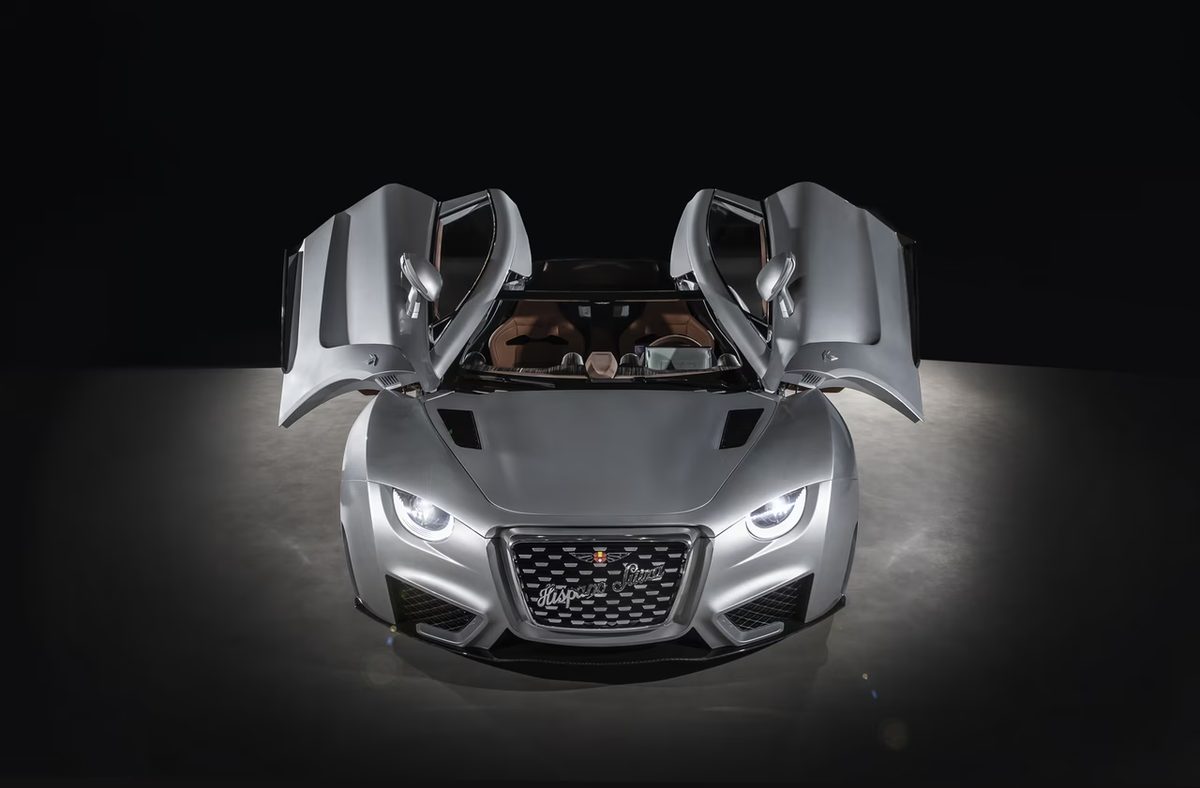
Miguel Suqué Mateu, the great-grandson of cofounder Damian Mateu, is leading the charge. He’s back at the helm with the Hispano Suiza Carmen. This isn’t a concept car you’ll see in a museum. It’s a 1,019-horsepower electric supercar. It’s named after the current boss’s mother. The car caused a stir at the Geneva Motor Show, and for good reason.
Look closely at the styling. It’s not just new design. It’s a direct homage to the Hispano Suiza H6C Dubonnet Xenia from 1938. The curves are familiar. The elegance is inherited.
Aerodynamics and Powertrain Specs
The rear wheels are covered by fenders. This isn’t just for looks. It’s an aggressive aerodynamic choice. The drag coefficient (Cx) sits at 0.325. That is lower than a Porsche 918 Spyder. It’s better than a Ferrari F12. It beats a Koenigsegg Agera R.
Power comes from two electric motors. They are mounted on the rear axle. Total output hits 750 kW. That converts to roughly 1,019 hp. Torque vectoring manages the power delivery. It optimizes how force goes to the ground.
Acceleration is brutal. Zero to 100 km/h takes less than three seconds. Top speed? Deliberately capped at 250 km/h. Why limit it? Probably for tire ratings or regulatory comfort. The battery is a lithium-ion pack. Capacity is 80 kWh. Range is listed at 400 kilometers.
Weight matters. The chassis is a single-piece carbon fiber unit. The body panels are also carbon. Total dry weight? 1,690 kg.
Limited Production and Pricing
You can’t just buy one. The Hispano Suiza Carmen is strictly limited. Production numbers are set at 19 units. Manufacturing runs from late 2019 through 2021.
The price tag reflects the exclusivity. Each unit costs 1.5 million euros. That is steep. For that money, you get a piece of automotive history wrapped in modern electric tech.
Testing on public roads starts soon. Press drivers will get hands-on time with the car in October. The official launch is scheduled for June 2020.
“The Carmen is not just a car. It is a resurrection.”
Is 19 enough to keep the flame alive? Only time will tell if this electric revival sticks or fades into the background noise of the luxury EV market. One thing is certain. The nameplate is back. And it moves faster than most people’s dreams.