Your brake pedal feels soft. It sinks to the floor when you idle at a stoplight. You might assume a major failure. The reality is simpler. You likely have air trapped in your brake lines.
Hydraulic brakes don’t work like clamps. They work on pressure. When you press the pedal, fluid pushes the calipers. If air is in the mix, the system compresses. The pedal goes down. No stopping power follows.
The Hidden Reason Brake Fluid Drops
Brake fluid doesn’t vanish. It moves.
Watch how the pads wear. They get thinner over thousands of miles. The caliper pistons must extend further to keep contact with the rotors. This movement requires fluid displacement. Four wheels mean four calipers. Each one holds more fluid as the pads wear. The reservoir level drops. This is normal physics, not a leak.
But here is the trap.
The reservoir sits atop the master cylinder. It is sealed. Or it should be. When the fluid level falls, air rushes in to fill the void. You open the cap to check the level. You let air in. If the pads are worn, that void is huge. Air slips into the lines.
Air is compressible. Fluid is not.
How Water Ruins Your Brakes
Fluid absorbs water. It is hygroscopic. This is a feature, not a bug. It prevents internal corrosion. But saturated fluid has a lower boiling point.
Drive down a mountain. Brake hard. Repeat. The fluid heats up. It boils. Water turns to steam. Steam expands. Air separates from the water. You now have pockets of gas in rigid lines.
Press the pedal. The gas compresses. The pedal feels spongy. You lose pressure. This is brake fade. It is dangerous.
The Fix: Bleeding and Flushing
A spongy pedal is a warning. It isn’t a death sentence. You don’t need a full overhaul. You need to bleed the brakes.
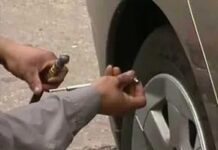
Bleeding removes the air. It restores firmness. You can do this at home. Or take it to a shop. It is straightforward.
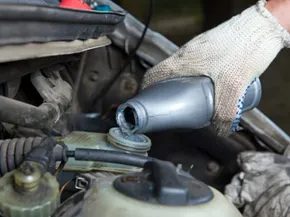
While you are at it, replace the fluid. Old fluid is saturated. It holds water. It conducts heat poorly. Fresh DOT fluid raises the boiling point. It resists vapor lock.
New pads. New fluid. Bleed lines. The pedal should feel firm again.
Check your reservoir often. Keep it full. Prevent air from entering the void. Your safety depends on the integrity of that hydraulic circuit.