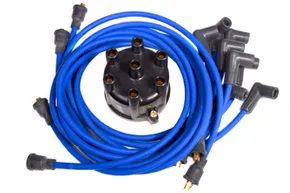
Before 1980, keeping a car running wasn’t just a chore. It was a recurring expense. If you owned a vehicle from that era, you were essentially renting its ignition components. Distributors, rotors, points, and wires weren’t just parts; they were consumables. They wore out. Contact points were so fragile that replacing them annually was standard advice. Spark plugs and rotors might scratch out 30,000 miles (48,280 kilometers) with a tune-up. The wires lasted longest, clocking in around 90,000 miles (144,841 kilometers) before they failed. It was a cycle of wear and tear that defined ownership.
Then came the 1990s. The industry shifted. Distributors vanished. In their place came on-board computers and sensors. Crankshaft and camshaft position sensors began sending data to the engine control unit. The computer stopped guessing and started triggering coils with precision. This wasn’t just an upgrade. It was a revolution in control.
The Rise of Distributorless Ignition Systems
Ditching the distributor meant better spark timing. Period. Early distributorless designs often used a single coil for every two spark plugs. That coil lasted forever. Most guides don’t even list a replacement interval for it. It could outlive the car. Shorter spark plug wires were another win. Less distance for the high-voltage spark to jump meant fewer failures. Platinum-tipped plugs extended that lifespan to 60,000 miles (96,561 kilometers). It was a massive leap from the plastic-wrapped wires of the seventies.
Now we are in the 21st century. The standard is the coil-on-plug (COP) system. These setups use iridium-tipped spark plugs that regularly survive 100,000 miles (160,934 kilometers). Some owners might never touch an ignition component in the life of the car. In a COP setup, there are no wires. No distributor cap. No rotor. Each spark plug well has its own coil. The coil snaps directly onto the plug. Moving parts are gone. Wires are eliminated. The system is simpler, more efficient, and significantly more durable.
But perfection is boring. And unreliable. Even these modern systems aren’t immune to failure.
Factors That Destroy Ignition Longevity
The mechanics of pre-1980 ignitions were brutally simple. More moving parts meant faster death. A full tune-up—plugs, rotor, points, coil—was often replaced every 15,000 miles (24,140 kilometers) or once a year. Delivery vans and taxis didn’t just use these systems harder. They broke them faster.
Spark plug wires were the weak link in the transition era. Jim Houser of Hawthorne Automotive Clinic notes that while wires could last 60,000 miles, their location was everything. Proximity to a hot exhaust manifold cooked them prematurely. Heat degrades insulation. Degraded insulation leads to arcing. Arcing leads to misfires.
Today, the maintenance schedule has nearly vanished. There are no moving parts to wear out in a COP system. But there is a catch. If you let iridium plugs sit for 120,000 miles (193,121 kilometers), removing them becomes a nightmare. They fuse to the cylinder head threads. You spend hours on extraction tools instead of changing a plug.
Leslie Macaulay, an Automotive Service Technology instructor at Portland Community College, points out the real killers. Fuel mixture. A rich mixture floods the plug with unburned fuel and oil. It fouls even the toughest iridium tips. A lean mixture runs too hot. It melts electrodes. Both conditions destroy longevity. Normal operation, however, keeps these plugs going for a very long time.
The Hidden Weakness: Your Key Ring
Here is where the story takes a sharp left turn. You think about plugs and coils. But Leslie Macaulay and Jim Houser agree on a different number-one factor. It is the ignition cylinder. The physical lock you insert your key into.
The culprit? The weight of your key ring.
Houser recommends carrying only one extra key and your fob. Nothing else. Every heavy keychain swings. It puts stress on the tumblers inside the cylinder. Over time, that physical wear causes the cylinder to fail. Without a pound of metal swinging from it, Macaulay says an ignition cylinder can last up to 200,000 miles (321,869 kilometers).
Think about that. The electronics can last the life of the car. The ignition system is bulletproof. But a heavy set of keys on your hip can kill the lock mechanism long before the engine does.
So, you have cleaner combustion. Better timing. Longer-lasting plugs. But you are still tethered to the physical wear of a metal cylinder. The technology advanced. The human element didn’t.
What happens when the cylinder finally gives out? And what does that mean for your insurance and repair costs? That is a different problem entirely.
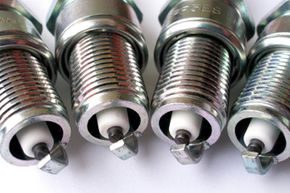
The era of replacing parts on a schedule is effectively dead. As automotive engineering has matured, so has the durability of the components inside the engine bay. You won’t find yourself swapping out ignition parts on a calendar-based timeline anymore. Without moving parts in the modern ignition system, maintenance has plummeted to near zero.
Take spark plugs. In the past, you’d pull them every thirty thousand miles to check for wear. Today, a single set can last up to one hundred thousand miles. That is a massive shift in how we think about upkeep.
Comparing Eras of Automotive Maintenance
Macaulay puts it bluntly. Comparing the maintenance needs of a car built in the last decade to an older model with a distributor and rotor is “like comparing a washing machine to a washboard.” It isn’t just different; it’s a different category of object entirely.
Older systems had physical points and coils that arced and wore down. Modern systems are solid-state. Spark plug wires, if a vehicle even uses them, are treated as “replace if broken” items. Manufacturers do not list a service interval for them. They don’t need one.
“Manufacturers don’t even list a maintenance interval,” she says.
This raises a valid concern. What about all the new computerized auto parts? Don’t they fail? Sure they do. Crankshaft sensors, camshaft sensors, and throttle position sensors all wear out over time. But you don’t replace them proactively. You wait for the check engine light.
The Powertrain Control Module (PCM) monitors these signals constantly. When a sensor stops sending data, the light comes on. The diagnostic code tells the technician exactly which part failed. This is reactive maintenance, not preventive.
The Shade-Tree Mechanic’s Dilemma
This shift has left almost nothing for the weekend wrencher to do. If your car is newer than 2010, your Saturday afternoon projects are severely limited. The “shade-tree mechanic” will have to find joy in working on pre-1980 vehicles. Those older cars still have shorter part longevity and require regular intervals of attention. They demand work.
However, one task remains non-negotiable. Oil and filter changes.
You cannot skip this. Without clean oil and a clean filter, the engine’s internal components will degrade. And if the engine degrades, the ignition system cannot survive one hundred thousand miles. The whole chain relies on that basic lubrication.
Replacing Car Ignitions
Even with this reduced maintenance schedule, components will eventually fail. The system doesn’t last forever. It just lasts much longer than we used to expect.
When those sensors die, you don’t guess. You scan. You find the code. You replace the part. It’s simple, efficient, and devoid of the guesswork that defined older eras of car repair.
Go to the next page for more car part information.

The Hidden Costs of Modern Ignition Reliability
The era of chasing down loose wires and adjusting points is long gone. In distributorless systems and modern coil-on-plug (COP) setups, you will rarely touch the core ignition components. They just work. But when something finally does go wrong, the repair bill doesn’t just reflect labor; it reflects the complexity of parts that were designed to outlast the vehicle itself.
This durability is a double-edged sword. Consider spark plugs. Leave them in for the full 120,000-mile interval, and you aren’t just dealing with wear. You’re dealing with metallurgy. Steel plugs can fuse permanently to aluminum cylinder heads. The heat cycles cause the metals to bond, turning a simple maintenance task into a nightmare.
Techs often find the plugs broken into shards upon removal. It’s not just annoying. It requires specialized extraction tools to pull the remnants out. In the worst-case scenario, you’re looking at a cracked head or a complete replacement. That’s a five-figure mistake on a five-thousand-dollar car.
“If the spark plugs are left in for a full 120,000 miles, they can be very difficult to remove. Steel spark plugs can fuse with aluminum cylinder heads.”
Then there’s the PCM. It’s reliable. It lasts. But the security tech layered on top of it introduces new failure points. Modern ignition cylinders contain transponders. The key has a chip. The cylinder has a chip. They talk to each other. If the signal doesn’t match, the engine won’t crank.
What happens when that key chip fails? You can’t just hotwire it. You can’t just bypass it. The car becomes a brick. It needs to be towed to a dealership or a certified specialist. And then comes the reprogramming. Jim Houser at Hawthorne Auto Clinic warns that messing with this security handshake can damage the car’s computer. It’s not a plug-and-play fix. It’s a diagnostic minefield.
The California Standard and Future Durability
Longevity isn’t just a feature anymore. It’s becoming legislation. California is pushing for a mandated 10-year or 150,000-mile warranty on new car ignition systems. The goal is to force manufacturers to notch up quality across the board. Crankshaft sensors. Ignition coils. The whole chain.
Houser doesn’t see this as a struggle for OEMs. He thinks they’ll meet the standard easily. The technology is there. The engineering is mature. The push for longer life isn’t about solving a crisis; it’s about eliminating the maintenance interval entirely.
This shift changes the economics of ownership. Keeping a vehicle for 15 years is suddenly cheaper than it was in the 1990s. Fewer parts end up in landfills. Less waste. Better margins for the owner who keeps their hands off the wrench.
Leslie Macaulay from Portland Community College puts it bluntly. It’s worlds apart from the cars of the ’70s. Back then, you serviced the ignition every other oil change. Today, you service the car until the body rots out.
What This Means for Your Garage
The reduction in required maintenance is the headline. But the reality is more nuanced. You trade frequent small repairs for infrequent, catastrophic failures.
- Spark Plugs: Don’t ignore the 120k-mile mark. If you keep the car that long, budget for professional extraction.
- Security Systems: If your key fob dies, don’t try to hack the lock. You risk bricking the PCM.
- Quality Expectations: Parts are getting better. Crank sensors and coils are built to last the life of the car.
The environment benefits. The wallet benefits. But the tech needs to be good. One mistake on a fused plug or a misprogrammed transponder can cost more than the car is worth.
The industry is moving toward a “install and forget” model. It works until it doesn’t. And when it doesn’t, the stakes are higher than ever.
Lots More Information
Related HowStuffWorks Articles:
-
Top 10 Everyday Car Technologies that Came from Racing
-
How Car Computers Work
-
How Driverless Cars Will Work
-
How Hypercars Work
-
How Auto Transport Works
-
How Automotive Production Lines Work
-
Can you assemble your own car?
-
What makes a digital car digital?
-
What’s new in synthetic oil technology?
-
Will car repairs in the future financially cripple you?
Sources :
-
2CarPros.com. “How Car Ignition Systems Work.” (Oct. 1, 2009)http://www.2carpros.com/how_does_it_work/ignition.htm
-
Draper, Dave. “Electronic Ignition Overview.” June 2005. (Oct. 1, 2009)http://www.jetav8r.com/Vision/Ignition/CDI.html
-
Houser, Jim. Hawthorne Auto Clinic. Personal interview. Conducted on Oct. 8, 2009.
-
Macaulay, Leslie. Portland Community College Automotive Service Technology. Personal interview. Conducted on Oct.